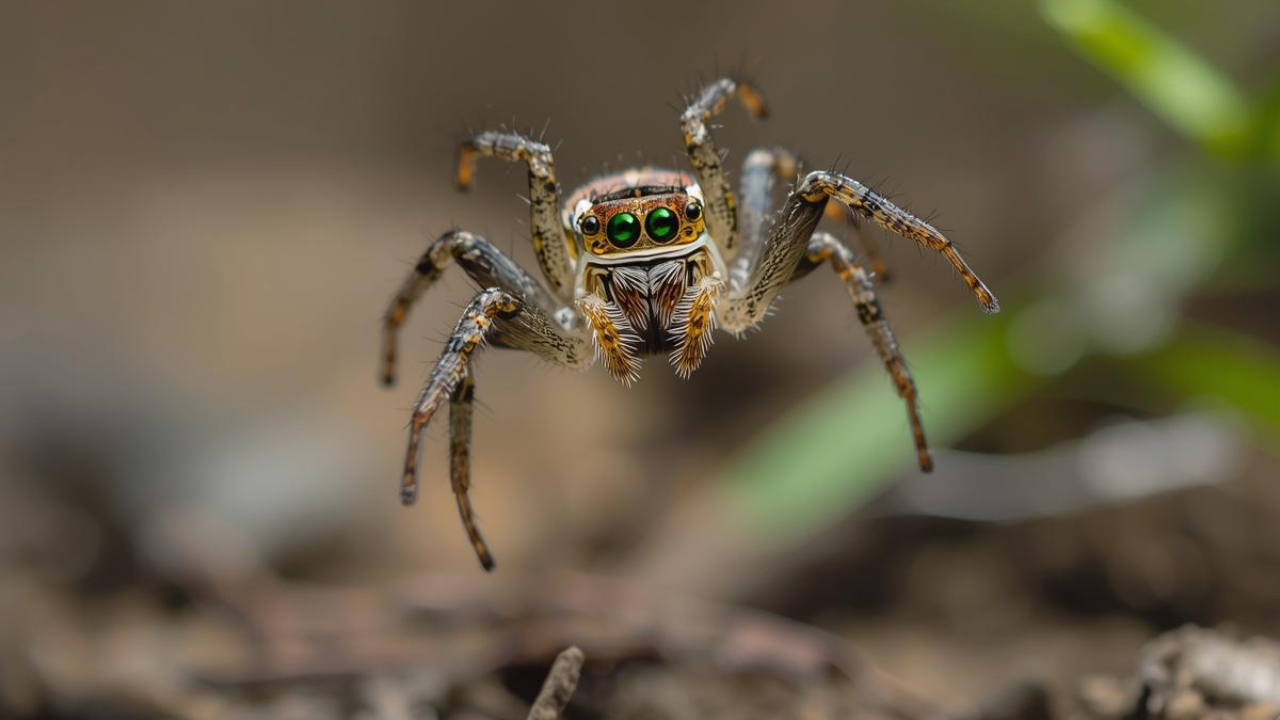
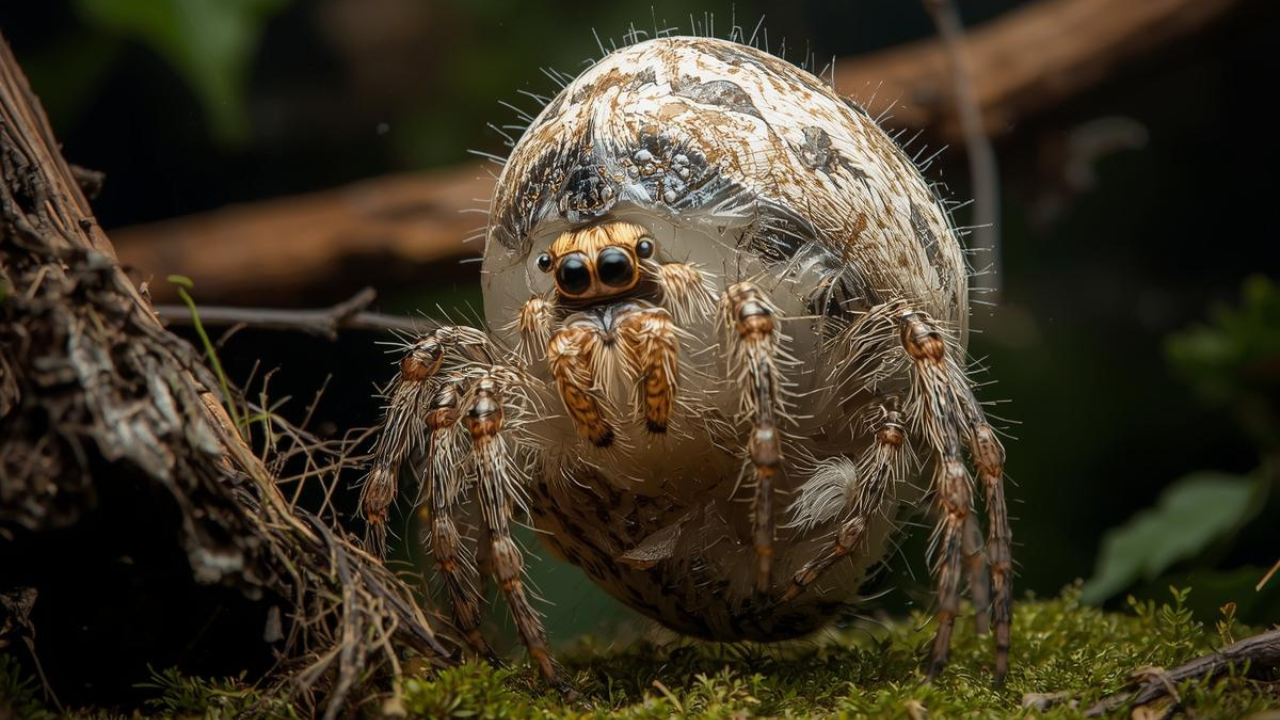
Jumping spiders are among the most captivating tiny predators in the arachnid world. Their agility, keen vision, and remarkable jumping ability make them stand out from other spiders. Unlike web-building spiders that trap prey passively, jumping spiders actively hunt, stalking and leaping on their targets with precision. Understanding a jumping spider jump provides insight into their survival strategies, hunting behavior, and even proper care for enthusiasts who keep them as pets.
In this article, we’ll explore the mechanics of their jumps, the heights they can reach, factors that influence jumping, scientific findings, common myths, and essential care tips.

H2: Understanding Jumping Spiders and Their Jumping Abilities
Jumping spiders belong to the Salticidae family and are known for their intelligence, extraordinary vision, and agile hunting skills. Unlike web-building spiders, they actively stalk prey, relying on their jumping ability for survival. Their compact bodies, strong legs, and large forward-facing eyes allow them to judge distances accurately and execute precise leaps. Observing these spiders reveals a high level of sophistication in their behavior and hunting strategies.
H3: Anatomy That Supports Jumping
- Large anterior median eyes: Allow depth perception and precise distance calculation.
- Strong hind legs: Store hydraulic pressure to propel the spider into the air.
- Lightweight exoskeleton: Absorbs landing impact and supports multiple jumps.
- Flexible abdomen: Stabilizes the spider mid-air for accurate landings.
H3: Hunting Behavior
Jumping spiders rarely leap randomly. They carefully stalk prey, measuring distances visually. Before jumping, they often anchor a silk dragline as a safety line. This ensures recovery if a leap is miscalculated. This behavior highlights the importance of jumping in hunting and survival, as well as their intelligence compared to other arachnids.
H2: The Mechanics of a Jumping Spider Jump
A jumping spider jump is powered by a hydraulic system rather than strong muscles. By rapidly increasing blood pressure in the legs, the spider extends them suddenly, propelling itself through the air. This system enables jumps that are many times the spider’s body length with remarkable precision.
H3: How Hydraulic Pressure Works
- Rapid blood pressure increase in the legs provides lift-off.
- Legs extend almost instantaneously to generate propulsion.
- Body posture and timing are crucial for accurate distance and safe landing.
H4: Comparison With Other Spiders
- Most spiders rely on webs and rarely jump.
- Jumping spiders are unique in using hydraulic propulsion.
- Their jumping mechanics have inspired robotic systems and microengineering innovations.
H2: How High Can a Jumping Spider Jump?
The height of a jumping spider jump depends on species, age, size, and motivation. On average, most jumping spiders leap 20–50 times their body length. For a 1 cm spider, this translates to 20–50 cm a distance proportionally astonishing.
H3: Jump Heights by Species
| Species | Body Length | Average Jump Height |
|---|---|---|
| Phidippus audax | 1.5 cm | 35–50 cm |
| Salticus scenicus | 0.8 cm | 15–20 cm |
| Marpissa muscosa | 1.2 cm | 25–40 cm |
H3: Mid-Air Adjustments
Jumping spiders use visual cues to adjust their trajectory mid-air. They often rely on silk draglines to stabilize themselves or secure footing if a jump doesn’t land perfectly. This precision ensures effective hunting and safe navigation in complex environments.
H4: Record Jumps
Under optimal conditions, some species can exceed their average jump heights, particularly when hunting prey or escaping predators. These extreme leaps showcase their agility and evolutionary specialization.
H2: Factors Influencing a Jumping Spider Jump
Several factors determine how high a spider can jump, ranging from biological traits to environmental conditions.
H3: Biological Factors
- Species differences: Some species are naturally more agile.
- Age and maturity: Older, fully-grown spiders typically jump farther.
- Health and nutrition: Well-fed spiders maintain energy for longer and higher jumps.
H3: Environmental Factors
- Surface type: Rough or textured surfaces improve grip and takeoff.
- Temperature: Moderate warmth improves leg function and muscle efficiency.
- Humidity: Supports leg flexibility and jumping efficiency.
H3: Motivation and Energy
- Hunting: Strong jumps occur when targeting prey.
- Escaping predators: Sudden danger triggers higher leaps.
- Courtship: Male spiders perform shorter, precise jumps to attract mates.
H2: Research on Jumping Spider Jump
Scientific studies on jumping spider jump use high-speed cameras to track leaps, measuring distance, speed, and accuracy. Research has revealed that jumping spiders can adjust mid-air trajectory and land precisely on moving targets.
H3: Key Findings
- Jumping distance remains consistent relative to body size.
- Spiders can jump multiple times their body length.
- Trajectory adjustments enable targeting of moving prey.
H3: Applications Beyond Nature
- Robotic systems inspired by spider hydraulics.
- Insights into small animal biomechanics.
- Inspiration for micro-drones and robotic jumpers.
H2: The Role of Jumping in Survival
Jumping is essential for hunting, predator evasion, mating, and navigation.
H3: Hunting
- Ambushing prey from a distance
- Energy-efficient, precise leaps
H3: Predator Evasion
- Quick, agile jumps help escape birds, lizards, and other predators
- Accurate landings reduce injury risk
H3: Mating and Navigation
- Courtship displays often include controlled jumps
- Navigating complex environments requires precise leaps
H2: Myths and Misconceptions About Jumping Spider Jump
Jumping spiders are often misunderstood by hobbyists and casual observers.
Exaggerated Distance
- They cannot jump meters; leaps are proportional to body size
- Still impressive relative to their tiny bodies
Danger to Humans
- Harmless and non-venomous
- Agility may surprise, but they are not dangerous
Equal Ability Across Species
- Jumping skill varies with species, size, and age
- Some species are naturally more agile than others
Jumping Spider Care and Jumping Ability
Proper care enhances natural jumping behavior and overall health.
Enclosure and Space
- Provide vertical and horizontal room for movement
- Use soft surfaces to prevent injuries from landings
Nutrition and Feeding
- Balanced diet with protein-rich prey
- Hydration supports leg strength and energy
Observation and Exercise
- Encourage natural hunting and jumping behaviors
- Avoid stress to maintain agility
Safety Tips
- Avoid hard surfaces in the enclosure
- Maintain optimal temperature and humidity
Choosing a Jumping Spider as a Pet
Selecting the right species ensures enjoyable observation of jumps.
Popular Species for Beginners
- Phidippus audax: Agile and beginner-friendly
- Marpissa muscosa: Colorful and excellent jumper
- Salticus scenicus: Small, hardy, and active
Considerations for Pet Owners
- Jumping ability and activity level
- Enclosure size and complexity
- Observation and handling safety
Conclusion: Celebrating Their Remarkable Ability
Jumping spiders are extraordinary predators, combining agility, intelligence, and precision. Their hydraulic jumping system enables a jumping spider jump that is crucial for hunting, survival, and mating. Understanding the mechanics, influencing factors, and proper care allows enthusiasts to observe and appreciate these incredible leaps safely. Observing their behavior highlights the ingenuity of even the smallest creatures and reminds us of the marvels present in the natural world.