
Jumping Spider Lifespan: Complete Care Guide 2026
Understanding Jumping Spider Lifespan is essential for anyone keeping these intelligent and active arachnids as pets. In the USA, jumping spiders are becoming increasingly popular due to their curious behavior, compact size, and easy maintenance compared to other exotic pets.
However, many beginners are surprised when they learn that their lifespan is relatively short. Therefore, proper care plays a major role in how long they actually live. Additionally, environmental conditions, feeding routines, and stress levels directly affect their overall survival.
In fact, the Jumping Spider Lifespan can vary significantly depending on species and care quality. For example, spiders kept in controlled environments often live much longer than those in the wild. As a result, understanding proper husbandry techniques becomes extremely important.
Moreover, many USA-based hobbyists often ask how to extend the life of their spider. The answer is not complex. Consistency, proper feeding, and a stable enclosure are key factors. On the other hand, poor care can shorten their life dramatically, even within months.
This guide will provide a complete breakdown of everything you need to know. For example, you will learn about lifespan differences between species, ideal feeding practices, and how enclosure setup impacts health. Therefore, even beginners can confidently care for their spider.
- Understand average lifespan in captivity and wild
- Learn species-based differences in lifespan
- Discover care techniques to improve survival
- Avoid common beginner mistakes in spider care
Ultimately, learning about Jumping Spider Lifespan helps you become a more responsible and successful keeper. Let’s explore how long these fascinating creatures actually live and what affects their life expectancy.
Average Jumping Spider Lifespan in the Wild and Captivity
Understanding the Jumping Spider Lifespan becomes clearer when comparing wild and captive environments. In nature, these spiders face constant threats such as predators, food shortages, and harsh weather conditions. Therefore, their lifespan is often significantly shorter compared to controlled environments.
In the wild, most jumping spiders survive only a few months to around one year. However, this can vary depending on species and environmental stability. For example, seasonal changes in the USA directly impact survival rates in outdoor habitats.
On the other hand, the Jumping Spider Lifespan in captivity is usually longer. With proper care, stable temperature, and regular feeding, they can live up to 1 to 2 years. In some cases, well-maintained females may even exceed this range.
Additionally, captivity removes many natural risks. For example, spiders no longer need to escape predators or compete for food. As a result, energy is focused on growth, molting, and reproduction rather than survival.
Wild vs Captivity Lifespan Comparison
| Factor | Wild Environment | Captivity |
|---|---|---|
| Average Lifespan | 3 to 12 months | 12 to 24 months |
| Food Availability | Unstable | Consistent |
| Predator Risk | High | Very Low |
| Stress Level | High | Low (if cared properly) |
Why Captive Spiders Live Longer
There are several reasons why captivity improves Jumping Spider Lifespan. First, food is readily available, which supports steady growth. Additionally, stable humidity and temperature reduce stress significantly.
- Consistent feeding schedule improves energy levels
- Controlled environment reduces stress factors
- No exposure to predators or environmental hazards
- Better hydration through regular misting
However, captivity does not guarantee a long life. Poor care practices can still shorten lifespan. Therefore, understanding proper husbandry is essential for long-term success.
Overall, spiders in captivity generally live longer when compared to their wild counterparts. As a result, most USA hobbyists prefer controlled environments for keeping jumping spiders as pets.
Life Cycle Stages and Their Impact on Jumping Spider Lifespan
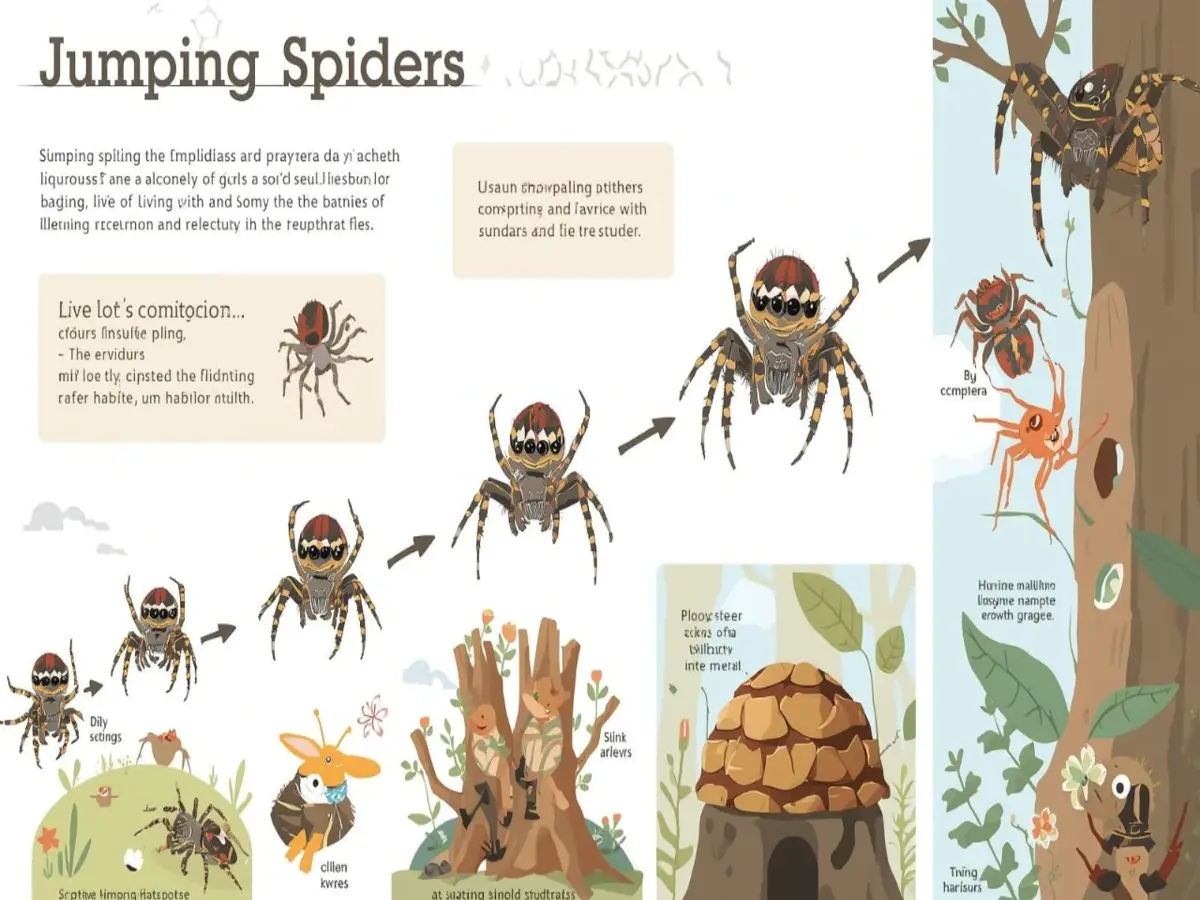
The Jumping Spider Lifespan is closely connected to its life cycle stages. Each stage plays an important role in development, survival, and overall health. Therefore, understanding these stages helps keepers in the USA provide better care and improve longevity.
Jumping spiders go through four main stages: egg, spiderling, juvenile, and adult. Additionally, each stage requires different care levels. As a result, improper care during any stage can reduce overall lifespan significantly.
1. Egg Stage
This is the beginning of life. Female jumping spiders lay eggs inside a silk sac for protection. During this stage, development is highly sensitive to temperature and humidity.
- Eggs remain protected inside silk sacs
- Development time depends on temperature
- No feeding required during this stage
2. Spiderling Stage
After hatching, baby spiders enter the spiderling stage. This is one of the most critical phases for Jumping Spider Lifespan because survival rates are lower without proper care.
- Require very small live prey like fruit flies
- High sensitivity to humidity changes
- Frequent molting occurs for growth
3. Juvenile Stage
In this stage, spiders grow rapidly and become stronger hunters. Additionally, their feeding capacity increases, allowing better nutritional intake for development.
- Improved hunting ability
- Larger prey can be introduced gradually
- Reduced vulnerability compared to spiderlings
4. Adult Stage
The adult stage is the final phase of the Jumping Spider Lifespan. At this point, growth stops, and energy is mostly focused on reproduction and survival.
- Full size and developed behavior
- Females generally live longer than males
- Activity levels may decrease over time
Additionally, each molting cycle between stages plays a crucial role in growth. However, molting is also a vulnerable period where stress or poor conditions can lead to complications.
Therefore, providing stable environmental conditions throughout all life stages is essential. As a result, spiders are more likely to reach their full lifespan potential in captivity.
Factors That Affect Jumping Spider Lifespan
The Jumping Spider Lifespan is not fixed and can change significantly depending on care quality and environmental conditions. In the USA, hobbyists often notice that two spiders of the same species can live very different lengths of time based on how they are kept.
Therefore, understanding the key factors that influence survival is essential. Additionally, small improvements in care routines can greatly increase lifespan and overall health.
1. Feeding Quality and Frequency
Nutrition plays a major role in determining Jumping Spider Lifespan. A well-fed spider grows stronger, molts successfully, and remains active for longer periods.
- Regular feeding improves energy and survival
- Live prey supports natural hunting behavior
- Underfeeding can lead to weakness and early death
2. Temperature and Environmental Stability
Temperature changes directly affect metabolism and activity levels. As a result, unstable environments can shorten lifespan significantly.
- Ideal temperature: 70°F to 80°F
- Avoid sudden heat or cold exposure
- Stable conditions support healthy molting cycles
3. Humidity and Hydration
Proper hydration is essential for spider health. Additionally, dehydration is one of the most common causes of early mortality.
- Light misting provides necessary water droplets
- Too much humidity can cause mold issues
- Balanced moisture supports healthy molting
4. Enclosure Quality
A well-designed habitat improves safety and reduces stress. Therefore, enclosure setup has a direct impact on Jumping Spider Lifespan.
- Proper ventilation prevents mold growth
- Small enclosures make feeding easier
- Escape-proof design ensures safety
5. Stress and Handling
Stress is another major factor affecting lifespan. On the other hand, a calm environment helps spiders feel secure and behave naturally.
- Minimize unnecessary handling
- Keep enclosure in a quiet location
- Avoid sudden vibrations or disturbances
Overall, even small mistakes in care can reduce lifespan. However, consistent attention to these factors can significantly improve survival rates and long-term health.
Feeding Plan to Extend Jumping Spider Lifespan
Proper nutrition plays a direct role in improving Jumping Spider Lifespan. In fact, feeding quality is one of the most important factors that determines growth rate, energy levels, and long-term survival. Therefore, a structured feeding plan is essential for healthy development.
In the USA, many hobbyists successfully extend lifespan by maintaining consistent feeding schedules and offering appropriate prey sizes. Additionally, understanding what jumping spiders eat at each stage helps prevent common mistakes.
What Do Jumping Spiders Eat?
Jumping spiders are active hunters. They rely on live prey for nutrition. Therefore, food selection must match their size and development stage.
- Spiderlings: fruit flies and micro insects
- Juveniles: small flies and soft-bodied insects
- Adults: larger insects like crickets and moths
Additionally, prey should always be smaller than the spider to avoid injury or stress. As a result, feeding success rates improve significantly.
Feeding Frequency for Better Lifespan
Feeding frequency also impacts Jumping Spider Lifespan. Overfeeding or underfeeding can both create health problems. Therefore, balance is key.
- Spiderlings: every 1–2 days
- Juveniles: every 2–3 days
- Adults: every 3–4 days
However, feeding should always be based on behavior. For example, if the spider is not interested in food, it may be preparing to molt.
Common Feeding Mistakes
Many beginners unintentionally shorten lifespan by making feeding errors. Therefore, avoiding these mistakes is essential for long-term health.
- Using prey that is too large
- Leaving uneaten insects in the enclosure
- Overfeeding without observing behavior
- Ignoring hydration needs
Additionally, hydration is just as important as food. Light misting helps spiders drink water droplets, which supports digestion and molting.
Overall, a consistent and well-planned feeding routine significantly improves Jumping Spider Lifespan. As a result, spiders remain active, healthy, and more likely to reach their full life potential.
Proper Enclosure Setup for Maximum Jumping Spider Lifespan
A well-designed habitat plays a major role in improving Jumping Spider Lifespan. In fact, enclosure quality directly affects stress levels, feeding success, and overall health. Therefore, setting up the correct environment is essential for long-term survival.
In the USA, most hobbyists use simple yet functional enclosures that support airflow, safety, and easy maintenance. Additionally, a properly arranged enclosure reduces stress and encourages natural behavior.
Ideal Enclosure Size and Type
Jumping spiders do not require large spaces. Instead, compact enclosures work best for spiderlings and juveniles.
- Small plastic or acrylic containers
- Vertical space for climbing
- Secure lid to prevent escape
Additionally, a smaller environment makes it easier for spiders to hunt prey efficiently. As a result, feeding success improves significantly.
Ventilation and Airflow
Proper airflow is crucial for maintaining healthy conditions. Without ventilation, humidity can build up and lead to mold growth, which negatively affects Jumping Spider Lifespan.
- Small air holes on sides and top
- Balanced humidity control
- Prevents mold and bacterial growth
Interior Setup and Decoration
Enclosure design should be simple but functional. Additionally, providing climbing structures helps mimic natural habitats.
- Small twigs or artificial branches
- Minimal clutter for easy movement
- Clear surfaces for observation
However, overcrowding the enclosure can cause stress and reduce hunting efficiency. Therefore, simplicity is always better for spider health.
Substrate and Moisture Control
Substrate choice also affects hygiene and humidity levels. For example, paper towel is commonly used in the USA due to its cleanliness and easy replacement.
- Light misting once daily
- Avoid over-wetting the enclosure
- Maintain one dry and one slightly moist side
Overall, a clean and stable enclosure significantly improves Jumping Spider Lifespan. As a result, spiders experience less stress and show better growth and activity levels.
Comparison of Jumping Spider Lifespan Across Different Species
The Jumping Spider Lifespan can vary depending on species. While care quality plays a major role, genetics and biological differences also influence how long each type lives. Therefore, understanding species-based lifespan differences helps hobbyists set realistic expectations.
In the USA, several species are commonly kept as pets. For example, the Regal jumping spider and black jumping spider are among the most popular due to their behavior and appearance. However, their lifespan can differ slightly under similar care conditions.
Regal Jumping Spider Lifespan
The Regal jumping spider is one of the most commonly kept species. Additionally, it is known for its calm behavior and strong hunting ability.
- Average lifespan: 1 to 2 years in captivity
- Females often live longer than males
- Thrives in stable indoor environments
Black Jumping Spider Lifespan
Black jumping spiders are also popular among beginners. However, their lifespan is similar to other common species when properly cared for.
- Average lifespan: 1 to 1.5 years
- Highly active and fast hunters
- Require consistent feeding for best results
General Species Comparison Table
| Species | Average Lifespan | Behavior | Care Difficulty |
|---|---|---|---|
| Regal Jumping Spider | 1–2 years | Calm and observant | Easy |
| Black Jumping Spider | 1–1.5 years | Active and fast | Moderate |
| Common Jumping Spider | 1–2 years | Balanced behavior | Easy |
What Affects Species Lifespan Differences?
Although species genetics play a role, environmental care remains the most important factor in Jumping Spider Lifespan. Therefore, even shorter-lived species can thrive under excellent care conditions.
- Diet quality and feeding frequency
- Temperature and humidity stability
- Stress levels and enclosure setup
- Genetic variation between individuals
Additionally, females generally live longer than males in most species. On the other hand, males often have shorter lifespans due to reproductive cycles.
Overall, understanding species differences helps keepers make better decisions and improve care strategies for longer, healthier spider lives.
Pros and Cons of Keeping Jumping Spiders as Pets
Understanding the Jumping Spider Lifespan is not only about care techniques but also about realistic expectations. Therefore, it is important to evaluate both the advantages and limitations of keeping these spiders as pets, especially for beginners in the USA.
Additionally, jumping spiders are unique compared to traditional pets. They require minimal space but still need consistent care. As a result, they are ideal for hobbyists who enjoy observing natural behavior rather than handling animals frequently.
Pros of Keeping Jumping Spiders
There are many benefits that make jumping spiders popular among exotic pet enthusiasts.
- Easy to maintain compared to other exotic pets
- Require very small living space
- Fascinating hunting and visual behavior
- Low feeding cost and simple diet
Additionally, their intelligence and curiosity make them highly interactive to observe. In fact, many USA keepers find them more engaging than larger reptiles or insects.
Cons of Keeping Jumping Spiders
On the other hand, there are some challenges that directly affect Jumping Spider Lifespan and overall experience.
- Short natural lifespan (1–2 years)
- Require live prey feeding
- Sensitive to environmental changes
- Not suitable for frequent handling
Moreover, beginners sometimes underestimate their care requirements. As a result, improper setup or feeding mistakes can reduce lifespan significantly.
Balanced Perspective for USA Hobbyists
In the USA, jumping spiders are becoming more popular as beginner-friendly exotic pets. However, success depends on understanding both their strengths and limitations.
Therefore, if you are looking for a low-maintenance but highly interactive pet, they are an excellent choice. On the other hand, if you prefer long-lived animals, their naturally short Jumping Spider Lifespan may be a limitation.
Overall, they offer a rewarding experience when cared for properly, especially for those interested in observing natural behavior up close.
Expert Tips to Maximize Jumping Spider Lifespan
Improving Jumping Spider Lifespan is not only about basic care. Instead, small expert-level adjustments can make a significant difference in long-term survival and health. In the USA, experienced keepers often focus on consistency, observation, and environmental stability.
Additionally, these tips are based on real husbandry practices rather than theory. Therefore, applying them can help beginners avoid common mistakes and improve results quickly.
1. Maintain a Stable Environment
Consistency is one of the most important factors for extending Jumping Spider Lifespan. Sudden changes in temperature or humidity can stress the spider and affect feeding behavior.
- Avoid frequent enclosure relocation
- Keep temperature between 70°F and 80°F
- Maintain gentle and consistent humidity levels
2. Focus on Proper Feeding Timing
Feeding at the right time improves energy levels and growth. Additionally, observing behavior before feeding prevents overfeeding or stress.
- Feed only when the spider shows interest
- Match prey size to spider size
- Remove uneaten prey quickly
3. Reduce Stress Factors
Stress is one of the biggest hidden causes of reduced lifespan. Therefore, minimizing disturbances is essential for long-term health.
- Place enclosure in a quiet location
- Avoid unnecessary handling
- Prevent sudden vibrations or loud noises
4. Monitor Behavior Regularly
Observation helps detect early warning signs. For example, changes in movement or feeding patterns often indicate environmental issues.
- Track feeding response and activity
- Watch for molting behavior changes
- Identify stress signs early
5. Keep Enclosure Clean and Safe
Hygiene directly impacts Jumping Spider Lifespan. Additionally, a clean environment reduces the risk of mold and bacteria growth.
- Remove dead prey promptly
- Clean enclosure regularly
- Maintain proper ventilation
Overall, these expert strategies help maximize lifespan and improve spider health significantly. As a result, your spider will grow more stable, active, and less prone to stress-related issues.
Conclusion: Understanding Jumping Spider Lifespan for Better Care
Understanding Jumping Spider Lifespan is essential for anyone who wants to successfully keep these fascinating arachnids. Throughout this guide, we explored how lifespan changes based on species, environment, and care quality.
Additionally, we learned that spiders in captivity generally live longer than those in the wild. However, this only happens when proper feeding, stable temperature, and a clean enclosure are maintained consistently.
In fact, even small improvements in care routines can significantly extend survival. Therefore, beginners in the USA should focus on consistency rather than complex setups.
Moreover, species differences such as Regal jumping spider lifespan and black jumping spider lifespan show that genetics also plays a role. On the other hand, care quality remains the most important factor overall.
Ultimately, jumping spiders are short-lived but highly rewarding pets. As a result, understanding their needs helps you make the most of their limited lifespan while ensuring a healthy and active life.
If you follow the care strategies shared in this guide, you can greatly improve your spider’s health, activity, and lifespan.
Start applying these expert care tips today and give your jumping spider the best possible life.
Frequently Asked Questions (FAQs)
1. What is the average Jumping Spider Lifespan?
Most jumping spiders live between 1 to 2 years in captivity, depending on care quality, species, and environmental conditions.
2. Do jumping spiders live longer in captivity?
Yes, jumping spiders usually live longer in captivity because they have stable food, controlled temperature, and no predators.
3. What is the Regal jumping spider lifespan?
Regal jumping spiders typically live around 1 to 2 years in captivity when properly cared for.
4. How long do black jumping spiders live?
Black jumping spiders usually live between 1 to 1.5 years depending on diet and environment.
5. Does female Jumping Spider Lifespan differ from males?
Yes, females generally live longer than males because males have shorter reproductive cycles.
6. What affects Jumping Spider Lifespan the most?
Feeding, temperature stability, humidity levels, and stress management have the biggest impact on lifespan.
7. How can I increase my jumping spider’s lifespan?
You can increase lifespan by providing proper feeding, a clean enclosure, stable environment, and minimal stress handling.
