
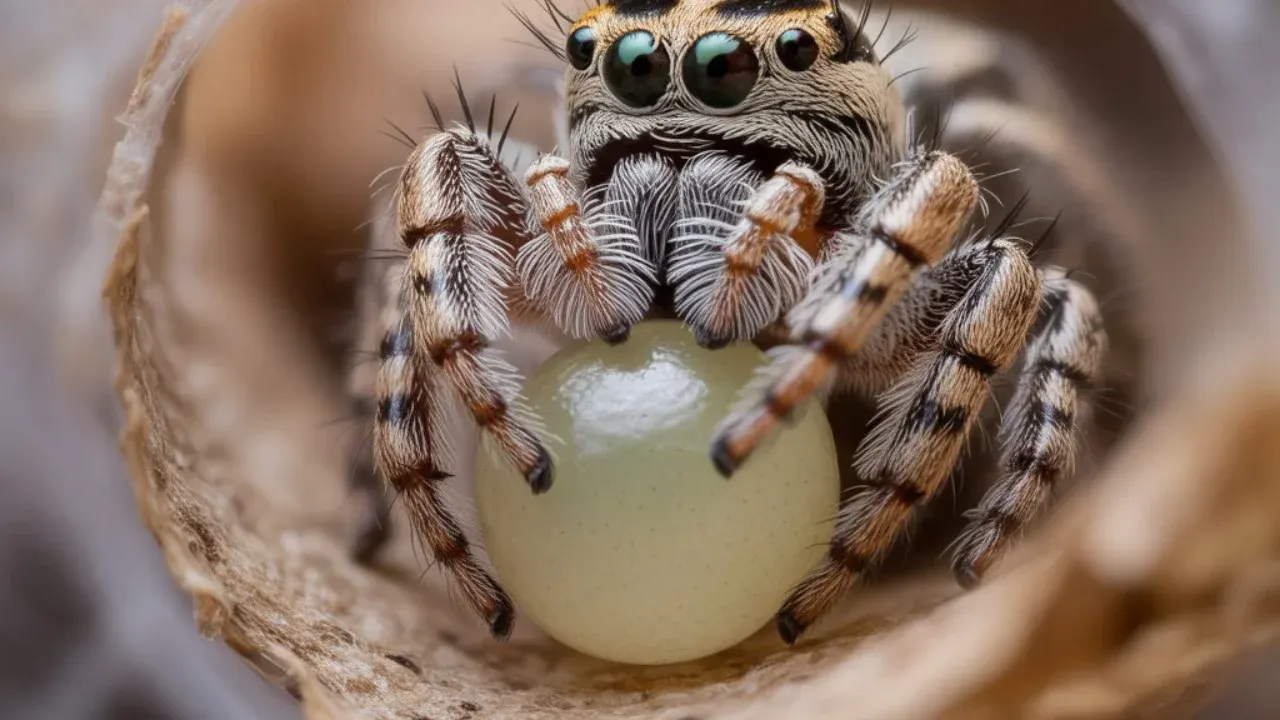
Introduction to Jumping Spider Egg Sac Safety & Habitat Setup Guide
The Jumping Spider Egg stage is one of the most delicate and important phases in a jumping spider’s life cycle. During this period, proper care and environment control become essential for survival. In fact, even small mistakes in habitat setup can significantly reduce hatching success rates.
Jumping spiders, including species like the regal jumping spider, are known for their intelligence and strong maternal instincts. However, the safety of a Jumping Spider Egg sac depends heavily on how well the enclosure is prepared. Additionally, factors like humidity, temperature, and disturbance levels play a major role in successful development.
Many beginners underestimate how sensitive the egg sac stage is. For example, moving or shaking the enclosure can cause stress to the female spider. As a result, she may abandon or damage the sac. Therefore, understanding proper habitat setup is not just helpful—it is essential for successful breeding.
In this guide, we will break down everything you need to know about protecting a Jumping Spider Egg sac. You will learn how to set up a safe enclosure, maintain ideal conditions, and avoid common beginner mistakes. Moreover, we will also explain how egg sac stages develop over time and what to expect during hatching.
Whether you are caring for a regal jumping spider egg sac or another species, this guide is designed for practical use. It is especially helpful for hobbyists in the USA who want to ensure a stable, safe, and natural environment for spider reproduction.
Additionally, we will also address common concerns such as whether you can move a jumping spider egg sac and how to recognize healthy development stages. By the end, you will have a clear and confident understanding of how to manage this critical stage successfully.
- Understand why egg sac safety is critical
- Learn proper habitat setup techniques
- Avoid common beginner mistakes
- Improve spiderling survival rates
Therefore, before setting up or adjusting any enclosure, it is important to fully understand the needs of the Jumping Spider Egg stage. Let’s begin by exploring the biological behavior behind egg sac development.
Understanding Jumping Spider Egg Sac Behavior
To properly care for a Jumping Spider Egg, it is important to first understand how egg sac behavior works. Female jumping spiders are highly intelligent and protective during this stage. In fact, their behavior changes significantly once the sac is laid.
After laying a sac, the female begins guarding it closely. She may stay in one position for long periods. Additionally, she will often clean and rotate the sac to protect it from mold or parasites. This behavior is especially visible in species like the regal jumping spider, where maternal care is very strong.
During this stage, the Jumping Spider Egg sac is extremely sensitive to disturbance. For example, vibrations, frequent enclosure handling, or sudden temperature changes can stress the female. As a result, she may relocate the sac or, in rare cases, abandon it completely.
On the other hand, a healthy female shows calm but alert behavior. She stays near the sac but continues minimal movement inside the enclosure. Additionally, she may refuse food temporarily, focusing entirely on protecting the eggs.
Understanding these behavioral signs helps you determine whether the egg sac is developing normally. For example, a firm and well-attached sac usually indicates good health. However, a damaged or loosely placed sac may require closer monitoring.
The Jumping Spider Egg development process also follows clear biological stages:
- Stage 1: Egg formation inside the sac
- Stage 2: Early embryo development
- Stage 3: Pre-hatching movement inside sac
- Stage 4: Spiderlings preparing to emerge
Additionally, environmental stability plays a major role in behavior consistency. For instance, stable humidity encourages healthy sac development, while fluctuations may slow growth. Therefore, maintaining a controlled environment is essential.
In real-world USA hobby setups, breeders often observe that even small disturbances—such as enclosure shaking—can temporarily affect maternal behavior. However, once stability is restored, the spider usually resumes normal guarding behavior.
In conclusion, understanding behavior is the first step toward successful care. Once you recognize these patterns, you can better protect the Jumping Spider Egg sac and improve overall survival chances.
- Female spiders become highly protective after laying eggs
- Behavior changes indicate sac health
- Environmental stability is critical
- Regal jumping spiders show strong maternal care
Ideal Habitat Setup for Jumping Spider Egg Safety
Creating the right environment for a Jumping Spider Egg is one of the most important steps in successful breeding. A properly designed habitat directly influences egg sac stability, female behavior, and spiderling survival rates. Additionally, a well-structured enclosure reduces stress and improves natural development.
First, enclosure size matters. A medium vertical enclosure is usually ideal because jumping spiders prefer height for web building. However, avoid overly large spaces. In fact, too much space can make it difficult for the female to secure her egg sac safely.
For best results, choose an enclosure with good ventilation and secure locking. This prevents escape and maintains consistent airflow. Moreover, stable airflow helps control humidity levels, which is essential for a healthy Jumping Spider Egg sac.
Inside the enclosure, provide natural climbing structures. For example:
- Cork bark for anchoring webs
- Thin branches for movement support
- Mesh or textured walls for grip
Additionally, avoid overcrowding the habitat. Simple setups are often more effective. As a result, the female feels safer and focuses more on protecting the egg sac rather than exploring unnecessary clutter.
Humidity control is another key factor. Light misting once or twice a week is usually enough. However, over-misting should be avoided because excessive moisture can lead to mold growth around the sac. On the other hand, dry environments can cause dehydration issues.
Temperature should remain stable within a moderate range. Sudden fluctuations can disturb both the female and the Jumping Spider Egg sac. Therefore, avoid placing the enclosure near heaters, air conditioners, or direct sunlight.
In real USA hobby setups, many breeders use shelf-based enclosures in quiet indoor areas. This reduces vibrations and ensures a consistent environment. Additionally, keeping the habitat in a low-traffic room improves long-term stability.
Finally, always secure the enclosure properly. Jumping spiders are skilled escape artists, and a loose lid can lead to loss of both the mother and egg sac. Therefore, double-check locking mechanisms before introducing the spider.
- Use a vertical, medium-sized enclosure
- Maintain stable humidity and temperature
- Provide natural climbing structures
- Avoid clutter and over-decorating
A well-planned habitat significantly increases the chances of a successful Jumping Spider Egg development cycle. Next, we will explore temperature and humidity control in more detail.
Temperature and Humidity Requirements for Jumping Spider Egg Safety
Maintaining the right environment is essential for a healthy Jumping Spider Egg sac. Temperature and humidity directly affect development speed, hatching success, and overall spiderling survival. Additionally, even small fluctuations can influence the female’s protective behavior.
For most jumping spider species, including the regal jumping spider, a stable temperature range is ideal. Sudden heat spikes or cold drops should always be avoided. In fact, consistency is more important than achieving an exact number.
Humidity also plays a critical role. A slightly moist environment helps prevent the egg sac from drying out. However, excessive moisture can create mold, which may damage the sac. Therefore, balance is key.
Recommended environmental conditions include:
- Stable indoor temperature without direct heat exposure
- Light humidity through controlled misting
- Good ventilation to prevent stagnant air
- No direct sunlight on the enclosure
Additionally, misting should be done carefully. Light misting once or twice per week is usually enough in most USA indoor environments. However, if the air is already humid, reduce misting frequency to avoid over-saturation.
The Jumping Spider Egg sac is naturally designed to retain moisture, so overwatering the enclosure is a common beginner mistake. As a result, many breeders experience mold growth or weakened sac structure when humidity is not properly controlled.
On the other hand, dry environments can also be harmful. If humidity drops too low, the sac may harden prematurely. This can reduce successful hatching rates. Therefore, monitoring conditions regularly is strongly recommended.
In real-world USA setups, many hobbyists use small hygrometers to track humidity levels inside enclosures. This helps maintain consistency and reduces guesswork. Additionally, placing the enclosure in a naturally stable room, such as a bedroom or study, improves environmental control.
Temperature stability is equally important. Avoid placing the enclosure near HVAC vents, windows, or kitchen areas. These locations often cause sudden temperature shifts that can stress the female spider and affect the Jumping Spider Egg sac.
In conclusion, stable temperature combined with balanced humidity creates the ideal environment for successful development. Once these conditions are maintained correctly, the chances of healthy spiderling emergence increase significantly.
- Consistency is more important than exact values
- Balanced humidity prevents drying or mold
- Avoid heat sources and direct sunlight
- Monitor conditions regularly for stability
Can You Move a Jumping Spider Egg Sac? Safety Guide
One of the most common questions among breeders is whether a Jumping Spider Egg sac can be moved safely. The short answer is yes, but only under very specific conditions. In fact, unnecessary movement is one of the biggest risks to successful hatching.
Jumping spider mothers are highly protective, especially species like the regal jumping spider. When an egg sac is laid, the female carefully attaches it to a secure surface. Additionally, she constantly monitors it for safety. Therefore, any disturbance can cause stress or defensive behavior.
In most cases, it is best to avoid moving the sac at all. However, there are a few situations where relocation may be necessary:
- The enclosure is unsafe or damaged
- Mold or pests threaten the sac
- Extreme environmental instability occurs
- Emergency enclosure cleaning is required
Even in these cases, movement must be done with extreme care. The safest method is to move the entire enclosure rather than removing the Jumping Spider Egg sac directly. This reduces stress and prevents accidental damage.
On the other hand, directly handling the egg sac is strongly discouraged. The sac is delicate, and even minor pressure can harm developing embryos. Additionally, the female may react aggressively or abandon the sac after disturbance.
If relocation is necessary, follow these precautions:
- Move slowly and avoid vibrations
- Keep the enclosure in the same orientation
- Maintain stable temperature during transfer
- Minimize light exposure and handling time
In USA hobby setups, experienced breeders often prepare backup enclosures in advance. This allows them to transfer the entire habitat quickly if needed, without disturbing the Jumping Spider Egg sac directly.
Additionally, timing matters. Moving a sac during early development is more risky than during late stages. Therefore, if relocation is unavoidable, it is better to wait until the sac is stable and well-secured.
In conclusion, while it is technically possible to move a jumping spider egg sac, it should only be done when absolutely necessary. The safest approach is always to leave it undisturbed in a stable environment.
- Do not handle the sac directly
- Move only the enclosure if required
- Minimize vibration and stress
- Relocate only in emergency situations
Jumping Spider Egg Sac Stages: Complete Development Breakdown
Understanding Jumping Spider Egg sac stages is essential for successful breeding and care. Each stage shows different biological changes inside the sac, even though most of the development happens out of sight. Additionally, recognizing these stages helps you predict hatching time more accurately.
The development of a Jumping Spider Egg sac is gradual and highly sensitive. In fact, environmental stability directly affects how smoothly each stage progresses. Therefore, maintaining consistent humidity and temperature is critical throughout the cycle.
Below are the main stages of egg sac development:
- Stage 1: Egg Formation – The female lays and seals the sac securely.
- Stage 2: Early Embryo Development – Eggs begin internal growth and cell division.
- Stage 3: Mid Development – Embryos become more defined, though not visible externally.
- Stage 4: Pre-Hatching Stage – Spiderlings begin active movement inside the sac.
During the early stages, the Jumping Spider Egg sac appears firm and stable. Additionally, the female remains close and highly protective. However, there is little visible activity at this point.
As development progresses, subtle changes may appear. For example, the sac may slightly darken or shift in shape. On the other hand, these changes are normal and indicate healthy growth rather than damage.
In the pre-hatching stage, movement inside the sac becomes noticeable. This is one of the most exciting phases for breeders. The female may also become more alert and reposition the sac more frequently.
Eventually, spiderlings begin to emerge. At first, they stay clustered near the sac. However, within a short time, they begin dispersing to explore their surroundings. Therefore, preparation for separation should already be in place before this stage begins.
In USA hobby breeding setups, experienced keepers closely monitor these stages using minimal interference. Additionally, they often document changes to better predict future hatching cycles for the Jumping Spider Egg.
It is important to avoid disturbing the sac during any stage. Even though curiosity is natural, excessive observation can stress the female spider and impact development.
In conclusion, understanding egg sac stages helps you manage expectations and improve survival outcomes. Each stage is a natural step toward successful spiderling emergence.
- Egg development happens in hidden stages
- Movement increases before hatching
- Female behavior reflects sac health
- Minimal disturbance ensures better survival
Common Mistakes in Jumping Spider Egg Care
Caring for a Jumping Spider Egg sac may look simple, but many beginners make small mistakes that can significantly reduce hatching success. In fact, most failures in captive breeding are not caused by the spider itself but by environmental or handling errors.
One of the most common mistakes is overhandling the enclosure. Jumping spiders are extremely sensitive to vibrations and movement. Additionally, frequent checking of the sac can stress the female, causing her to abandon or damage it.
Another major issue is incorrect humidity control. Too much moisture can lead to mold growth, while too little can dry out the sac. Therefore, balance is essential for protecting the Jumping Spider Egg.
Here are the most frequent mistakes beginners make:
- Moving or shaking the enclosure unnecessarily
- Over-misting and creating excessive humidity
- Using overly large or open enclosures
- Placing enclosure in high-traffic or noisy areas
- Ignoring ventilation balance
Additionally, many beginners overcrowd the habitat with decorations. While enrichment is helpful, too many objects can increase stress and reduce the female’s ability to secure her egg sac properly.
On the other hand, some breeders underestimate the importance of enclosure stability. For example, placing the habitat near windows or air vents can create sudden temperature changes. As a result, the Jumping Spider Egg sac may develop inconsistently or become damaged.
In USA hobby setups, experienced keepers often emphasize “minimal disturbance care.” This means observing from a distance and only interacting when absolutely necessary. Additionally, they use stable shelving units to reduce vibration exposure.
Another overlooked mistake is feeding the female too aggressively during egg guarding. In many cases, she will naturally reduce feeding activity. Forcing food or frequent disturbance during this phase can do more harm than good.
Therefore, the best approach is patience and consistency. A stable environment, combined with minimal interference, significantly improves survival rates of the Jumping Spider Egg sac.
In conclusion, most problems come from small avoidable errors. Once these are corrected, success rates improve dramatically.
- Avoid unnecessary handling and vibrations
- Maintain balanced humidity levels
- Use simple, stable enclosure setups
- Limit disturbance during egg guarding phase
Comparison with Competitors: Jumping Spider Egg Care Methods
When it comes to Jumping Spider Egg care, not all breeding methods deliver the same results. In fact, care techniques vary widely between beginners, intermediate hobbyists, and experienced breeders. Additionally, understanding these differences helps improve survival rates and enclosure success.
Many beginners focus only on basic enclosure setup. However, experienced breeders in the USA use a more controlled and minimal-interference approach. As a result, their Jumping Spider Egg sac success rates are significantly higher.
Below is a simple comparison of common care methods:
| Care Method | Setup Type | Humidity Control | Disturbance Level | Success Rate |
|---|---|---|---|---|
| Beginner Setup | Large, decorative enclosure | Inconsistent misting | High (frequent checking) | Low to Moderate |
| Intermediate Setup | Medium vertical enclosure | Controlled misting | Moderate handling | Moderate to High |
| Expert USA Setup | Simple, stable enclosure | Balanced humidity system | Minimal disturbance | High |
As shown above, simplicity and stability often lead to better results. For example, expert breeders prioritize environmental consistency over decoration or visual design. Additionally, they avoid unnecessary handling of the Jumping Spider Egg sac.
On the other hand, beginner setups often include too many variables. Over-decorated enclosures, inconsistent misting, and frequent observation can all stress the female spider. As a result, egg sac survival rates tend to decrease.
Intermediate setups show improvement by reducing disturbance and improving humidity control. However, they may still include minor inconsistencies in environmental stability.
In contrast, expert-level care focuses on:
- Stable temperature and humidity conditions
- Minimal enclosure interaction
- Simple but functional habitat design
- Careful observation from a distance
Additionally, USA-based breeders often prepare backup enclosures in advance. This ensures that if relocation becomes necessary, the Jumping Spider Egg sac can be transferred safely without direct handling.
Therefore, the key difference is not complexity but control. The more stable and less intrusive the environment, the higher the chance of successful hatching.
In conclusion, learning from expert methods can significantly improve your results and reduce common breeding mistakes.
Pros and Cons of Jumping Spider Egg Care in Captivity
Caring for a Jumping Spider Egg sac in captivity can be a highly rewarding experience, but it also comes with challenges. Understanding both the advantages and limitations helps breeders set realistic expectations and improve overall success rates.
In fact, many USA-based hobbyists find that success depends less on complexity and more on consistency. Additionally, knowing what to expect reduces mistakes during critical development stages.
Below is a balanced breakdown of the main pros and cons:
Pros of Captive Jumping Spider Egg Care
- Higher observation control compared to wild environments
- Protection from predators and environmental threats
- Ability to manage humidity and temperature
- Opportunity to study Jumping Spider Egg sac stages closely
- Improved survival rates with proper setup
Additionally, captive care allows breeders to monitor development without external risks. For example, wild egg sacs face threats from parasites and weather changes, which are eliminated in controlled enclosures.
Cons of Captive Jumping Spider Egg Care
- High sensitivity to human disturbance
- Risk of accidental stress during enclosure handling
- Requires consistent environmental control
- Possible mold or humidity imbalance issues
- Limited natural behavior compared to wild conditions
On the other hand, captive environments require responsibility. Even small mistakes—such as over-misting or vibration—can negatively affect the Jumping Spider Egg sac.
Another challenge is patience. Unlike other pets, jumping spiders require minimal interference. Therefore, beginners often struggle with the “hands-off” approach needed for success.
However, experienced breeders in the USA often report high satisfaction when proper techniques are followed. Additionally, observing spiderling development is considered one of the most fascinating aspects of invertebrate keeping.
Therefore, while challenges exist, they are manageable with the right knowledge and setup strategy. In fact, most issues can be avoided through stable environmental control and minimal disturbance practices.
In conclusion, captive care offers strong benefits but requires discipline. When done correctly, it significantly improves the chances of successful Jumping Spider Egg development and hatching.
Customer Experience Highlights: Real Jumping Spider Egg Care Insights
When caring for a Jumping Spider Egg, real-world experiences from hobbyists provide some of the most valuable learning insights. In fact, many breeders in the USA report that success often comes from patience, observation, and environmental stability rather than advanced techniques.
Additionally, most beginners improve significantly after their first egg sac cycle. This is because hands-on experience reveals small but important details that are not always obvious in guides.
Hobbyist Insight 1: Stability Matters Most
Many breeders note that consistent temperature and humidity produce the best results. For example, one hobbyist mentioned that simply moving the enclosure away from a window increased Jumping Spider Egg survival rates significantly.
Hobbyist Insight 2: Less Handling = Better Results
Another common observation is that over-checking the sac causes unnecessary stress. Additionally, experienced keepers recommend observing from a distance instead of opening the enclosure frequently.
Hobbyist Insight 3: First-Time Mistakes Are Normal
Many USA-based breeders admit their first egg sac attempt was not successful. However, they also highlight that learning from mistakes improved their future outcomes dramatically.
For example, one breeder reported losing a sac due to over-misting. After adjusting humidity control methods, their next Jumping Spider Egg sac successfully hatched.
Hobbyist Insight 4: Preparation Improves Success
Experienced keepers often prepare multiple enclosures in advance. This helps them respond quickly if relocation becomes necessary. Additionally, it reduces stress during critical development stages.
These real-world insights highlight an important truth: success with jumping spider breeding is not about perfection, but consistency and careful observation.
Key Takeaways from Hobbyists
- Stable environments improve survival rates
- Minimal interference is essential
- Learning comes through experience
- Preparation reduces emergency risks
In conclusion, real breeder experiences confirm that a calm, stable approach produces the best outcomes for Jumping Spider Egg development. Additionally, each cycle provides valuable learning for future success.
Final Thoughts on Jumping Spider Egg Care & Habitat Setup
Caring for a Jumping Spider Egg sac requires patience, stability, and a clear understanding of environmental needs. Throughout this guide, we explored how proper habitat setup, humidity control, and minimal disturbance significantly improve hatching success.
Additionally, real-world breeder insights show that simplicity often works better than complex setups. Therefore, focusing on consistency is the most reliable way to support healthy development.
If you are serious about raising jumping spiders successfully, applying these methods will help you avoid common mistakes and improve survival rates. Moreover, each breeding cycle will strengthen your experience and confidence.
Ready to Improve Your Jumping Spider Care?
Start by reviewing your enclosure setup today. Ensure stable humidity, reduce disturbances, and prepare a safe environment for your Jumping Spider Egg sac. Small improvements can make a big difference in results.
For more detailed guides and advanced spider care tips, explore more resources on JumpingSpider.xyz and continue building your expertise.
Frequently Asked Questions (FAQs)
1. Can you move a jumping spider egg sac?
Yes, but only in emergency situations. It is best to move the entire enclosure instead of handling the Jumping Spider Egg sac directly. Movement should be slow and vibration-free.
2. What is the size of a jumping spider egg sac?
The size varies by species, but most sacs are small, round, and only a few millimeters to about a centimeter in diameter. The regal jumping spider often produces slightly larger sacs.
3. How long does a jumping spider egg sac take to hatch?
Typically, a Jumping Spider Egg sac takes around 2 to 6 weeks to hatch. However, temperature and humidity can affect the exact timing.
4. What are jumping spider egg sac stages?
The main stages include egg formation, embryo development, mid-growth, and pre-hatching. Each stage shows gradual internal changes inside the sac.
5. How do I know if a jumping spider egg sac is healthy?
A healthy sac appears firm, stable, and well-attached. Additionally, the female remains protective and calm while guarding it.
6. What happens after jumping spider eggs hatch?
After hatching, spiderlings stay near the sac for a short time. Then they gradually disperse to explore and begin independent survival behavior.
7. Can a regal jumping spider egg sac be moved safely?
Yes, but it should be done with extreme caution. It is safer to move the entire enclosure rather than disturbing the sac itself.
Conclusion
Successfully raising a Jumping Spider Egg sac depends on stable environmental conditions, careful handling, and minimal disturbance. By following the guidelines in this article, you can significantly improve hatching success and spiderling survival rates.
Consistency is the key. Therefore, focus on maintaining a safe habitat rather than frequent intervention. With the right approach, even beginners can achieve excellent results.
