
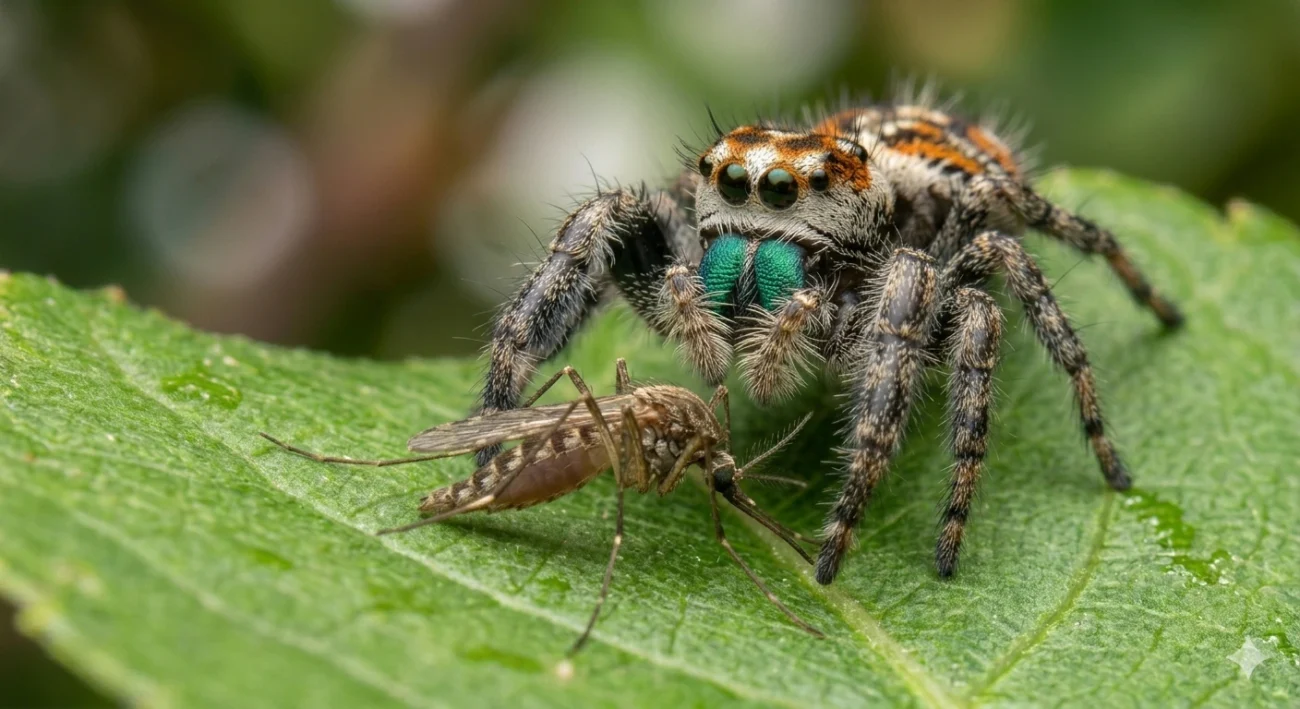
Can Jumping Spiders Eat Mosquitoes? Full Guide 2026
Jumping Spiders Eat Mosquitoes is a common question among spider keepers in the USA. Many people notice mosquitoes inside homes and wonder if these small hunters can help control them naturally.
In fact, jumping spiders are active visual predators. They rely on movement and precision hunting. Therefore, mosquitoes can sometimes become part of their diet in both wild and indoor environments.
However, the reality is more complex. While mosquitoes are small enough for most jumping spiders, not every encounter leads to successful feeding. Additionally, environmental factors and spider behavior play a major role in whether they will actually eat them.
In this guide, we will break down everything clearly. You will learn if jumping spiders eat mosquitoes, how often it happens, and whether mosquitoes are a reliable food source in captivity.
- How jumping spiders hunt flying insects
- Whether mosquitoes are safe and nutritious
- Differences between wild and captive feeding
- Better food alternatives for healthy growth
Additionally, we will explore expert care insights used by USA-based spider keepers. As a result, you will understand not just the answer, but the science behind it.
Let’s start by understanding how these fascinating spiders actually feed and hunt in real life.
How Jumping Spiders Hunt and Eat Mosquitoes
To understand whether Jumping Spiders Eat Mosquitoes, we first need to understand their feeding behavior. These spiders are not web builders. Instead, they are active hunters that rely on vision and movement detection.
In fact, jumping spiders have excellent eyesight compared to most spider species. As a result, they can track flying insects like mosquitoes with surprising accuracy.
How They Detect Prey
Jumping spiders use multiple pairs of eyes to detect motion and depth. This helps them identify even small flying insects in their environment.
- Front-facing eyes detect sharp detail
- Side eyes detect movement
- Depth vision helps judge jumping distance
Therefore, when a mosquito flies nearby, the spider may immediately lock onto it if conditions are right.
Do They Actually Hunt Mosquitoes?
Yes, jumping spiders can eat mosquitoes, but it depends on opportunity and behavior. They are opportunistic feeders, not specialized mosquito hunters.
For example, if a mosquito lands within range, the spider may stalk and attack. However, if the mosquito is too fast or avoids detection, the spider will ignore it.
- Successful hunts happen when mosquitoes land nearby
- Flying mosquitoes are harder to catch
- Smaller spiders may target only resting mosquitoes
Why Movement Matters So Much
Jumping spiders depend heavily on visual movement cues. This is why live prey is always preferred over dead insects.
On the other hand, stationary mosquitoes may not trigger a strong feeding response. Therefore, motion plays a key role in whether feeding happens or not.
Indoor vs Outdoor Behavior
Feeding behavior also changes based on environment.
- Outdoor spiders: More access to mosquitoes and flying insects
- Indoor spiders: Limited mosquito encounters but more stable prey
As a result, mosquitoes are not a guaranteed or consistent food source in captivity or homes.
In summary, jumping spiders are capable of eating mosquitoes, but success depends on opportunity, movement, and environmental conditions. Next, we will explore how common this actually is in the wild.
Do Jumping Spiders Naturally Eat Mosquitoes?
In the wild, Jumping Spiders Eat Mosquitoes only when the opportunity is available. They are not specialized mosquito hunters. Instead, they are generalist predators that eat a wide range of small insects.
In fact, mosquitoes are just one of many possible prey items. Therefore, they are not a primary food source in the natural diet of jumping spiders.
How Often Do Encounters Happen?
Encounters between jumping spiders and mosquitoes depend on environment and location. In humid regions, mosquitoes are more common, which increases the chances of interaction.
- Near water sources: higher mosquito activity
- Urban areas: occasional encounters indoors
- Dry climates: very low mosquito availability
However, even when mosquitoes are present, successful hunting is not guaranteed. Spiders rely on timing and positioning.
Are Mosquitoes Easy Prey?
Mosquitoes are small, but they are also fast and unpredictable. This makes them moderately difficult prey for jumping spiders.
Additionally, mosquitoes spend most of their time flying. This reduces the chances of a successful attack unless they land nearby.
- Landing mosquitoes are easier targets
- Flying mosquitoes are difficult to capture
- Small spiders may avoid fast-moving prey
Natural Diet Diversity
Jumping spiders do not depend on a single food source. Instead, they consume whatever small insects are available.
- Flies and gnats
- Small moths
- Beetles and larvae
- Occasional mosquitoes
As a result, mosquitoes represent only a small portion of their natural diet.
Key Insight from Wild Behavior
Field observations show that jumping spiders prioritize easy and accessible prey. Therefore, mosquitoes are only eaten when conditions are favorable.
On the other hand, more predictable insects like flies are consumed more frequently. This makes them a more reliable food source overall.
In conclusion, while jumping spiders do eat mosquitoes in nature, it happens occasionally rather than regularly. Next, we will examine whether mosquitoes are safe and beneficial in captivity.
Are Mosquitoes Safe Food for Jumping Spiders?
When discussing whether Jumping Spiders Eat Mosquitoes, safety is an important factor. Even if spiders can eat mosquitoes, it does not always mean they are the best or safest option.
In fact, safety depends on where the mosquito comes from, its condition, and environmental exposure. Therefore, not all mosquitoes are equally suitable as food.
Natural vs Wild Mosquito Risks
Wild mosquitoes often come from uncontrolled environments. As a result, they may carry harmful substances that affect spider health.
- Possible pesticide exposure
- Bacterial contamination
- Unknown parasites
On the other hand, captive-bred feeder insects are much safer because they are raised in controlled environments.
Size and Feeding Suitability
Mosquitoes are generally small enough for most jumping spiders. However, size alone does not guarantee suitability.
- Spiderlings may struggle with fast mosquitoes
- Adult spiders can handle them more easily
- Very small mosquitoes may not trigger feeding response
Therefore, success depends on both spider size and prey behavior.
Do Mosquitoes Provide Good Nutrition?
Mosquitoes do contain protein, but they are not highly nutritious compared to other feeder insects. Additionally, their small size means limited nutritional value per feeding.
For example, fruit flies or house flies provide more consistent nutrition for long-term spider health.
- Low to moderate protein content
- Limited fat and mineral balance
- Not ideal for regular feeding
Indoor Feeding Considerations
In indoor environments, mosquitoes are not a reliable or controlled food source. Therefore, depending on them for feeding is not practical.
Additionally, spiders may ignore mosquitoes if better prey options are available.
Safety Conclusion
While mosquitoes are not toxic to jumping spiders, they are not the safest or most reliable food option. Controlled feeder insects remain the best choice for consistent health and growth.
In the next section, we will explore whether jumping spiders actually eat mosquitoes in captivity and how often it happens in real feeding conditions.
Can Jumping Spiders Eat Mosquitoes in Captivity?
In captivity, Jumping Spiders Eat Mosquitoes only under specific conditions. Unlike the wild, controlled environments limit natural hunting opportunities and reduce insect variety.
In fact, most captive jumping spiders do not regularly encounter mosquitoes. Therefore, feeding behavior becomes highly dependent on what the keeper provides.
Why Mosquito Feeding Is Inconsistent
Even if mosquitoes are available, captive spiders may not always eat them. Several factors influence this behavior.
- Limited movement inside enclosures
- Lack of natural hunting space
- Preference for familiar feeder insects
Additionally, mosquitoes are fast and unpredictable. As a result, they may escape or avoid capture inside small enclosures.
Do Captive Spiders Recognize Mosquitoes as Food?
Recognition depends on experience and hunger level. Some spiders may attack immediately, while others ignore mosquitoes completely.
- Hungry spiders are more likely to engage
- Well-fed spiders may ignore them
- Young spiders may prefer slower prey
Therefore, feeding success is not guaranteed in captivity.
Environmental Challenges in Enclosures
Captive setups also affect feeding behavior significantly.
- Small space reduces hunting distance
- Low airflow affects mosquito movement
- Artificial surfaces limit natural flight patterns
On the other hand, controlled environments are better for stable feeding routines using predictable insects like fruit flies or house flies.
Are Mosquitoes a Reliable Food Source?
In short, mosquitoes are not a reliable feeding option in captivity. While occasional feeding may occur, it should not be considered a primary diet.
For example, USA-based spider keepers typically rely on cultured feeder insects for consistent nutrition and growth.
Key Takeaway
Although jumping spiders can eat mosquitoes in captivity, success is unpredictable. Therefore, mosquitoes should only be treated as occasional or accidental prey rather than a feeding strategy.
Next, we will explore better and more nutritious alternatives that ensure healthy spider growth and stable feeding behavior.
Best Alternative Foods for Jumping Spiders
While Jumping Spiders Eat Mosquitoes occasionally, mosquitoes are not the most reliable or nutritious option. Therefore, experienced keepers in the USA prefer controlled feeder insects for consistent health and growth.
In fact, a stable diet improves feeding response, molting success, and overall activity. As a result, choosing better alternatives is essential for long-term care.
Top Safe Feeder Insects
These feeder insects are widely used because they are safe, predictable, and nutritionally balanced.
- Fruit flies: Best for spiderlings and small juveniles
- House flies: Ideal for active juveniles and adults
- Small crickets: High protein source for growth
- Mealworms: Occasional treat, not a staple diet
Additionally, fruit flies for jumping spiders are especially popular in captivity due to their safe size and easy availability.
Why These Foods Work Better Than Mosquitoes
Compared to mosquitoes, alternative feeder insects provide more consistent nutrition and feeding success.
- More predictable movement patterns
- Better nutritional value per feeding
- Safer and easier to culture
On the other hand, mosquitoes are unpredictable and often escape capture, making them less reliable overall.
Feeding Efficiency Comparison
Feeding success depends not only on prey type but also on spider behavior and environment.
- Fruit flies: high acceptance rate
- House flies: strong hunting response
- Crickets: good for larger spiders
- Mosquitoes: inconsistent response
Therefore, most keepers avoid relying on mosquitoes as a primary food source.
Expert Care Insight (USA Practice)
In professional spider care setups, feeder insects are often bred at home or purchased from trusted suppliers. This ensures consistent quality and safety.
As a result, spiders receive a stable diet that supports healthy molting and active behavior.
Key Takeaway
Although mosquitoes may occasionally be eaten, better feeder insects provide more reliable nutrition and feeding success. Therefore, a varied diet of fruit flies, flies, and crickets is always recommended.
Next, we will compare mosquitoes with other feeder insects to understand their real value in spider nutrition.
Comparison of Mosquitoes vs Other Feeder Insects
To clearly understand whether Jumping Spiders Eat Mosquitoes as a reliable food source, it is important to compare mosquitoes with other commonly used feeder insects.
In fact, professional spider keepers in the USA rarely rely on mosquitoes because more stable and nutritious options are available. Therefore, this comparison helps highlight real feeding value.
Feeding Comparison Table
| Food Type | Nutrition Value | Safety Level | Feeding Success | Ease of Use |
|---|---|---|---|---|
| Mosquitoes | Low to Moderate | Medium (wild risk) | Unreliable | Hard to control |
| Fruit Flies | Moderate | High | Very High | Easy |
| House Flies | High | High | High | Moderate |
| Small Crickets | High | Medium to High | High | Easy |
| Mealworms | High Fat | Medium | Moderate | Easy |
Key Differences Explained
Mosquitoes are naturally available but lack consistency. On the other hand, feeder insects like fruit flies and crickets are specifically used in captive care due to their stability.
- Mosquitoes are unpredictable in movement and availability
- Feeder insects are bred for controlled nutrition
- Spiders respond better to stable prey types
Additionally, captive-bred insects reduce risks such as pesticides or parasites, which are common in wild mosquitoes.
Which Food Is Best Overall?
Based on feeding success and nutritional balance, fruit flies and house flies are the most reliable choices for most jumping spiders.
Therefore, mosquitoes should only be considered occasional or accidental prey, not a primary diet option.
Expert Insight
In real-world USA spider keeping practices, consistency is more important than variety alone. As a result, controlled feeder insects always outperform wild insects like mosquitoes.
Next, we will analyze the pros and cons of feeding mosquitoes directly to jumping spiders.
Pros and Cons of Feeding Mosquitoes to Jumping Spiders
When evaluating whether Jumping Spiders Eat Mosquitoes, it is important to look at both benefits and limitations. While mosquitoes can be eaten, they are not always the best feeding choice in captivity.
In fact, experienced keepers in the USA prefer structured feeder insects due to reliability and nutrition. Therefore, understanding pros and cons helps make better care decisions.
Pros of Feeding Mosquitoes
Mosquitoes do offer some natural advantages when they are successfully captured.
- Natural prey found in wild environments
- Small enough for most spider sizes
- Can trigger natural hunting instincts
- Readily available in some regions
Additionally, mosquitoes may provide occasional enrichment by encouraging natural hunting behavior.
Cons of Feeding Mosquitoes
Despite some benefits, mosquitoes come with several serious limitations.
- Unreliable feeding success in captivity
- Possible exposure to pesticides or chemicals
- Low nutritional value compared to feeder insects
- Hard to control or manage in enclosures
On the other hand, feeder insects like fruit flies or crickets are safer and more consistent for long-term care.
Feeding Reliability Comparison
Reliability is one of the most important factors in spider nutrition.
- Mosquitoes: inconsistent and unpredictable
- Fruit flies: highly reliable for spiderlings
- House flies: stable for juveniles and adults
Therefore, mosquitoes should not be used as a primary feeding source.
Risk vs Reward Analysis
Although mosquitoes may seem like natural prey, the risks often outweigh the benefits in captive environments.
For example, wild mosquitoes may carry contaminants that could affect spider health. Additionally, their unpredictable behavior reduces feeding success.
Final Insight
In conclusion, while jumping spiders can eat mosquitoes, they are not an optimal food source. Safer feeder insects provide better nutrition, higher success rates, and improved long-term health outcomes.
Next, we will explore real customer-based insights and experiences from spider keepers in the USA.
Customer Testimonial Highlights from Spider Keepers
Understanding whether Jumping Spiders Eat Mosquitoes becomes much clearer when we look at real experiences from spider keepers. In fact, feedback from USA-based hobbyists shows consistent patterns in feeding behavior and diet preference.
Therefore, these insights help bridge the gap between theory and real-world care practices.
Real Keeper Experiences
Many spider owners share that mosquitoes are occasionally noticed in enclosures, but rarely become a primary food source.
- “My jumping spider ignored mosquitoes but quickly ate fruit flies.” – California keeper
- “Mosquitoes were too fast in my enclosure setup.” – Texas hobbyist
- “Flies work way better than mosquitoes for consistent feeding.” – Florida spider keeper
Additionally, most keepers agree that feeder insects provide more predictable results compared to wild insects.
Common Feedback Themes
Across different experiences, several consistent observations appear.
- Spiders prefer slow or controlled prey movement
- Feeding success improves with cultured insects
- Mosquitoes are rarely relied upon intentionally
On the other hand, fruit flies and house flies are frequently mentioned as reliable staples in spider diets.
USA-Based Care Observations
In the United States, spider enthusiasts often maintain controlled feeding setups. As a result, diet consistency becomes a priority over natural randomness.
- Use of captive-bred feeder insects
- Controlled feeding schedules
- Reduced reliance on wild insects like mosquitoes
Therefore, mosquitoes are mostly considered incidental prey rather than a planned feeding option.
Expert Insight Summary
Based on keeper feedback, jumping spiders show strong preference for predictable and manageable prey. This aligns with their natural hunting style, which depends on precision and control.
As a result, mosquitoes are rarely considered a dependable part of their diet in captivity.
Next, we will move into a practical care section with feeding schedules tailored for healthy spider growth.
Jumping Spider Feeding Schedule for Healthy Growth
A proper feeding schedule is essential when managing whether Jumping Spiders Eat Mosquitoes or rely on other feeder insects. In fact, structured feeding improves health, activity, and long-term survival.
In the USA, experienced keepers follow consistent schedules based on spider age and activity level. Therefore, understanding timing is more important than focusing on a single food type like mosquitoes.
Feeding Frequency by Life Stage
Different stages of a jumping spider require different feeding intervals.
- Spiderlings: Feed every 1–2 days
- Juveniles: Feed every 2–3 days
- Adults: Feed every 3–5 days
Additionally, prey size should always match the spider’s abdomen to avoid stress or injury.
Where Mosquitoes Fit in the Schedule
Mosquitoes are not a structured feeding option in most care routines. Instead, they appear occasionally if available.
- Not reliable for scheduled feeding
- May be eaten accidentally or opportunistically
- Should never replace feeder insects
Therefore, mosquitoes are best treated as occasional enrichment rather than a dietary staple.
Best Feeding Routine Practices
To maintain optimal spider health, consistency is key.
- Use captive-bred feeder insects regularly
- Monitor abdomen size before each feeding
- Avoid overfeeding or underfeeding cycles
On the other hand, irregular feeding can lead to stress, refusal of food, or weak molting cycles.
Environmental Impact on Feeding
Temperature, humidity, and enclosure setup can all influence feeding behavior.
- Warm environments increase appetite
- Low temperatures reduce activity
- Proper humidity supports digestion
As a result, feeding schedules should remain flexible based on behavior, not just fixed timing.
Key Takeaway
In conclusion, jumping spiders thrive on structured feeding schedules using reliable feeder insects. Mosquitoes may occasionally be consumed, but they should never replace a balanced diet.
Next, we will cover expert feeding tips to help you improve care and avoid common mistakes.
Expert Tips for Safe Feeding of Jumping Spiders
Understanding whether Jumping Spiders Eat Mosquitoes is only part of proper care. In reality, safe feeding practices matter more than focusing on a single prey type.
In fact, USA-based spider keepers emphasize consistency, safety, and controlled nutrition. Therefore, expert feeding techniques help improve long-term health and reduce common mistakes.
Prioritize Safe Feeder Insects
The foundation of proper spider care is selecting safe and reliable food sources.
- Use fruit flies for spiderlings
- Use house flies or crickets for adults
- Avoid wild-caught insects when possible
Additionally, captive-bred feeders reduce risks such as pesticides and parasites.
Avoid Relying on Mosquitoes
Although jumping spiders may occasionally eat mosquitoes, they should not be used as a primary food source.
- Unreliable feeding behavior
- Possible chemical exposure in wild mosquitoes
- Low nutritional consistency
Therefore, mosquitoes should only be considered accidental or occasional prey.
Monitor Feeding Response
Spider behavior is the best indicator of feeding success.
- Active hunting response = healthy feeding cycle
- Ignoring prey = possible fullness or molting stage
- Weak movement = possible underfeeding
On the other hand, consistent observation helps adjust feeding schedules effectively.
Maintain Proper Enclosure Conditions
Environmental stability directly affects feeding behavior.
- Keep humidity balanced for digestion
- Avoid overcrowded enclosures
- Ensure proper ventilation
As a result, spiders remain more active and responsive to food.
Expert Handling Insight
Many experienced keepers in the USA recommend minimal disturbance during feeding. Jumping spiders are sensitive to movement and stress easily.
Therefore, calm environments improve feeding success and reduce refusal rates.
Final Expert Takeaway
In conclusion, safe feeding is not about whether spiders eat mosquitoes. Instead, it is about providing consistent, nutritious, and controlled food sources that support long-term health.
Next, we will conclude the article with final insights and practical takeaways for spider care success.
Conclusion
In summary, Jumping Spiders Eat Mosquitoes occasionally, but they are not a reliable or essential part of their diet. While these spiders may hunt and consume mosquitoes in both wild and indoor environments, their feeding behavior depends heavily on opportunity, movement, and environmental conditions.
However, real-world care practices in the USA show a clear pattern. Jumping spiders thrive best on consistent, controlled feeder insects such as fruit flies, house flies, and small crickets. Therefore, mosquitoes should only be considered incidental prey rather than a primary food source.
Additionally, safety and nutrition play a major role in long-term health. Wild mosquitoes may carry risks, and their nutritional value is not as balanced as captive-bred feeder insects. As a result, relying on them regularly is not recommended for proper spider care.
On the other hand, a structured feeding schedule, proper enclosure conditions, and careful observation ensure healthy growth and active behavior. Therefore, focusing on stable feeding practices will always deliver better results than depending on unpredictable prey like mosquitoes.
Ultimately, understanding your spider’s behavior is the key to success. With the right approach, your jumping spider can remain healthy, active, and naturally curious throughout its life.
Frequently Asked Questions
1. Do jumping spiders eat mosquitoes regularly?
No, jumping spiders do not eat mosquitoes regularly. They may occasionally catch them, but they prefer more reliable prey like flies and small insects.
2. Can jumping spiders eat mosquitoes in the house?
Yes, jumping spiders can eat mosquitoes inside homes if they encounter them. However, this happens by chance and is not a dependable feeding source.
3. Are mosquitoes good food for jumping spiders?
Mosquitoes are not the best food option. They offer low nutritional value compared to feeder insects like fruit flies or house flies.
4. Do spiders eat mosquitoes in your house naturally?
Yes, some spiders may eat mosquitoes in houses if they come across them. However, jumping spiders mainly rely on other small insects for regular feeding.
5. What do jumping spiders prefer to eat instead of mosquitoes?
Jumping spiders prefer fruit flies, house flies, small crickets, and other soft-bodied insects that are easier to catch and digest.
6. Can baby jumping spiders eat mosquitoes?
Baby jumping spiders may struggle with mosquitoes due to their speed. They usually do better with fruit flies or very small prey.
7. Should I feed mosquitoes to my jumping spider?
No, mosquitoes should not be used as a primary food source. They can be offered occasionally, but safer feeder insects are strongly recommended.
