
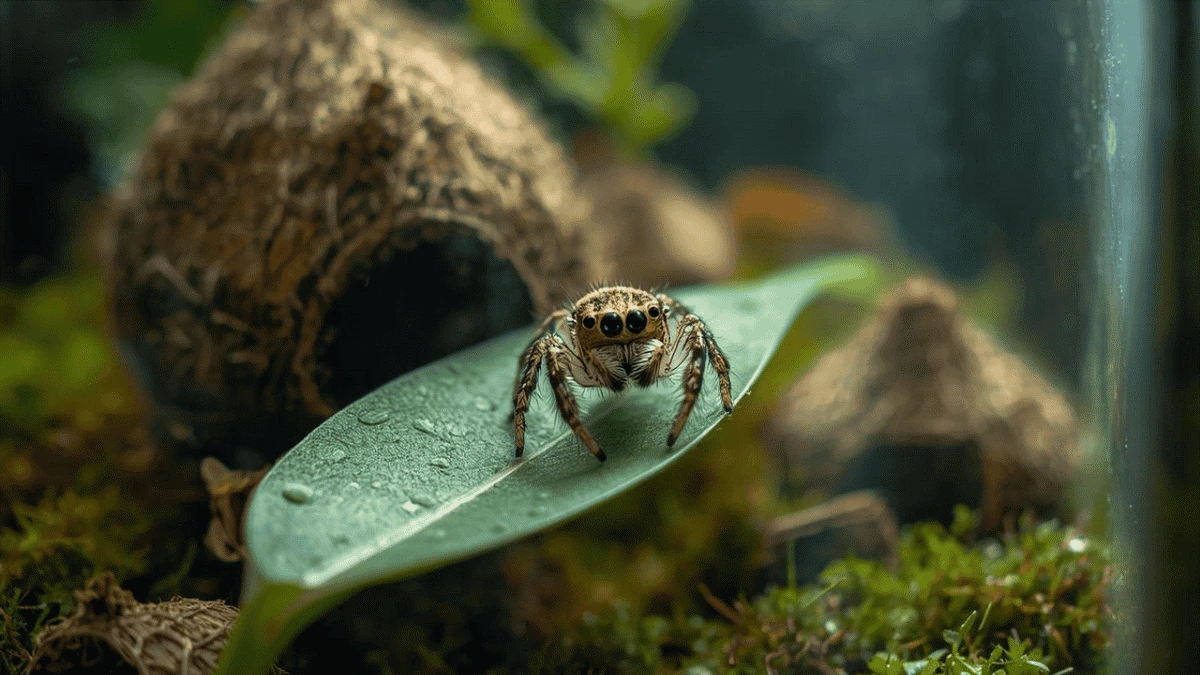
Baby Jumping Spider Care Guide for Healthy Growth
Baby jumping spider care is essential for ensuring strong growth, proper feeding habits, and long-term survival. In the USA, more hobbyists are now keeping these tiny arachnids as exotic pets due to their intelligence, curiosity, and unique hunting behavior. However, beginners often struggle with proper setup and feeding routines.
Additionally, many new owners underestimate how delicate spiderlings are in their early stages. Without the right environment, even minor mistakes can affect their health. Therefore, understanding the correct baby jumping spider care routine is the first step toward raising a healthy pet.
This guide will walk you through everything in a simple and practical way. For example, you will learn how to set up a safe enclosure, what to feed spiderlings, and how to maintain ideal humidity levels. As a result, you will be able to avoid common mistakes that lead to early mortality.
Moreover, proper baby jumping spider care is not just about feeding. It also includes monitoring behavior, supporting molting stages, and creating a stress-free habitat. In fact, experienced keepers in the USA emphasize consistency over complexity when it comes to spiderling care.
Throughout this article, you will also discover proven tips based on real hobbyist experience. Therefore, whether you are a beginner or an intermediate keeper, this guide will help you improve survival rates and growth performance.
- Learn correct feeding schedules for spiderlings
- Understand proper humidity and temperature balance
- Set up a safe and escape-proof enclosure
- Avoid common beginner mistakes in spider care
Ultimately, mastering baby jumping spider care will make your experience more enjoyable and successful. Let’s begin with understanding the basics of these fascinating tiny hunters.
Understanding Baby Jumping Spiders and Their Natural Behavior
Baby jumping spider care becomes much easier when you first understand their natural behavior. These tiny spiderlings are active hunters, known for their excellent vision and quick movement. In the USA, many hobbyists prefer them because they are fascinating to observe and relatively easy to manage compared to other exotic pets.
Additionally, baby jumping spiders are not web-dependent like many other species. Instead, they rely on their agility and intelligence to capture prey. Therefore, their behavior plays a major role in how you should set up their environment and feeding routine.
Spiderlings are significantly different from adult jumping spiders. For example, they are more sensitive to environmental changes and require stable humidity and temperature levels. As a result, even small mistakes in baby jumping spider care can affect their growth and survival.
Moreover, their curiosity is one of their most interesting traits. They often explore their enclosure, react to movement, and show hunting instincts from a very early stage. In fact, many USA-based keepers enjoy observing these behaviors as part of the experience.
On the other hand, baby jumping spiders can also be easily stressed. Sudden vibrations, improper handling, or poor enclosure conditions may cause them to stop feeding or hide for long periods. Therefore, a calm and controlled environment is essential.
- Highly visual hunters with strong eyesight
- Active and curious even at spiderling stage
- Do not rely on webs for hunting
- Require stable and low-stress environments
Understanding these behavioral traits helps improve baby jumping spider care significantly. Once you know how they naturally behave, you can design a habitat that supports their instincts instead of working against them.
Ideal Baby Jumping Spider Enclosure Setup for Safety and Comfort
Creating the right baby jumping spider enclosure is one of the most important parts of baby jumping spider care. A proper setup ensures safety, supports natural behavior, and prevents escape. In the USA, many keepers prefer simple and affordable enclosures that are easy to maintain.
First of all, size matters. Baby jumping spiders do not need large containers. In fact, smaller enclosures make it easier for them to find food. Therefore, using a small clear container or deli cup is often the best choice for beginners.
Additionally, ventilation plays a critical role. Without proper airflow, humidity can build up and lead to mold growth. As a result, always choose an enclosure with small air holes. However, the holes must be tiny enough to prevent spiderlings from escaping.
Moreover, the interior setup should remain minimal. Over-decorating can make feeding difficult and increase hiding spots. Instead, focus on a clean and functional layout that supports easy monitoring.
Essential Enclosure Setup Tips
- Use a small clear plastic container with secure lid
- Add tiny ventilation holes for airflow
- Include a small twig or surface for climbing
- Avoid large spaces that make hunting difficult
Substrate and Moisture Control
For substrate, many USA keepers use paper towel at the bottom. This makes cleaning easier and helps maintain hygiene. Additionally, lightly misting one side of the enclosure provides necessary moisture without over-humidifying the space.
On the other hand, too much moisture can be harmful. Excess humidity may lead to bacteria or mold growth. Therefore, always maintain a balanced environment with slight moisture rather than wet conditions.
Safety Considerations
Safety should always come first in baby jumping spider care. Make sure the enclosure is escape-proof, as spiderlings are extremely small and quick. Also, avoid using toxic materials or sharp objects inside the enclosure.
Overall, a well-designed baby jumping spider enclosure improves feeding success and reduces stress. As a result, your spiderling will grow faster and stay healthier in a controlled environment.
Temperature, Humidity, and Lighting for Healthy Spiderling Growth
Maintaining the right environmental conditions is a key part of baby jumping spider care. Temperature, humidity, and lighting directly affect feeding behavior, molting, and overall health. In the USA, indoor conditions usually work well, but small adjustments are often needed.
First, temperature should remain stable. Baby jumping spiders thrive in a range between 70°F and 80°F. Therefore, normal room temperature is usually ideal. However, avoid placing the enclosure near windows, air conditioners, or heaters, as sudden changes can cause stress.
Additionally, humidity plays an important role in hydration and molting. Light misting once a day is usually enough for most species. As a result, spiderlings can drink water droplets and stay properly hydrated without excess moisture buildup.
On the other hand, over-misting can be dangerous. Too much humidity may lead to mold or bacterial growth inside the baby jumping spider enclosure. Therefore, always keep one side slightly moist and the other dry to maintain balance.
Ideal Environmental Conditions
- Temperature: 70°F to 80°F for optimal growth
- Humidity: Light misting once daily
- Airflow: Proper ventilation to prevent mold
- Placement: Keep away from direct heat or cold drafts
Lighting Requirements
Lighting is also important in baby jumping spider care. These spiders rely on natural light cycles to stay active. Therefore, placing the enclosure in a well-lit room helps maintain their normal behavior.
For example, indirect sunlight works best. Avoid direct sunlight, as it can overheat the enclosure quickly. Additionally, artificial room lighting can support a consistent day and night cycle when natural light is limited.
Moreover, proper lighting encourages hunting activity. Spiderlings are more active during the day, so a bright environment helps them locate prey easily. In fact, many USA hobbyists report better feeding success with consistent lighting conditions.
Overall, stable temperature, controlled humidity, and proper lighting create a healthy environment. As a result, your spiderling will eat better, molt successfully, and grow without unnecessary stress.
What Do Baby Jumping Spiders Eat and How to Feed Them
Feeding is one of the most critical parts of baby jumping spider care. Many beginners often ask, what do baby jumping spiders eat, and how often should they be fed. Understanding the correct diet ensures proper growth and prevents common health issues.
Baby jumping spiders typically eat very small live prey. For example, flightless fruit flies are the most popular choice among USA keepers. These are easy to manage and perfectly sized for spiderlings. Additionally, pinhead crickets can also be used once the spider grows slightly larger.
However, prey size is extremely important. Food that is too large can stress or even injure your spiderling. Therefore, always choose prey that is smaller than the spider’s body size. This improves hunting success and reduces risk.
Best Food Options for Spiderlings
- Flightless fruit flies (Drosophila melanogaster)
- Fruit flies (Drosophila hydei) for slightly larger spiderlings
- Pinhead crickets (occasionally)
- Small soft-bodied insects
Feeding Schedule and Routine
Consistency is key in baby jumping spider care. Most spiderlings should be fed every 1 to 2 days. However, always observe their behavior before feeding. If the spider shows interest and actively hunts, it is ready to eat.
Additionally, remove uneaten prey after some time. This prevents stress and keeps the baby jumping spider enclosure clean. As a result, hygiene improves and the risk of contamination decreases.
Common Feeding Mistakes to Avoid
- Offering prey that is too large
- Overfeeding without observing behavior
- Leaving live prey inside for too long
- Ignoring hydration needs
Moreover, hydration is just as important as feeding. Light misting allows spiderlings to drink water droplets. In fact, many beginners overlook this simple step, which can lead to dehydration.
Overall, proper feeding is the foundation of successful baby jumping spider care. With the right diet and schedule, your spiderling will grow faster, stay active, and develop strong hunting skills.
Molting Process and Growth Stages in Baby Jumping Spider Care
The molting process is a crucial part of baby jumping spider care. Spiderlings grow by shedding their exoskeleton, which allows them to increase in size and develop properly. In the USA, experienced keepers closely monitor this stage because it directly affects survival and long-term health.
Additionally, molting happens several times as the spider grows. Each stage is called an instar. Therefore, understanding these growth stages helps you adjust feeding and environmental conditions accordingly.
Before molting, baby jumping spiders show clear behavioral changes. For example, they may stop eating, become less active, or hide in a corner of the enclosure. As a result, many beginners mistakenly think their spider is sick, when in fact it is preparing to molt.
Signs of an Upcoming Molt
- Reduced or no interest in food
- Decreased movement or hiding behavior
- Creation of a small silk retreat
- Slight dullness in body appearance
Care During Molting
Proper care during this stage is essential. Avoid disturbing the spider at all costs. Handling or stress can lead to failed molting, which is often fatal. Therefore, maintaining a calm environment is critical.
Additionally, humidity should be slightly increased during molting. Light misting helps soften the old exoskeleton, making it easier for the spider to shed. However, avoid over-misting, as excess moisture can still cause problems.
Post-Molt Care Tips
- Wait 2 to 3 days before feeding again
- Ensure the spider has fully hardened before interaction
- Keep enclosure clean and stable
- Monitor movement and activity levels
After molting, the spiderling will appear brighter and slightly larger. In fact, this is one of the most exciting stages for keepers, as visible growth occurs quickly. However, patience is important, as the spider is still fragile immediately after shedding.
Overall, understanding the molting cycle improves baby jumping spider care significantly. With proper support during this stage, your spiderling will grow stronger and transition smoothly through each development phase.
Handling and Behavior Tips for Stress-Free Interaction
Handling is often a concern for beginners learning baby jumping spider care. While these spiders are generally calm and curious, spiderlings are extremely delicate. Therefore, handling should be limited, especially during early growth stages.
Additionally, baby jumping spiders are naturally active and observant. They rely on vision and quick reflexes to explore their surroundings. As a result, sudden movements or forced interaction can cause stress and disrupt their behavior.
In the USA, experienced keepers usually recommend observing rather than handling. This allows the spiderling to feel safe while still giving you the chance to enjoy its natural behavior. In fact, watching their hunting skills is often more rewarding than physical interaction.
Should You Handle Baby Jumping Spiders?
In most cases, it is better to avoid handling spiderlings. However, occasional gentle interaction can be done once the spider grows stronger. Even then, it should be done carefully and in a controlled environment.
- Handle only when necessary
- Use slow and gentle movements
- Avoid handling during molting stages
- Never force the spider to move
Understanding Their Behavior
Understanding behavior is an important part of baby jumping spider care. These spiders often tilt their heads, track movement, and jump short distances. Therefore, providing a calm environment helps them feel secure.
On the other hand, signs of stress should not be ignored. For example, excessive hiding, refusal to eat, or erratic movement may indicate discomfort. As a result, you may need to adjust the enclosure or reduce interaction.
Creating a Low-Stress Environment
- Keep enclosure in a quiet area
- Avoid frequent disturbances
- Maintain consistent lighting and temperature
- Limit unnecessary handling
Moreover, trust builds over time. As your spiderling becomes familiar with its surroundings, it may become more active and confident. In fact, many keepers notice improved behavior when they reduce interference and focus on proper care.
Overall, gentle observation and minimal handling are key to successful baby jumping spider care. By respecting their natural instincts, you create a safer and healthier environment for growth.
Common Health Issues in Baby Jumping Spider Care and How to Prevent Them
Even with proper setup, problems can still occur in baby jumping spider care. However, most health issues are preventable with the right knowledge and routine. Therefore, understanding early warning signs can help you take quick action and improve survival rates.
One of the most common issues is dehydration. Baby jumping spiders are very small and can lose moisture quickly. As a result, lack of proper misting may lead to weakness or inactivity. Additionally, dehydration often causes a shriveled abdomen, which is a clear warning sign.
Another frequent problem is starvation. Beginners sometimes struggle with feeding schedules or prey size. For example, offering food that is too large may cause the spider to avoid eating. Therefore, choosing the correct prey is essential for healthy growth.
Common Health Problems
- Dehydration due to lack of moisture
- Starvation from improper feeding
- Mold growth inside the enclosure
- Failed molting due to low humidity or stress
Signs to Watch For
Early detection is important in baby jumping spider care. In many cases, spiders show subtle signs before serious problems occur. For instance, reduced activity or refusal to eat may indicate stress or environmental imbalance.
- Shriveled or small abdomen
- Lack of movement or hiding constantly
- Refusal to hunt prey
- Unusual posture or weakness
Prevention Tips for Better Health
Prevention is always easier than treatment. Therefore, maintaining a clean and stable environment is essential. Additionally, regular observation helps you understand your spider’s normal behavior and detect changes quickly.
- Mist lightly once a day for hydration
- Feed appropriate-sized prey regularly
- Clean enclosure to prevent mold buildup
- Maintain proper temperature and humidity
Moreover, avoid overhandling and sudden environmental changes. These factors can increase stress and lead to health issues. In fact, many USA hobbyists report that consistent care routines significantly reduce common problems.
Overall, successful baby jumping spider care depends on prevention and observation. By identifying issues early and maintaining proper conditions, you can ensure your spiderling stays active, healthy, and grows properly.
Advanced Care Tips for Faster Growth and Strong Development
Once you understand the basics of baby jumping spider care, you can move toward more advanced techniques. These methods help improve growth rate, feeding success, and overall health. In the USA, experienced keepers often use small adjustments to significantly enhance spiderling development.
Additionally, advanced care is not about complexity. Instead, it focuses on consistency and observation. Therefore, small improvements in feeding, enclosure setup, and monitoring can make a big difference over time.
Upgrade Feeding Strategy for Better Growth
As spiderlings grow, their nutritional needs also increase. For example, switching from tiny fruit flies to slightly larger prey supports faster development. However, prey size should still remain appropriate to avoid stress or injury.
- Gradually increase prey size as spider grows
- Offer variety for better nutrition balance
- Feed more frequently during active growth phases
Improve Baby Jumping Spider Enclosure Design
A well-optimized baby jumping spider enclosure plays a major role in long-term success. Therefore, adding small environmental upgrades can improve behavior and comfort. For instance, adding natural climbing surfaces helps mimic their wild habitat.
- Add thin branches or artificial plants for climbing
- Maintain clean and minimalistic setup
- Ensure easy access for feeding and observation
Monitor Growth and Behavior Changes
Careful monitoring is a key part of advanced baby jumping spider care. Additionally, tracking behavior helps you identify growth patterns and detect potential issues early. In fact, many USA keepers keep simple logs of feeding and molting stages.
- Record molting cycles and growth stages
- Observe feeding response regularly
- Watch for changes in activity levels
Environmental Stability for Long-Term Health
Consistency is more important than frequent changes. Therefore, avoid constantly adjusting temperature or humidity unless necessary. A stable environment reduces stress and supports healthy development.
Moreover, spiderlings thrive when their environment remains predictable. As a result, they become more active, better hunters, and more resilient during molting stages.
Overall, advanced baby jumping spider care focuses on refinement rather than change. By improving small details, you can significantly enhance growth speed and overall health of your spiderling.
Conclusion: Mastering Baby Jumping Spider Care for Long-Term Success
Successful baby jumping spider care is all about consistency, observation, and a safe environment. Throughout this guide, you have learned how to set up the right enclosure, maintain proper humidity, and understand feeding routines that support healthy growth.
Additionally, we explored how spiderlings behave, how they grow through molting stages, and how to prevent common health issues. Therefore, even beginners in the USA can confidently raise a healthy and active jumping spider with the right approach.
Moreover, the key to long-term success is not complicated techniques but simple daily care habits. For example, regular misting, proper feeding, and a clean enclosure can significantly improve survival rates. As a result, your spider will grow stronger and more active over time.
On the other hand, neglecting small details like humidity balance or prey size can lead to stress or health problems. Therefore, always observe your spider closely and adjust care when needed.
Ultimately, baby jumping spider care becomes enjoyable once you understand their natural behavior. In fact, many hobbyists find them one of the most fascinating pets due to their intelligence and hunting skills.
If you are ready to start or improve your spider-keeping journey, following these proven care techniques will help you achieve better results and a healthier spiderling.
Take action today and give your baby jumping spider the perfect environment to thrive and grow.
Frequently Asked Questions (FAQs)
1. What is the best baby jumping spider care routine?
The best routine includes proper feeding every 1–2 days, light misting for hydration, and maintaining a stable enclosure environment with good ventilation and temperature control.
2. What do baby jumping spiders eat daily?
They mainly eat small live prey like flightless fruit flies. As they grow, you can introduce slightly larger insects while ensuring prey size is always appropriate.
3. How do I set up a baby jumping spider enclosure?
Use a small, clear, ventilated container with minimal decoration. Add a climbing surface and maintain proper humidity with light misting.
4. How often should I feed baby jumping spiders?
Most spiderlings should be fed every 1 to 2 days depending on activity level and size. Always remove uneaten prey after a short time.
5. Why is my baby jumping spider not eating?
This is often due to molting, stress, or improper temperature. Check environmental conditions and avoid disturbing the spider during this period.
6. How long does it take a baby jumping spider to grow?
Growth depends on species and care conditions, but with proper feeding and care, they go through multiple instars over several weeks to months.
7. Can I handle my baby jumping spider safely?
Handling is not recommended for spiderlings because they are very delicate. Observation is safer and less stressful for their development.
