
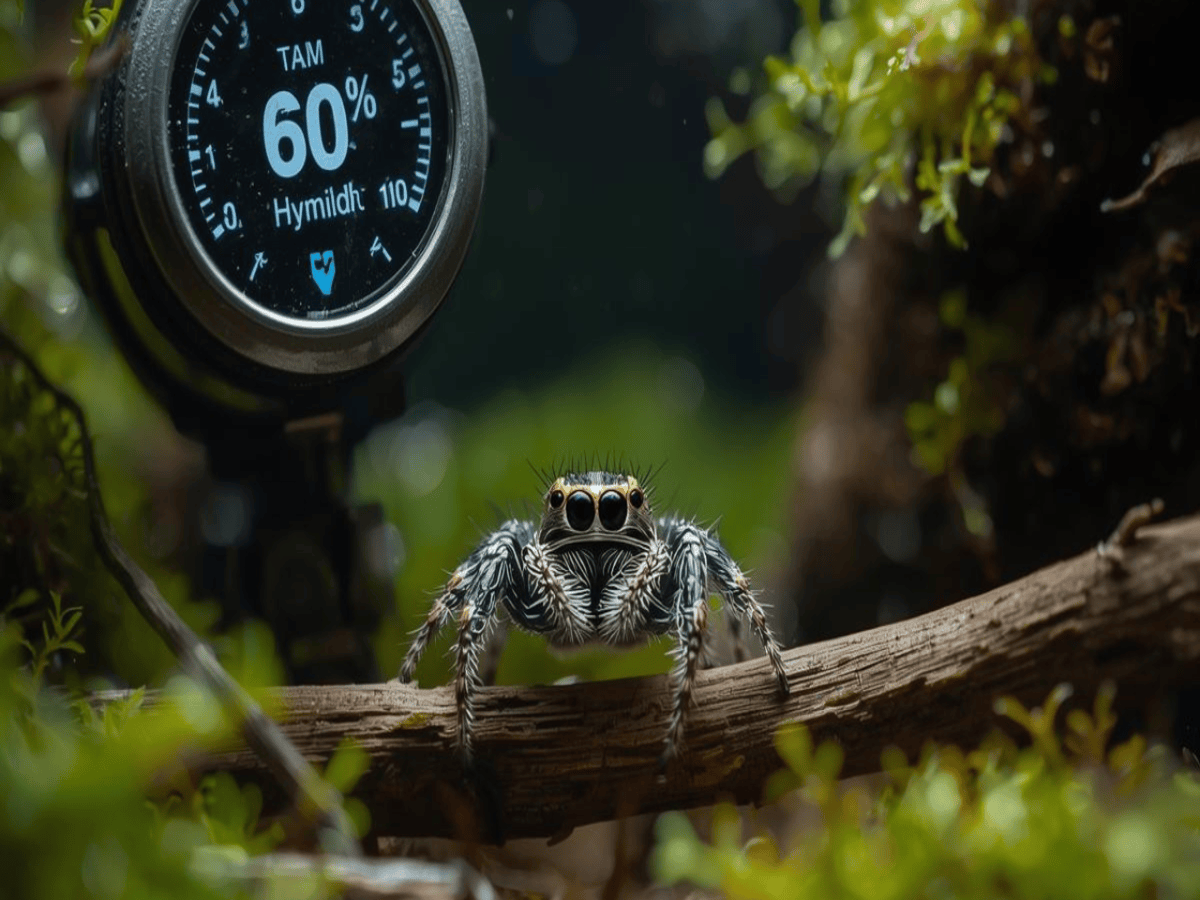
Introduction to Jumping Spider Humidity and Care Needs
Understanding Jumping Spider Humidity is essential for keeping your pet spider healthy, active, and stress-free. In fact, humidity directly affects hydration, molting, and overall behavior. Additionally, many USA-based pet owners often struggle with maintaining the right enclosure conditions.
Therefore, learning the correct humidity range is a key part of proper spider care. However, both low and high humidity levels can cause health problems if not managed correctly.
In fact, species like the regal jumping spider are especially sensitive to environmental conditions. As a result, stable humidity and temperature are more important than extreme changes.
Why Humidity Matters for Jumping Spiders
Additionally, jumping spiders rely on moisture in their environment to stay hydrated and complete molting successfully. Therefore, poor humidity levels can affect their survival.
- Supports proper hydration and health
- Helps successful molting process
- Maintains energy and activity levels
- Prevents dehydration stress
Next, we will explore the ideal humidity range for different jumping spider species.
What is the Ideal Jumping Spider Humidity Level?
Maintaining correct Jumping Spider Humidity is one of the most important parts of spider care. In fact, most jumping spiders thrive in a moderate humidity range. Additionally, stability is more important than sudden changes in moisture levels.
Therefore, beginners in the USA should aim for a balanced enclosure environment. However, different species like the regal jumping spider may have slightly different needs.
Recommended Humidity Range
For example, most jumping spiders do best in a controlled humidity level that is neither too dry nor too wet. As a result, their health and behavior remain stable.
- General jumping spiders: 50% to 65% humidity
- Regal jumping spider: 60% to 70% humidity
- Juveniles: slightly higher humidity for safe molting
- Adults: stable moderate humidity preferred
In fact, consistency is more important than hitting an exact number every time.
Regal Jumping Spider Temp and Humidity Balance
On the other hand, temperature also plays a key role. Therefore, humidity and heat must work together for a healthy enclosure.
- Temperature: 22°C to 28°C (72°F to 82°F)
- Humidity: 60% to 70%
- Avoid sudden spikes in moisture
- Ensure proper ventilation at all times
Additionally, improper balance can lead to stress or reduced activity in spiders.
Next, we will look at signs of low humidity and how to identify dehydration in jumping spiders.
Signs of Low Jumping Spider Humidity
Low Jumping Spider Humidity can quickly affect your spider’s health and behavior. In fact, dehydration is one of the most common issues in captive care. Additionally, it often happens when enclosures are too dry or not misted properly.
Therefore, recognizing early warning signs is very important for prevention. However, many beginners confuse normal behavior with stress symptoms.
Common Symptoms of Low Humidity
For example, a dehydrated jumping spider will show clear behavioral changes. As a result, you may notice reduced activity and weak movement.
- Less active or slow movement
- Reduced hunting response
- Wrinkled or dull abdomen
- Hiding more than usual
In fact, these signs usually appear when humidity stays below the required range for several days.
Dehydration Risks in Jumping Spiders
On the other hand, long-term low humidity can lead to serious health issues. Therefore, immediate correction is necessary.
- Difficulty during molting
- Weak immune response
- Loss of energy and alertness
- Increased stress behavior
Additionally, younger spiders are more sensitive and require closer monitoring of moisture levels.
Next, we will explore the dangers of high humidity and how it can affect spider health.
Problems Caused by High Jumping Spider Humidity
Too much Jumping Spider Humidity can be just as harmful as low humidity. In fact, excessive moisture creates an unhealthy enclosure environment. Additionally, it increases the risk of mold, bacteria, and stress in spiders.
Therefore, maintaining balance is essential for long-term health. However, many beginners in the USA over-mist the enclosure thinking it is helpful.
Signs of High Humidity Issues
For example, a spider exposed to too much moisture may start showing stress-related behavior. As a result, activity levels often drop.
- Constant hiding and inactivity
- Foggy or wet enclosure walls
- Mold growth inside the habitat
- Reduced feeding response
In fact, excessive humidity can make the environment unsafe over time.
Health Risks of Excess Moisture
On the other hand, long-term high humidity creates serious health concerns. Therefore, proper ventilation becomes extremely important.
- Respiratory stress in spiders
- Fungal and bacterial growth
- Contaminated substrate conditions
- Molting complications
Additionally, poor airflow combined with high humidity increases risk even more.
Next, we will explain how to properly maintain balanced humidity in a jumping spider enclosure.
How to Maintain Perfect Jumping Spider Humidity
Maintaining stable Jumping Spider Humidity is essential for long-term health and activity. In fact, a balanced setup prevents both dehydration and excess moisture problems. Additionally, proper enclosure design makes humidity control much easier for beginners in the USA.
Therefore, using simple tools and daily monitoring can keep conditions stable. However, overcomplicating the setup is not necessary if you follow basic care rules.
Simple Methods to Control Humidity
For example, light misting and proper ventilation can maintain the ideal environment. As a result, spiders stay active and stress-free.
- Mist enclosure lightly 1–2 times per day
- Use a small digital hygrometer
- Provide ventilation holes for airflow
- Use absorbent but safe substrate
In fact, monitoring is more important than constant misting.
Best Practices for Stable Environment
On the other hand, consistency plays a key role in spider care. Therefore, sudden changes in humidity should always be avoided.
- Keep enclosure away from direct sunlight
- Avoid sealing enclosure completely
- Maintain room temperature stability
- Check humidity levels daily
Additionally, species like the regal jumping spider may require slightly higher moisture but still need airflow.
Next, we will compare proper vs improper humidity setups to understand their impact on spider health.
Proper vs Improper Jumping Spider Humidity Setup
Understanding Jumping Spider Humidity becomes easier when you compare a healthy setup with a poor one. In fact, enclosure design directly affects airflow, moisture balance, and spider behavior. Additionally, small mistakes can quickly lead to stress or health issues.
Therefore, knowing what works and what does not is essential for beginners. However, many USA pet owners only realize these differences after problems appear.
Comparison of Ideal vs Poor Humidity Setup
For example, a well-balanced enclosure maintains stable moisture with proper ventilation. As a result, spiders stay active and healthy.
| Factor | Proper Setup | Improper Setup |
|---|---|---|
| Humidity Level | Stable 50%–70% | Too dry or too wet |
| Ventilation | Good airflow | Poor or no airflow |
| Behavior | Active hunting | Lethargic or hiding |
| Enclosure Condition | Clean and dry | Mold or condensation |
Why Proper Balance Matters
In fact, stability is more important than extreme conditions. Therefore, small daily care habits make a big difference in spider health.
- Prevents dehydration and stress
- Reduces mold and bacteria growth
- Supports natural hunting behavior
- Improves lifespan and activity
Additionally, maintaining balance ensures your spider behaves naturally and stays stress-free in captivity.
Next, we will cover common mistakes beginners make with humidity control.
Common Mistakes in Jumping Spider Humidity Control
Managing Jumping Spider Humidity may look simple, but small mistakes can quickly affect your spider’s health. In fact, most beginner issues come from overwatering or ignoring airflow. Additionally, inconsistent care often creates unstable enclosure conditions.
Therefore, learning what to avoid is just as important as knowing the correct setup. However, these mistakes are easy to fix once you understand them.
Most Common Beginner Mistakes
For example, many owners in the USA over-mist the enclosure thinking it improves hydration. As a result, humidity becomes too high and unsafe.
- Over misting the enclosure daily
- Ignoring ventilation holes
- Not checking humidity levels
- Using sealed containers
In fact, even one of these mistakes can disrupt the entire habitat balance.
Effects of Poor Humidity Management
On the other hand, poor humidity control leads to visible stress in spiders. Therefore, early correction is very important.
- Reduced activity and hunting behavior
- Stress-related hiding
- Molting difficulties
- Mold growth inside enclosure
Additionally, younger spiders are more sensitive and may show symptoms faster than adults.
Next, we will summarize key takeaways and provide a final care guide for maintaining perfect humidity levels.
Conclusion: Maintaining the Right Jumping Spider Humidity
Maintaining correct Jumping Spider Humidity is one of the most important parts of successful spider care. In fact, stable environmental conditions directly improve health, behavior, and lifespan. Additionally, a simple routine can prevent most common problems.
Therefore, consistency is more important than perfection. However, ignoring humidity levels can quickly lead to stress or dehydration in your spider.
Key Takeaways for Better Care
For example, a balanced enclosure with proper airflow and light misting creates an ideal habitat. As a result, your spider remains active and healthy.
- Keep humidity between 50%–70%
- Ensure proper ventilation at all times
- Avoid over misting or sealed enclosures
- Monitor conditions daily with a hygrometer
In fact, small daily care habits are enough to maintain long-term stability.
Final Care Advice
On the other hand, species like the regal jumping spider may require slightly adjusted conditions. Therefore, always observe your spider’s behavior closely.
Additionally, a healthy spider will show active hunting, smooth movement, and regular feeding response. If these signs are missing, reassess humidity and airflow immediately.
As a result, proper care ensures your jumping spider thrives in captivity with minimal stress.
Frequently Asked Questions (FAQs)
1. What is the ideal jumping spider humidity level?
Most jumping spiders thrive in 50% to 70% humidity, depending on species and age.
2. Can jumping spiders survive low humidity?
Short-term low humidity is tolerable, but long-term dryness can cause dehydration and stress.
3. What happens if humidity is too high?
High humidity can lead to mold growth, stress, and breathing issues in the enclosure.
4. Do regal jumping spiders need higher humidity?
Yes, regal jumping spiders prefer slightly higher humidity around 60% to 70%.
5. How often should I mist a jumping spider enclosure?
Light misting once or twice daily is usually enough, depending on enclosure size and airflow.
6. What is the best way to measure humidity?
A digital hygrometer is the most accurate and recommended tool for monitoring humidity.
7. Can poor humidity affect molting?
Yes, incorrect humidity can cause molting problems and increase risk of injury or stress.
