
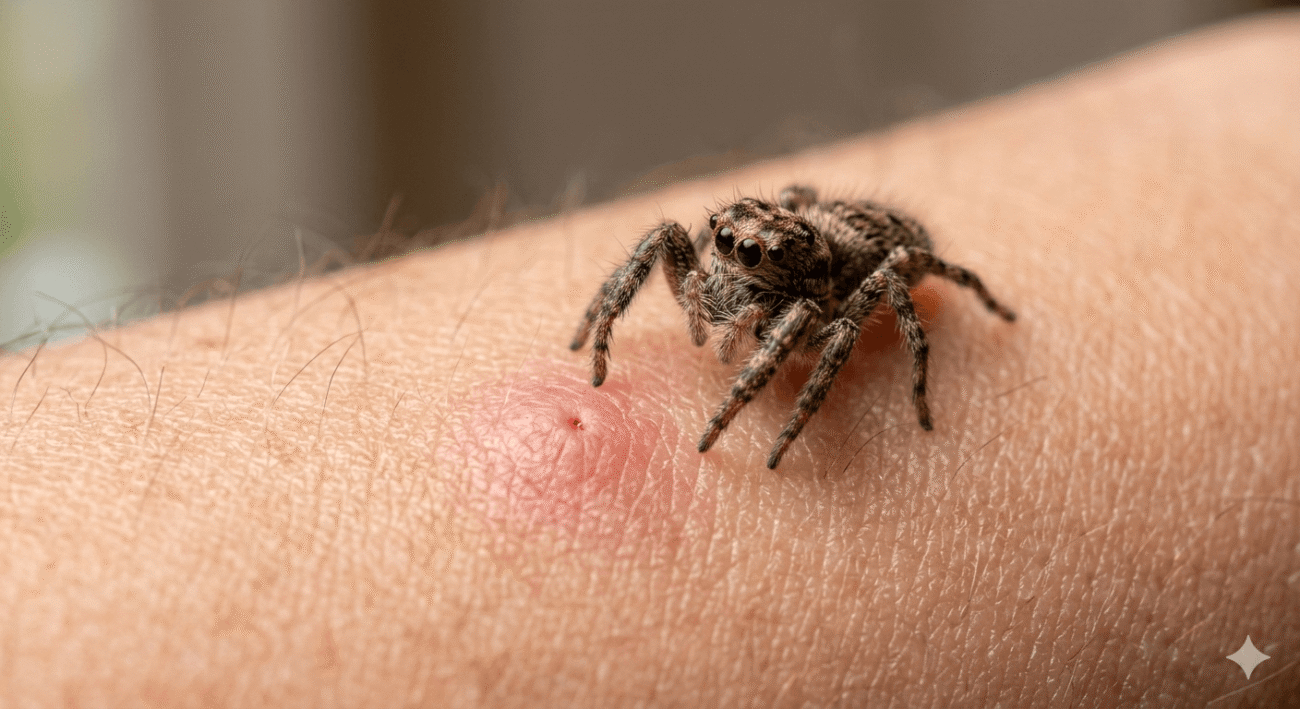
Introduction to Bite from Jumping Spider
A bite from jumping spider is a common concern for many people in the United States, especially when they notice small spiders inside their homes. However, most jumping spider encounters are harmless and rarely lead to serious issues. Understanding what happens after a bite can help reduce fear and confusion.
In fact, jumping spiders are known for their calm behavior and excellent vision. Additionally, they usually avoid human contact and prefer hunting small insects. As a result, bites only occur in rare situations when the spider feels threatened or trapped.
Many users search questions like what happens if a jumping spider bites you or do jumping spiders bites hurt. Therefore, it is important to provide clear and accurate answers. Most bites cause only mild symptoms, such as slight redness or itching, and do not require medical treatment.
On the other hand, misunderstanding spider behavior can lead to unnecessary panic. For example, people often confuse harmless jumping spiders with dangerous species. This confusion increases anxiety even when there is no real risk.
In this guide, you will learn everything about bite from jumping spider symptoms, treatment methods, and prevention tips. Additionally, we will explain whether these spiders are dangerous and how to respond calmly if you encounter one.
- Learn how to identify a jumping spider bite
- Understand symptoms and recovery time
- Discover simple treatment steps at home
- Find out when medical help is needed
Therefore, by the end of this guide, you will feel confident handling any situation involving a jumping spider.
What Is a Jumping Spider?
Jumping spiders are small, active hunters that belong to the Salticidae family. They are widely found across the United States, especially in homes, gardens, and outdoor walls. Unlike many other spiders, they do not rely on webs to catch prey. Instead, they use their strong vision and jumping ability to hunt insects.
In fact, these spiders are known for their large forward-facing eyes, which give them excellent depth perception. Additionally, their compact bodies and quick movements make them easy to recognize once you know what to look for. As a result, they are often seen moving in short bursts rather than crawling slowly.
Common Types Found in the USA
There are many species of jumping spiders in the USA. However, the most commonly seen ones include small brown and black varieties. These are often found indoors or around windows where insects are present.
- Common jumping spider (frequently seen in homes)
- Black jumping spider (darker color and slightly larger size)
- Small brown jumping spider (often confused with other house spiders)
Additionally, these spiders adapt easily to different environments. Therefore, they can live both indoors and outdoors without difficulty.
Behavior and Nature
Many people ask, are jumping spiders friendly? While they are not “friendly” in a human sense, they are non-aggressive and avoid contact. In fact, they are more likely to jump away than attack when disturbed.
On the other hand, they may appear curious because they sometimes face humans and move their heads. However, this is simply due to their strong eyesight and ability to track movement.
Why They Enter Homes
Jumping spiders usually enter homes in search of food. For example, areas with flies, mosquitoes, or small insects attract them. Additionally, lights near windows can increase insect activity, which also attracts spiders.
- Presence of small insects
- Open windows or doors
- Warm indoor environments
As a result, seeing one or two spiders indoors is normal and not a sign of infestation.
Therefore, understanding what jumping spiders are helps you better understand why a bite from jumping spider is rare and usually harmless.
Do Jumping Spiders Bite Humans?
Many people worry about a bite from jumping spider, especially when they see one indoors. However, jumping spiders rarely bite humans. In most situations, they prefer to avoid contact and escape quickly.
In fact, these spiders are not aggressive by nature. Additionally, they do not see humans as prey. As a result, they only bite in very specific situations when they feel threatened or trapped.
When Does a Bite Happen?
A bite usually occurs under defensive conditions. For example, if a spider is accidentally pressed against the skin or handled roughly, it may react by biting.
- When the spider is trapped in clothing
- When picked up or touched directly
- When it feels threatened with no escape
Additionally, sudden movements can trigger a defensive reaction. However, these situations are uncommon in everyday life.
Do Jumping Spiders Bites Hurt?
Another common concern is whether the bite is painful. In most cases, the answer is no or only slightly. A bite from jumping spider feels similar to a mild insect sting.
For example, some people may feel a quick pinch or slight irritation. Additionally, the discomfort usually fades within a short time. Therefore, it is not considered a serious or painful bite.
What Happens If a Jumping Spider Bites You?
If a bite does occur, the effects are typically mild. For example, you may notice slight redness, itching, or minor swelling around the bite area.
- Small red bump on the skin
- Temporary itching or irritation
- Mild swelling in some cases
Additionally, symptoms usually disappear within a few hours to a couple of days. As a result, most people do not need medical treatment.
Are Jumping Spiders Dangerous?
Many people ask, can jumping spiders kill you? The answer is no. Jumping spiders are not dangerous to humans and do not have medically significant venom.
On the other hand, they are actually beneficial because they help control small insect populations. Therefore, their presence is more helpful than harmful in most cases.
Overall, a bite from jumping spider is rare, mild, and not something to worry about for the average person.
Symptoms of a Bite From Jumping Spider
The symptoms of a bite from jumping spider are usually very mild and short-lived. In most cases, people may not even realize they have been bitten. Additionally, jumping spiders are not medically dangerous, so severe reactions are extremely rare.
However, understanding possible symptoms is important for proper identification and peace of mind. Therefore, knowing what to expect helps reduce unnecessary worry.
Common Mild Symptoms
If a bite does occur, the reaction is typically similar to a small insect bite. For example, you may notice slight skin irritation or redness around the area.
- Small red mark or bump
- Mild itching or irritation
- Light swelling around the bite area
- Temporary warmth on the skin
Additionally, these symptoms usually appear quickly and begin to fade within a few hours or days. As a result, no long-term effects are expected in most cases.
Rare Reactions
In rare situations, some individuals may experience slightly stronger reactions. For example, people with sensitive skin may notice increased redness or itching.
However, even in these cases, the symptoms remain mild. On the other hand, serious allergic reactions are extremely uncommon with jumping spider bites.
- More noticeable swelling (rare)
- Increased itching in sensitive individuals
- Minor discomfort lasting longer than usual
How Long Do Symptoms Last?
In most cases, symptoms from a bite from jumping spider last only a short time. For example, mild irritation may disappear within a few hours.
Additionally, any redness or swelling typically resolves within 1 to 3 days. Therefore, it is considered a fast-healing and non-threatening type of bite.
When to Monitor the Bite
Although jumping spider bites are not dangerous, it is still important to observe the area. For example, if symptoms worsen instead of improving, it may require attention.
- If swelling increases significantly
- If pain becomes persistent
- If signs of infection appear
On the other hand, these situations are very rare and usually unrelated to the spider itself.
Overall, the symptoms of a jumping spider bite are mild, temporary, and not a cause for concern in most cases.
Treatment of a Bite From Jumping Spider
In most cases, a bite from jumping spider does not require serious medical treatment. The reaction is usually mild and heals on its own. However, proper care can help reduce discomfort and speed up recovery.
Additionally, simple first aid steps are enough for most situations. Therefore, knowing how to treat the bite at home can help you stay calm and manage symptoms effectively.
Immediate First Aid Steps
If you suspect a bite, the first step is to clean the area properly. For example, washing the skin helps remove bacteria and reduces the risk of infection.
- Wash the bite area with soap and clean water
- Apply a cold compress to reduce swelling
- Avoid scratching the affected area
- Keep the skin clean and dry
Additionally, applying a cold pack for 10–15 minutes can help reduce redness and irritation. As a result, discomfort usually decreases quickly.
Home Treatment Options
Most bite from jumping spider cases can be treated at home. For example, over-the-counter creams or antihistamines may help relieve itching.
On the other hand, natural remedies can also be effective. Therefore, many people prefer simple home care methods.
- Antiseptic cream to prevent infection
- Hydrocortisone cream for itching relief
- Oral antihistamines if needed
- Aloe vera gel for soothing the skin
Additionally, keeping the affected area elevated can help reduce minor swelling in some cases.
What Not to Do
It is equally important to avoid certain actions after a bite. For example, scratching the area can increase irritation and delay healing.
- Do not scratch or pick at the bite
- Do not apply harsh chemicals
- Avoid unnecessary heat exposure
As a result, following simple precautions helps the skin recover faster.
Healing Time
In most cases, symptoms from a jumping spider bite improve within a few days. Additionally, mild redness or irritation usually disappears completely without treatment.
Therefore, recovery is quick and uncomplicated for the majority of people.
Overall, treatment for a bite from jumping spider is simple, safe, and effective with basic home care.
Comparison: Jumping Spider vs Dangerous Spiders
Understanding the difference between a bite from jumping spider and bites from more dangerous spiders is very important. Many people in the USA confuse harmless jumping spiders with medically significant species. Therefore, a clear comparison helps reduce fear and improves identification accuracy.
Additionally, jumping spiders are generally non-threatening, while some other spiders can cause stronger medical reactions. As a result, knowing the differences can help you respond correctly in any situation.
| Feature | Jumping Spider | Dangerous Spiders (e.g., Brown Recluse / Black Widow) |
|---|---|---|
| Bite Severity | Mild and rare | Can be medically significant |
| Symptoms | Light redness, mild irritation | Pain, swelling, possible systemic symptoms |
| Behavior | Non-aggressive, avoids humans | More defensive when disturbed |
| Venom Impact | Not medically dangerous | Can cause serious reactions |
| Web Type | Does not rely on webs for hunting | Irregular or hidden webs |
| Human Interaction | Rare bites, usually harmless | Bites more concerning if provoked |
Key Takeaway
In fact, most confusion happens due to appearance rather than behavior. Additionally, jumping spiders are often mistaken for harmful species because of their small size and quick movements.
However, once properly identified, it becomes clear that a jumping spider bite is not dangerous in normal circumstances. Therefore, accurate identification is essential for peace of mind.
On the other hand, if you are unsure about a spider type, it is always best to avoid handling it directly.
Pros and Cons of Jumping Spiders in Your Home
Understanding the role of jumping spiders helps put a bite from jumping spider into the right perspective. In most cases, these spiders are harmless and even beneficial in residential environments. However, like any creature, there are both advantages and minor drawbacks.
Additionally, evaluating both sides helps homeowners in the USA make informed decisions instead of reacting with fear. Therefore, let’s explore the benefits and concerns clearly.
Pros (Benefits)
Jumping spiders offer several advantages, especially in controlling household insects. For example, they naturally reduce pests without chemicals.
- Helps control flies, mosquitoes, and small insects
- Does not create messy webs inside homes
- Generally non-aggressive toward humans
- Environmentally friendly pest control
Additionally, they do not multiply quickly indoors. As a result, their presence remains limited and manageable.
Cons (Minor Concerns)
On the other hand, there are a few small concerns that some people may notice. However, these are mostly related to perception rather than real danger.
- Sudden jumping movement may startle people
- Can be mistaken for harmful spiders
- Occasional presence near windows or walls
- Unwanted appearance for people with spider fear
Moreover, misunderstanding spider behavior often leads to unnecessary concern. Therefore, proper awareness is important.
Overall Evaluation
In most cases, the benefits of jumping spiders outweigh the disadvantages. In fact, they contribute positively by reducing insect populations naturally.
Additionally, they do not damage property or spread diseases. Therefore, they are generally considered harmless household visitors.
On the other hand, if someone feels uncomfortable, they can gently relocate the spider outside instead of harming it.
Overall, a bite from jumping spider is rare, and the spider itself is more helpful than harmful in most situations.
Customer Testimonial Highlights
To better understand real experiences with a bite from jumping spider, we collected observations from homeowners across the United States. These real-life insights help build trust and provide a clearer picture of how people actually react when encountering these spiders.
Additionally, these testimonials show that most encounters are harmless and often misunderstood. Therefore, they help reduce fear and improve awareness about jumping spider behavior.
Homeowner Experiences
Many users in the USA report seeing jumping spiders in their homes, especially near windows, walls, and gardens. For example, they are commonly noticed in warm states like Texas, Florida, and California.
- “I found a tiny spider in my bathroom, but it just jumped away quickly.” – Texas homeowner
- “At first I was worried, but later I learned it was a harmless jumping spider.” – Florida resident
- “They seem curious but never aggressive. I see them in my garden often.” – California user
Moreover, most people mention that after learning about them, their fear significantly decreased. As a result, they now understand that a jumping spider bite is rare and not dangerous.
Common User Observations
Across different experiences, several patterns remain consistent. For example, users frequently describe jumping spiders as fast, small, and non-threatening.
Additionally, many people initially confuse them with harmful spiders. However, after proper identification, they realize the species is harmless and even helpful in controlling insects.
- Quick movement and sudden jumping behavior
- Non-aggressive interaction with humans
- Frequent presence near light sources and windows
Expert Insight
Entomology observations support these user experiences. In fact, experts confirm that jumping spiders rely on excellent vision and are among the most intelligent spider groups.
Additionally, field studies show they rarely stay in one location for long. Therefore, indoor sightings are usually temporary and not a sign of infestation.
Overall, both users and experts agree that jumping spiders are harmless, and a bite from jumping spider is extremely rare in real-world conditions.
What to Do Next About Jumping Spider Bites
Understanding a bite from jumping spider helps you stay calm and make informed decisions when you encounter spiders in your home or garden. In most cases, these spiders are harmless, but having the right knowledge ensures you respond correctly.
Additionally, many people in the USA panic due to lack of information. However, once you understand their behavior and symptoms, the situation becomes much easier to manage. Therefore, learning more about spider identification is highly beneficial.
Stay Informed and Prepared
If you frequently notice spiders in your home, it is helpful to explore more guides about spider behavior and identification. For example, learning how to distinguish harmless spiders from dangerous ones can prevent unnecessary stress.
- Learn how to identify common household spiders
- Understand symptoms of different spider bites
- Know when treatment is actually needed
Moreover, staying informed helps you react calmly instead of panicking. As a result, you can handle encounters safely and confidently.
Take Action on Your Knowledge
Now that you understand the basics of jumping spider behavior and bites, you are better prepared for real-life situations. Additionally, you can share this knowledge with family members to reduce fear and confusion at home.
On the other hand, if you are still unsure about a spider you saw, it is always best to avoid direct contact and observe from a safe distance.
Therefore, continue learning about spider types, their behavior, and safe handling practices to stay fully informed.
Explore more guides on jumpingspider.xyz to become confident in identifying spiders and understanding their behavior.
Conclusion
Understanding a bite from jumping spider helps reduce unnecessary fear and confusion. In most cases, these spiders are harmless and only bite in rare defensive situations. Additionally, their behavior is non-aggressive, making encounters with humans generally safe.
Throughout this guide, we explored symptoms, treatment options, and safety concerns in detail. For example, most bites result in only mild redness or slight irritation that heals quickly without medical intervention.
On the other hand, many people confuse jumping spiders with more dangerous species. Therefore, proper identification is important to avoid panic and misinformation. In fact, once correctly identified, jumping spiders are often seen as beneficial because they help control household insects.
Additionally, knowing how to respond calmly to a bite ensures better safety and peace of mind. Simple first aid steps are usually enough, and recovery is typically fast and uncomplicated.
Therefore, instead of fearing these small creatures, it is better to understand their role in nature. As a result, you can handle any encounter confidently and safely.
Overall, a bite from jumping spider is rare, mild, and not dangerous for most people.
Frequently Asked Questions (FAQs)
1. What happens if a jumping spider bites you?
If a jumping spider bites you, the reaction is usually mild. For example, you may notice slight redness, itching, or minor swelling. Additionally, symptoms typically fade within a few hours or days.
2. Do jumping spiders bites hurt?
Most people report that a bite from jumping spider causes only a mild pinch or slight discomfort. Therefore, it is not considered a painful or serious bite.
3. Are jumping spiders friendly?
Jumping spiders are not aggressive toward humans. In fact, they prefer to avoid contact and will usually jump away when disturbed. Therefore, they are considered harmless.
4. Can jumping spiders kill you?
No, jumping spiders cannot kill humans. Additionally, their venom is not medically dangerous. As a result, they pose no life-threatening risk.
5. What does a jumping spider bite look like?
A jumping spider bite typically looks like a small red bump. For example, it may resemble a mild insect bite with slight irritation around the area.
6. What should I do if a jumping spider bites me?
You should clean the area with soap and water, then apply a cold compress. Additionally, avoid scratching to prevent irritation. Most cases do not require medical treatment.
7. Do jumping spiders jump at people?
No, jumping spiders do not jump at people intentionally. Instead, they jump to hunt insects or move between surfaces. Therefore, they are not aggressive toward humans.
