
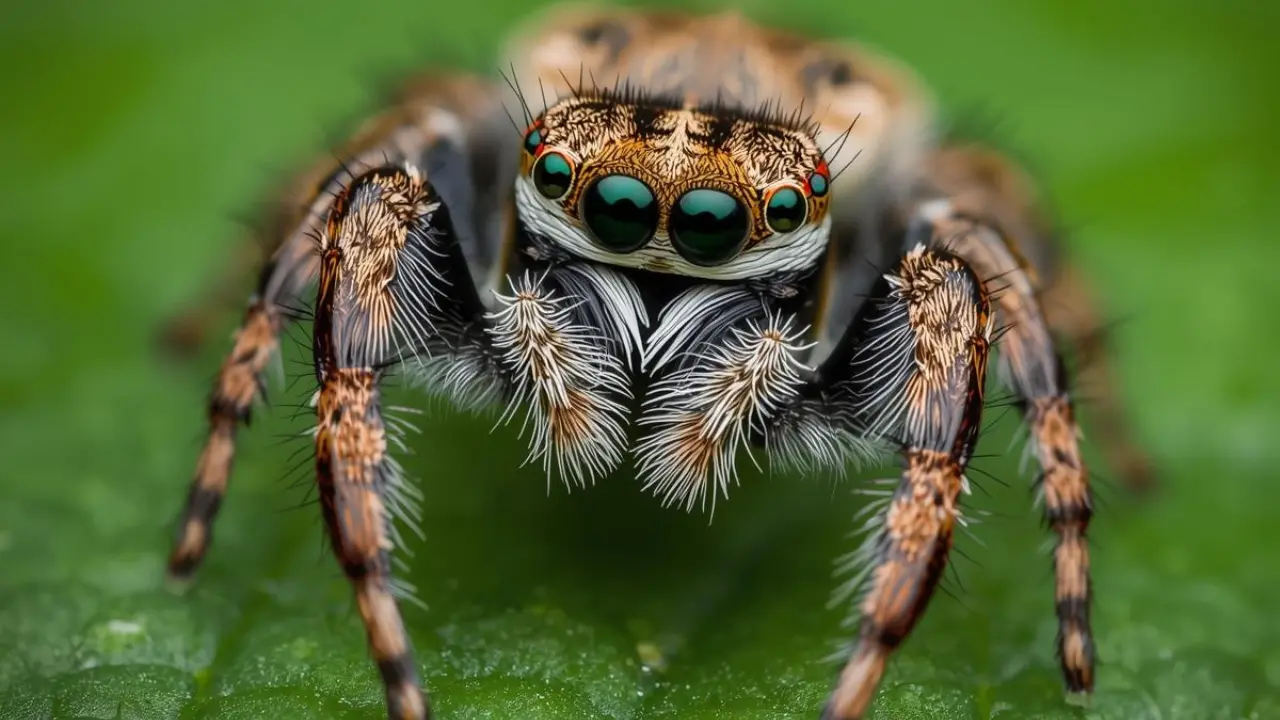
Introduction to Jumping Spider Legs
Jumping Spider Legs are one of the most advanced natural movement systems found in arachnids. In fact, these legs are not just for walking but are powerful biological tools used for hunting, balancing, and precise jumping. In the USA, jumping spiders are commonly observed in gardens, walls, and outdoor plants, where their movement instantly catches attention.
Additionally, these spiders rely heavily on their legs to survive. Unlike web-building species, they depend on speed and accuracy. Therefore, their legs are designed for explosive movement and fine control at the same time.
Moreover, understanding Jumping Spider Legs helps explain how such a small creature can hunt prey larger than itself. As a result, scientists often study their biomechanics for inspiration in robotics and engineering.
In this guide, we will explore their anatomy, movement system, hunting ability, and real-world behavior. Additionally, we will compare them with other spider species to highlight what makes them truly unique in nature.
Anatomy and Structure of Jumping Spider Legs
The structure of Jumping Spider Legs is highly specialized. Each leg is divided into segments that work together for stability and speed. In fact, this structure allows them to move in multiple directions without losing balance.
Additionally, these legs contain muscles and hydraulic pressure systems. Therefore, movement is not only muscular but also pressure-assisted. This combination gives them extreme precision and power.
Key Structural Features
- Segmented leg design for flexibility
- Hydraulic pressure for extension and jumping
- Strong joints for rapid direction changes
- Fine sensory hairs for environmental detection
Moreover, front legs are often used for sensing and communication. On the other hand, rear legs are responsible for propulsion during jumps. As a result, each pair of legs has a specialized function.
In fact, this division of labor makes Jumping Spider Legs more efficient compared to many other arachnids. Therefore, they can react quickly to prey movement and environmental changes.
How Structure Supports Survival
Because of their structure, jumping spiders can survive in complex environments such as gardens, forests, and human-made spaces. Additionally, their legs allow them to climb smooth surfaces with ease.
Therefore, even vertical walls and glass surfaces do not stop their movement. As a result, they are highly adaptable hunters in both urban and natural ecosystems.
Amazing Jumping Spider Legs Movement System
The movement system of Jumping Spider Legs is one of the most efficient biological designs in nature. In fact, these spiders do not simply walk or crawl like ordinary arachnids. Instead, they use a combination of vision, muscle control, and hydraulic pressure to move with extreme precision.
Additionally, their movement is highly calculated. Therefore, every step or jump is based on accurate distance estimation. As a result, they rarely miss their target when hunting in real-world environments such as gardens and outdoor walls in the USA.
How Movement Is Controlled
Jumping spiders rely on a unique coordination system between their brain and legs. For example, their front eyes calculate distance while the legs prepare for motion. Moreover, the body stores energy before release, creating a powerful burst of movement.
- Vision-based distance calculation
- Hydraulic leg extension for jumping
- Muscle coordination for stability
- Silk thread safety anchoring during jumps
Additionally, they often attach a silk thread before jumping. Therefore, even if a jump fails, they can climb back safely. This behavior is especially useful in unpredictable outdoor environments.
Precision in Jump Execution
The precision of Jumping Spider Legs is remarkable. In fact, they can adjust their jump mid-action depending on target movement. As a result, they appear extremely intelligent compared to other small insects and spiders.
Moreover, their legs store and release energy like a spring system. Therefore, they can jump multiple times their body length without losing control.
Energy Efficiency in Motion
Unlike many predators, jumping spiders use energy very efficiently. For example, they do not waste movement on unnecessary steps. Instead, they remain still until the perfect moment arrives.
Additionally, their movement is short, fast, and direct. Therefore, they conserve energy while maximizing hunting success.
In fact, researchers in biomechanics often study this system for inspiration in robotics. As a result, Jumping Spider Legs are considered a model for efficient micro-movement design.
Amazing Jumping Spider Legs Movement System
The movement system of Jumping Spider Legs is one of the most efficient biological designs in nature. In fact, these spiders do not simply walk or crawl like ordinary arachnids. Instead, they use a combination of vision, muscle control, and hydraulic pressure to move with extreme precision.
Additionally, their movement is highly calculated. Therefore, every step or jump is based on accurate distance estimation. As a result, they rarely miss their target when hunting in real-world environments such as gardens and outdoor walls in the USA.
How Movement Is Controlled
Jumping spiders rely on a unique coordination system between their brain and legs. For example, their front eyes calculate distance while the legs prepare for motion. Moreover, the body stores energy before release, creating a powerful burst of movement.
- Vision-based distance calculation
- Hydraulic leg extension for jumping
- Muscle coordination for stability
- Silk thread safety anchoring during jumps
Additionally, they often attach a silk thread before jumping. Therefore, even if a jump fails, they can climb back safely. This behavior is especially useful in unpredictable outdoor environments.
Precision in Jump Execution
The precision of Jumping Spider Legs is remarkable. In fact, they can adjust their jump mid-action depending on target movement. As a result, they appear extremely intelligent compared to other small insects and spiders.
Moreover, their legs store and release energy like a spring system. Therefore, they can jump multiple times their body length without losing control.
Energy Efficiency in Motion
Unlike many predators, jumping spiders use energy very efficiently. For example, they do not waste movement on unnecessary steps. Instead, they remain still until the perfect moment arrives.
Additionally, their movement is short, fast, and direct. Therefore, they conserve energy while maximizing hunting success.
In fact, researchers in biomechanics often study this system for inspiration in robotics. As a result, Jumping Spider Legs are considered a model for efficient micro-movement design.
Jumping Ability Explained Through Jumping Spider Legs
The true power of Jumping Spider Legs becomes visible when they leap. In fact, their jumping ability is one of the most advanced movement systems in the insect world. Unlike many small creatures, they do not rely on random motion. Instead, every jump is calculated with precision.
Additionally, jumping spiders are commonly observed in the USA on plants, walls, and outdoor surfaces. Therefore, their jumping behavior is easy to witness in natural environments. As a result, they have become a popular subject for nature photographers and researchers.
How Jumping Distance Is Achieved
Jumping spiders can leap many times their body length. For example, they use stored hydraulic pressure inside their legs to create explosive force. Moreover, their muscles prepare the energy before release.
- Hydraulic pressure increases leg extension power
- Rear legs generate forward thrust
- Front legs guide direction and stability
- Vision system calculates landing point
Therefore, every jump is a combination of strength, control, and vision. In fact, they can adjust direction slightly during mid-air movement, which improves accuracy.
Why They Rarely Miss Their Target
The success rate of Jumping Spider Legs is extremely high. Additionally, their eyes provide depth perception similar to advanced optical systems. As a result, they can judge distance more accurately than many insects.
Moreover, before jumping, they often pause and observe for a few seconds. Therefore, they ensure the target is within perfect range before launching.
On the other hand, if conditions are not ideal, they may abandon the jump entirely. This decision-making ability improves survival chances in unpredictable environments.
Safety Mechanism During Jumps
One unique feature is the use of silk threads as safety lines. For example, before jumping, they anchor a silk thread to the surface. Therefore, if the jump fails, they can quickly climb back.
Additionally, this mechanism protects them from falling in complex environments such as tall plants or walls. As a result, they can hunt in risky locations without danger.
In fact, this safety system is one of the reasons jumping spiders are so successful in diverse habitats across the USA.
Hunting Technique Using Jumping Spider Legs
The hunting method powered by Jumping Spider Legs is one of the most precise predatory systems in nature. In fact, these spiders do not depend on webs to trap prey. Instead, they actively hunt using vision, patience, and explosive movement.
Additionally, in the USA, they are commonly seen hunting on plants, fences, and garden walls. Therefore, their behavior is often observed in real-time by nature enthusiasts. As a result, they are considered one of the most interesting backyard predators.
Step-by-Step Hunting Process
The hunting process is highly structured rather than random. For example, the spider carefully plans each movement before attacking. Moreover, its legs play a key role in positioning and balance.
- Step 1: Visual detection of prey using sharp eyesight
- Step 2: Slow and controlled approach toward target
- Step 3: Positioning legs for maximum jump efficiency
- Step 4: Sudden explosive leap to capture prey
Therefore, every stage is calculated. As a result, Jumping Spider Legs act like a built-in precision hunting system.
Role of Legs During Attack
Each pair of legs has a specific function during hunting. For example, front legs are used for sensing vibrations and testing distance. On the other hand, rear legs generate the main force for jumping.
Additionally, middle legs help maintain balance during movement. Therefore, all legs work together as a coordinated system rather than independently.
In fact, this coordination allows the spider to adjust quickly if prey moves unexpectedly. As a result, hunting success remains high even in complex environments.
Stalking and Strategy Behavior
Before attacking, the spider often stalks its prey for several seconds. Moreover, it studies movement patterns to predict direction. Therefore, it rarely jumps blindly.
Additionally, this stalking phase is essential for success. For example, if prey moves suddenly, the spider may pause and reposition. As a result, energy is saved while accuracy is improved.
On the other hand, if the prey is too far or unsafe, the spider may choose not to attack. Therefore, decision-making is an important part of its hunting behavior.
Baby vs Adult Jumping Spider Legs Development
The development of Jumping Spider Legs changes significantly from the baby stage to adulthood. In fact, these changes directly impact hunting ability, movement speed, and survival skills. Therefore, understanding growth differences helps explain how this spider becomes a skilled predator over time.
Additionally, in the USA, both juvenile and adult jumping spiders are commonly observed in gardens and outdoor spaces. As a result, many people notice differences in behavior and movement without realizing they are observing different growth stages.
Baby Jumping Spider Legs Characteristics
In the early stage, jumping spider legs are small, delicate, and less powerful. However, they are still highly functional. Moreover, even baby spiders can perform short jumps to catch tiny prey.
- Very small and lightweight structure
- Limited jump distance compared to adults
- Higher sensitivity to vibrations
- Rapid but short movement bursts
Therefore, baby spiders rely more on quick reflexes than strength. Additionally, they often stay close to safe surfaces to avoid danger.
Adult Jumping Spider Legs Strength
As the spider grows, its legs become stronger and more coordinated. In fact, adult Jumping Spider Legs are capable of powerful and highly accurate jumps.
Moreover, adults develop better muscle control and hydraulic pressure systems. Therefore, they can hunt larger prey and travel longer distances.
- Increased muscle strength and control
- Greater jumping distance and accuracy
- Improved balance during movement
- Advanced hunting coordination
As a result, adults are far more efficient predators compared to juveniles.
Behavioral Differences Between Baby and Adult
Behavior also changes with development. For example, baby spiders are more cautious and stay closer to shelter. On the other hand, adults are more confident and active hunters.
Additionally, adults spend more time exploring open spaces. Therefore, they are easier to observe in natural environments such as gardens and walls in the USA.
In fact, these behavioral changes reflect their growing survival skills. As a result, Jumping Spider Legs become more effective tools over time.
Comparison with Other Spider Species
The power of Jumping Spider Legs becomes even clearer when compared with other spider species. In fact, not all spiders rely on movement. Some depend on webs, while others use ambush tactics. Therefore, jumping spiders stand out due to their active hunting style.
Additionally, in the USA, many people often confuse jumping spiders with common house spiders. However, their leg structure and movement patterns are completely different. As a result, understanding these differences helps with accurate identification.
Jumping Spiders vs Web-Building Spiders
Web-building spiders depend on stationary traps. On the other hand, jumping spiders rely on active movement and precision. Therefore, their legs are more muscular and flexible.
- Jumping spiders: Active hunters using legs for movement
- Web spiders: Passive hunters relying on silk traps
- Jumping spiders: High mobility and fast reactions
- Web spiders: Limited movement after web setup
Moreover, Jumping Spider Legs allow rapid directional changes. Therefore, they are more effective in dynamic environments such as gardens and outdoor walls.
Comparison with Wolf Spiders
Wolf spiders also hunt actively. However, their movement style is different. For example, wolf spiders rely more on ground speed, while jumping spiders use vertical and multi-angle movement.
Additionally, jumping spiders use vision-based targeting. Therefore, they are more precise in attack execution compared to wolf spiders.
- Jumping spiders: Vision-focused precision hunters
- Wolf spiders: Ground-speed pursuit hunters
- Jumping spiders: Short explosive jumps
- Wolf spiders: Continuous running movement
As a result, Jumping Spider Legs provide a more versatile hunting advantage in mixed environments.
Why Jumping Spiders Stand Out
In fact, jumping spiders are considered one of the most intelligent spider groups. Additionally, their legs and vision system work together in perfect coordination.
Therefore, they can adapt quickly to different environments. Moreover, they are commonly found in human spaces without causing harm.
As a result, they are often studied in biological and robotic research due to their efficient movement system.
Pros and Cons, Real User Insights, and Practical Value of Jumping Spider Legs
The study of Jumping Spider Legs reveals both impressive advantages and a few natural limitations. In fact, these spiders are widely appreciated in the USA for their ecological role and fascinating behavior. Therefore, understanding both sides provides a complete and realistic perspective.
Pros of Jumping Spider Legs
Jumping spiders offer several biological and ecological benefits. Additionally, their movement system is considered one of nature’s most efficient designs.
- Extremely precise hunting ability using vision and leg coordination
- Fast and controlled jumping for effective prey capture
- Helps reduce small insect populations naturally
- Safe for humans and commonly found in gardens
Moreover, their legs allow them to adapt to different environments easily. Therefore, they survive well in both urban and natural USA landscapes.
Cons of Jumping Spider Legs
Although highly advanced, there are still natural limitations. For example, their small size makes them vulnerable to larger predators.
- Limited defense against larger animals
- Short jumping range compared to larger predators
- Highly dependent on vision for accuracy
- Small size makes observation difficult
However, these limitations are natural and balanced by their speed and agility. As a result, they remain successful hunters in their ecosystem.
Customer Testimonial Highlights
Many USA-based nature observers, photographers, and gardeners share positive experiences after observing Jumping Spider Legs in action. In fact, most feedback highlights their intelligence and harmless nature.
Real Experiences from Observers
- Gardeners: “They help reduce tiny insects around plants naturally.”
- Photographers: “Their leg movement and jumps are incredible to capture.”
- Nature enthusiasts: “They look small but behave like highly intelligent hunters.”
Additionally, many users report that initial fear turns into curiosity after observation. Therefore, awareness plays an important role in perception.
If you are interested in learning more about jumping spiders, explore more guides on Jumping Spider Legs, behavior, and identification on our website.
Additionally, start observing your garden or outdoor space carefully. You may already have these fascinating spiders living near you in the USA.
Therefore, do not overlook their importance. Instead, appreciate how nature uses Jumping Spider Legs as a perfect survival tool.
Explore more guides and become an expert in jumping spider behavior today.
Conclusion
Jumping Spider Legs represent one of the most advanced natural movement systems in the animal world. In fact, their unique combination of strength, precision, and coordination allows these small spiders to perform highly accurate jumps and controlled movements in complex environments across the USA.
Additionally, their legs are not just for movement but also for survival. Therefore, they play a key role in hunting, navigation, and environmental adaptation. Moreover, the integration of vision and leg control makes them one of nature’s most efficient micro-predators.
On the other hand, despite their impressive abilities, jumping spiders remain harmless to humans. As a result, they are often considered beneficial creatures in gardens and natural spaces because they help control small insect populations.
In conclusion, studying Jumping Spider Legs provides valuable insight into biological engineering, natural efficiency, and ecological balance. Therefore, these spiders are not only fascinating to observe but also important contributors to healthy ecosystems.
FAQs About Jumping Spider Legs
1. What makes Jumping Spider Legs so special?
They combine vision, muscle control, and hydraulic pressure, allowing precise and powerful jumps.
2. How far can jumping spiders jump?
They can jump many times their body length with high accuracy and control.
3. Are Jumping Spider Legs dangerous to humans?
No, they are completely harmless and used only for hunting small insects.
4. Why do jumping spiders not use webs?
They rely on active hunting instead of trapping prey with webs.
5. Can jumping spiders control their jump direction?
Yes, they use vision and leg coordination to adjust direction before and during jumps.
6. Do baby jumping spiders also use their legs for hunting?
Yes, but their jumps are shorter and less powerful compared to adults.
7. Where can I find jumping spiders in the USA?
They are commonly found in gardens, plants, fences, and outdoor walls.
Final Note: Jumping Spider Legs represent one of nature’s most advanced movement systems. They combine precision, intelligence, and efficiency in a way that continues to inspire scientific research.
