
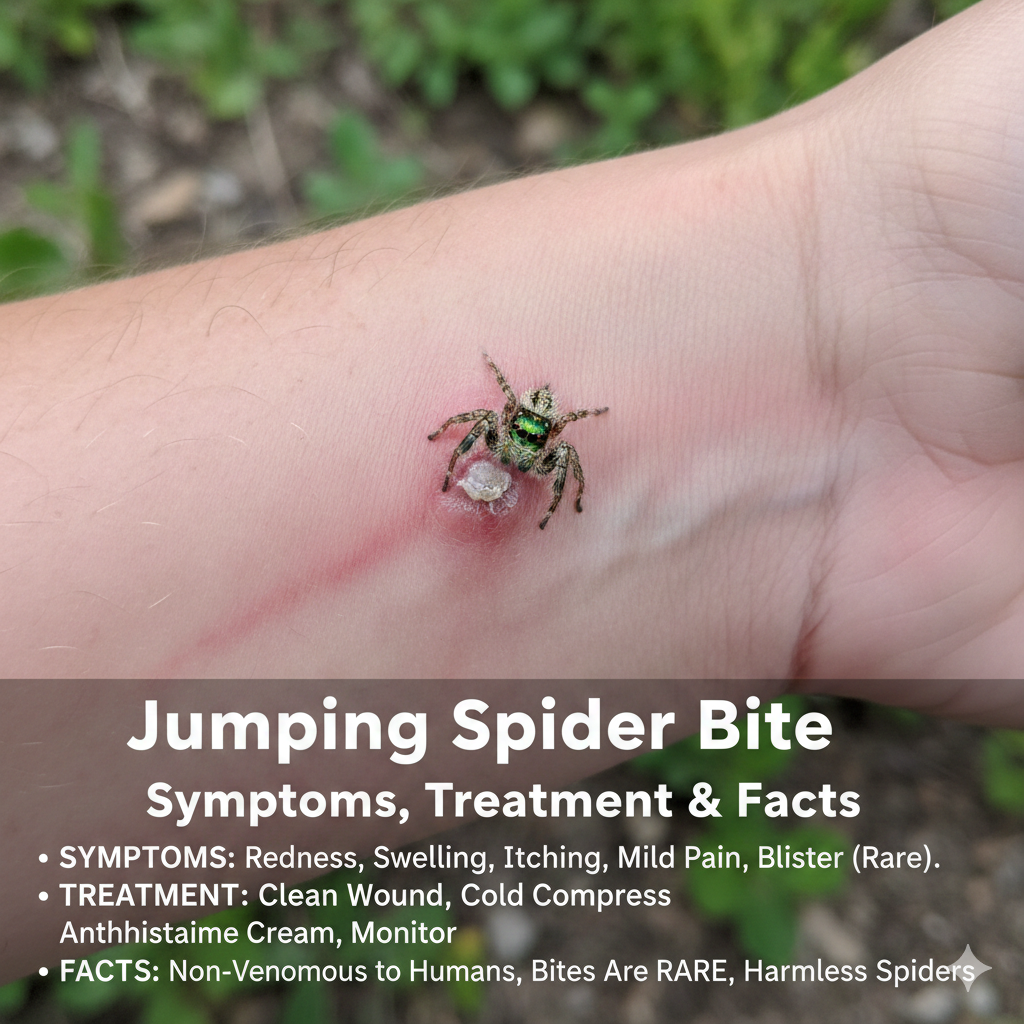
Signs and remedies for jumping spider bites
To reduce discomfort and avoid consequences, find out more about jumping spider bites, their symptoms, and efficient treatment choices. To learn more, read the article.
Are you afraid of getting bitten by a jumping spider? Jumping spiders rarely bite humans, and when they do, it is usually only in response to danger. Redness and itching are common but typically harmless signs of jumping spider bites. They are generally safe for humans. Most bites do not do any harm. This page will help you recognize jumping spider bites, explain when to see a doctor, and offer alternate treatments.
Humans are rarely bitten by jumping spiders, and when they are, the symptoms are usually moderate swelling, redness, and itching, just like other, less deadly bug bites. The symptoms, which include swelling and discoloration at the biting site, can mimic those of a mosquito bite. Compared to a bee sting, the pain from a jumping spider bite is usually far less severe. With basic first aid, most symptoms go away in a few hours.
Rarely, allergic symptoms like nausea or vertigo can be brought on by jumping spider bites. The venom can result in severe swelling, worsening redness, and dyspnea in susceptible people. You need to see a doctor right away if you have severe allergic reactions like hives, swelling, or trouble breathing.
First aid and treatment for jumping spider bites: To avoid infection, wash the affected area right away with soap and water. The venom that jumping spiders release to immobilize their victims is safe for humans to consume. A cold compress helps lessen inflammation and edema in addition to pain. Pharmacy lotions and pain medications can also help lower the risk of infection and discomfort.
You can treat the majority of jumping spider bites at home. However, you should see a doctor right away if you experience severe symptoms, including swelling, shortness of breath, or increased pain.
Home remedies and care
There are safe, natural ways to lessen the symptoms and speed up the healing process if you’ve been bitten by a jumping spider. Using water and mild soap to clean the bite site is the first line of defense against infection. Pain and swelling can be lessened by applying an ice pack wrapped in a towel or a cold compress. Antihistamines like diphenhydramine may reduce itching, while mild discomfort and inflammation can be relieved by drugs like acetaminophen or ibuprofen. Keep a close eye out for any changes, such edema, redness, or increased pus production, at the bite site. You should consult a physician right away to determine the best course of action if you have any of these symptoms or if they get worse.
Medical treatment options
In rare cases, jumping spider bites can get infected and result in more serious symptoms that require medical attention. If pus, redness, or swelling develops at the bite site, you must see a doctor immediately. They can administer antibiotics to treat the disease and prevent its spread. Make sure you complete the entire course of antibiotics, even if your symptoms go away before the end of the prescribed time. Keeping the bite site clean and using the ointments or lotions your doctor has given will help the healing process even more. Infected spider bites should be treated as soon as possible to ensure a speedier recovery and reduce the risk of consequences.
When should you seek medical help?
See a doctor if you experience the following:
- Severe or worsening symptoms
- Increasing swelling or redness that lasts for more than one or two days
- Breathing problems or other signs of an allergic reaction
The type of spider that bit you can influence the severity of your symptoms and how urgently you need medical help.
Understanding jumping spiders and their venom
Jumping spiders belong to the family Salticidae (salt spiders) and are known for their jumping ability and sharp eyesight. Unlike spiders that build webs to catch prey, these agile hunters can jump many times their own body length to ambush insects and even other spiders.
Jumping spiders are one of the most varied families of spiders, with many species found throughout the world. Jumping spiders come in a vast array of colours and patterns, with approximately 300 of the 4,000 species in the Salticidae family found in the United States. The gigantic jumping spider (Phidippus audax) and species of the genus Habronattus are two of the most prevalent jumping spiders in North America. Their exceptional vision is a result of having eight eyes spread out in two rows. Some species have iridescent markings that might be either green or blue, and they are highly colourful. The normal body length of an adult jumping spider is between 4 and 20 millimetres. Compared to the more homogeneous females, guys are frequently more colourful. They can jump and raise their front legs in a defence stance when they feel threatened.
The jumping spider and related spider species are the perpetrators.
You can receive the proper care and find peace of mind by identifying the jumping spider that bit you. The Salticidae family, which is the largest spider family, includes jumping spiders such as the bold jumping spider and the three-handed jumping spider. Because of their small size, vivid or contrasting colours, and unique, eye-catching markings, these spiders are easily recognized. The two huge eyes on the front of the adult jumping spider’s eight eyes provide superior eyesight for hunting. Jumping spiders use their agility and keen vision to stalk and catch insects, in contrast to other spiders that weave webs to capture their prey. It is certainly a member of this interesting family if you encounter a little, energetic spider that jumps and snaps at its markings.
It is important to distinguish jumping spiders from other spider species, such as wolf spiders, garden spiders and fiddler spiders, as these may exhibit different behaviour and venoms.
Habitat and behaviour of jumping spiders
Jumping spiders thrive in insect-rich areas such as fields, gardens, backyards, and areas with lush vegetation. They primarily live outdoors in environments like grasslands and woodlands, but can also be found indoors near entrances, window frames, and doors where insects can enter.
In secret locations like cracks, beneath tree bark, or beneath furniture, they weave their webs. These webs serve as resting spots during moulting, hibernation, and egg-laying rather than as a means of capturing prey. These webs also act as nesting places for jumping spiders, which lay their eggs in silken egg sacs inside them.
Advice on how to avoid getting bitten by a jumping spider
Seal any gaps and holes around windows and doors to keep spiders out and prevent jumping spider attacks.
- To get rid of hiding spots, keep your living area neat and clean.
- To lessen the quantity of insects that draw spiders, lower the illumination.
- To safely get rid of spiders indoors, use a vacuum; to keep the spiders from coming back, throw away the vacuum cleaner bag after sweeping outside.
See our in-depth article for more details on how to keep pests out of your house, including how to avoid bed bug infestations.
Hiring a professional pest control company could be advantageous in cases where the infestation is severe.
How to repel jumping spiders
With a few easy steps, you can keep jumping spiders out of your home and yard. Reducing the number of insects surrounding your property is crucial because jumping spiders are drawn to places that are high in insects. To keep spiders out, seal all the cracks and crevices around windows, doors, and walls. Spiders and their potential hiding places can be eliminated with regular vacuuming and cleaning, especially in corners and along windowsills.These nimble predators will find your property less appealing if you trim the vegetation and clear the area around your home
. Consider working with a professional pest control company that provides a safe and efficient solution if you have a serious spider infestation or ongoing issues. Don’t act until the spiders become a major annoyance because most spiders, even jumping spiders, are helpful because they consume insects.
It’s critical to differentiate jumping spiders from harmful spiders such as brown recluse spiders and black widows.
Leaping spiders are generally harmless, however they should be differentiated from dangerous spiders like the black widow and brown recluse, which may be very detrimental to one’s health. Black widow bites can cause numbness, muscle spasms, and, in severe cases, more severe harm in addition to the quick, stinging pain.. These may result in medical issues that necessitate hospitalization. Because of their size, black widows are sometimes confused with jumping spiders
. However, they are much more hazardous and have a characteristic shiny black body with red hourglass markings.Brown recluse bites are often painless or inconspicuous at first. Symptoms such as pain, skin ulcers, or changes may not develop until hours after the bite, accompanied by possible systemic symptoms such as fever and joint pain.
Safe handling of jumping spider bites
Most jumping spider bites are not severe and can be handled with basic first aid. Living with these helpful arachnids is safe for those who understand the symptoms and know when to get medical attention and take preventative action. It is best to get in touch with a professional pest control firm when there is a serious infestation or other issues.
Frequently Asked Questions
Are jumping spiders poisonous to humans?
Jumping spiders produce venom to subdue their prey, but this venom is neither toxic nor dangerous to humans. Bites are usually mild and cause only slight symptoms.
How can I tell if a spider bite came from a jumping spider?
Bites from jumping spiders usually resemble mosquito bites and manifest as redness, swelling, and mild itching. The spider can be identified by its compact body, distinctive markings, and jumping behaviour, which confirms the diagnosis of a bite.
Do jumping spider bites cause allergic reactions?
Rarely, allergic responses can cause symptoms including swelling, hives, lightheadedness, or trouble breathing. Serious reactions need to be treated by a doctor right away.
How do I treat a jumping spider bite at home?
After washing the bite site with soap and water and using a cool compress, use over-the-counter pain relievers or antihistamines if needed. Pay attention to any signs of infection or worsening symptoms.
When should I see a doctor after being bitten by a jumping spider?
Consult a doctor if symptoms worsen, if swelling or redness increases, if there are signs of infection, or if you experience difficulty breathing or other allergic symptoms.
