
Florida Jumping Spiders: Types, Facts & Behavior Overview
Florida jumping spiders are among the most fascinating and misunderstood arachnids in the United States. These tiny hunters are not only harmless in most cases, but they also play an important role in controlling pests around homes and gardens. As a result, many homeowners in Florida are beginning to appreciate their presence rather than fear them.
Unlike web-building spiders, jumping spiders actively hunt their prey. In fact, they rely on excellent vision and precise movement to catch insects. Additionally, their curious nature and unique behavior make them stand out from other spider species commonly found across the USA.
Many people search for Florida jumping spiders pictures to understand what these spiders look like. However, proper identification goes beyond appearance. It includes understanding their behavior, habitat, and physical features. Therefore, learning accurate Florida jumping spiders identification is essential for anyone who encounters them.
On the other hand, concerns about safety are very common. Questions like “Are Florida jumping spiders poisonous?” or “Can a Florida jumping spiders bite harm humans?” often come up. Fortunately, these spiders are generally not dangerous and rarely bite unless provoked.
Why Florida Is a Hotspot for Jumping Spiders
Florida provides the perfect environment for these spiders to thrive. The warm climate, high humidity, and diverse ecosystems create ideal living conditions throughout the year.
- Subtropical weather supports year-round activity
- Abundant insect population ensures steady food supply
- Urban and natural habitats both support spider populations
- Gardens, walls, and windows act as common hunting grounds
Because of these factors, Florida jumping spiders can be found in both residential and wild environments. For example, you may spot them on garden plants, house walls, or even inside your home.
Why You Should Not Fear Them
Despite their appearance, jumping spiders are not aggressive. In fact, they often avoid human interaction. Additionally, their bites are extremely rare and typically harmless.
- They help control mosquitoes and flies
- They do not build messy webs indoors
- They are naturally shy and non-aggressive
- They contribute to a balanced ecosystem
Therefore, instead of seeing them as pests, it is more beneficial to view them as helpful allies. Understanding Florida jumping spiders types, facts, and behavior can completely change how you perceive these small yet remarkable creatures.
What Are Jumping Spiders?
Jumping spiders belong to the family Salticidae, which is one of the largest spider families in the world. These spiders are widely known for their sharp vision, agile movement, and unique hunting style. In the United States, they are especially common in warm regions like Florida.
Unlike traditional spiders, they do not rely on webs to trap prey. Instead, they actively hunt insects using precision and speed. As a result, Florida jumping spiders are often seen moving quickly across surfaces rather than sitting in webs.
Additionally, their intelligence sets them apart. Studies show that jumping spiders can assess distances, plan movements, and even learn from their environment. Therefore, they are often considered one of the most advanced spider groups in terms of behavior.
Key Characteristics of Jumping Spiders
Understanding their physical and behavioral traits is essential for accurate Florida jumping spiders identification. These features make them easy to distinguish from other species.
- Large forward-facing eyes for excellent vision
- Compact, hairy bodies with short legs
- Ability to jump several times their body length
- Bright or patterned colors in some species
- Curious and alert behavior
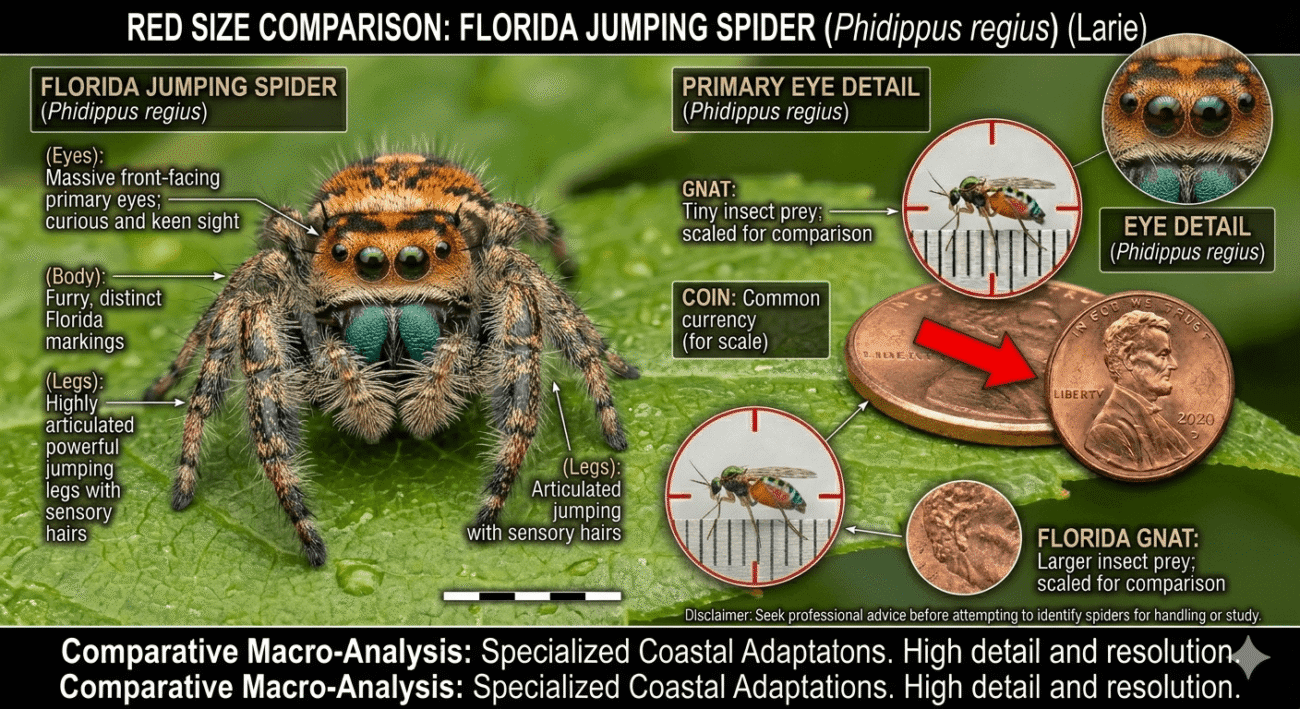
For example, many Florida jumping spiders pictures show their prominent front eyes, which almost look like tiny camera lenses. This unique feature helps them track prey with incredible accuracy.
How Their Vision Works
One of the most impressive traits of jumping spiders is their vision. Unlike most spiders, they rely heavily on eyesight instead of vibrations. In fact, they have four pairs of eyes, with the front pair providing sharp, detailed vision.
- Detect movement from a distance
- Judge depth and distance accurately
- Track moving prey with precision
- Recognize shapes and possibly faces
Because of this advanced vision, they can stalk prey like miniature predators. Additionally, this ability reduces unnecessary movement, making their hunting more efficient.
Difference from Other Spiders
Many people confuse jumping spiders with other common house spiders. However, there are clear differences that make identification easier.
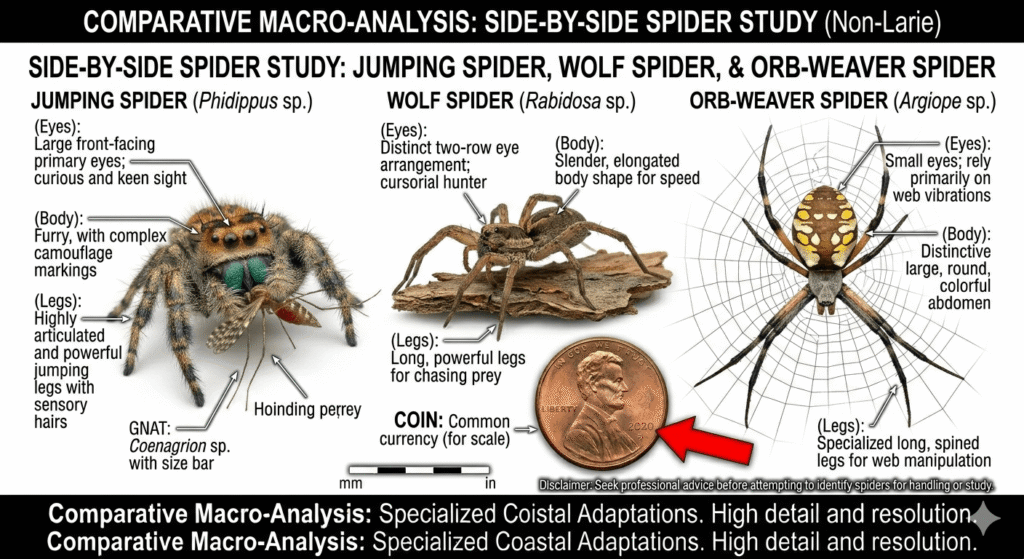
- They do not build large webs like orb-weavers
- They move actively instead of staying still
- They rely on vision instead of web vibrations
- They show curiosity toward humans rather than fear
On the other hand, web-building spiders typically wait for prey to get trapped. Jumping spiders take a completely different approach by hunting directly.
Therefore, when identifying Florida jumping spiders, observing behavior is just as important as appearance. This combination helps avoid confusion with other harmless or potentially dangerous species.
Common Types of Jumping Spiders Found in Florida
Florida is home to a wide variety of jumping spider species. Each type has unique colors, sizes, and behaviors. Therefore, understanding the most common species is essential for accurate Florida jumping spiders identification.
Many homeowners search for Florida jumping spiders pictures to compare what they see. However, knowing key traits makes identification faster and more reliable. Additionally, most of these spiders are harmless and beneficial for pest control.
Bold Jumping Spider (Phidippus audax)
This is one of the most commonly seen species across the United States. It is easily recognizable due to its black body and white markings.
- Black body with distinct white or orange spots
- Metallic green or blue chelicerae
- Found on walls, fences, and gardens
- Active during daytime
Because of its bold appearance, it is often featured in Florida jumping spiders pictures online.
Regal Jumping Spider (Phidippus regius)
The regal jumping spider is one of the largest species in Florida. It is also popular among spider enthusiasts due to its striking appearance.
- Larger size compared to other species
- Black body with white, orange, or red patterns
- Males and females have different colors
- Common in residential and natural areas
Additionally, this species is often kept as a pet because of its calm behavior.
Gray Wall Jumping Spider (Menemerus bivittatus)
This species is commonly found around buildings and urban environments. It blends well with walls and concrete surfaces.
- Gray or light brown body with subtle stripes
- Frequently seen on exterior walls
- Excellent camouflage abilities
- Active hunters in sunny areas
As a result, many people overlook this spider due to its neutral coloring.
Canopy Jumping Spiders
These spiders live mostly in trees and higher vegetation. Therefore, they are less commonly seen inside homes.
- Found in forests and wooded areas
- Often brightly colored or patterned
- Prefer elevated habitats
- Play an important role in forest ecosystems
Quick Identification Tips
To simplify Florida jumping spiders identification, focus on these key features:
- Eye arrangement with large front-facing eyes
- Short, compact body shape
- Quick, jumping movement
- Color patterns unique to each species
In conclusion, recognizing different species helps reduce fear and improves awareness. Most importantly, all these types share similar behavior and are rarely harmful to humans.
Habitat and Distribution Across Florida
Florida offers one of the most ideal environments for jumping spiders in the United States. The warm temperatures, high humidity, and diverse landscapes allow these spiders to thrive throughout the year. As a result, Florida jumping spiders are commonly found in both natural and urban settings.
Additionally, their adaptability makes them successful in a wide range of habitats. From dense forests to suburban homes, they can survive almost anywhere with a steady food supply. Therefore, spotting them around your property is quite normal.
Common Places Where They Live
Understanding where these spiders live helps with better Florida jumping spiders identification. It also reduces unnecessary fear when you encounter them.
- Garden plants and shrubs
- House walls and window frames
- Fences, decks, and patios
- Tree trunks and forest canopies
- Under leaves and hidden corners
For example, many homeowners notice them near windows because insects gather there. This creates a perfect hunting ground for these active predators.
Urban vs Natural Habitat
Interestingly, jumping spiders adapt equally well to city and wild environments. However, their behavior may vary slightly depending on the location.
Urban Areas
- Frequently seen on walls and ceilings
- Hunt insects attracted to lights
- Often found inside homes
Natural Environments
- Live in trees, bushes, and grasslands
- Rely on natural insect populations
- More diverse species variety
On the other hand, forest-dwelling spiders may display brighter colors for camouflage among leaves and flowers.
Seasonal Activity in Florida
Unlike colder states, Florida allows jumping spiders to remain active for most of the year. However, their activity levels still change with the seasons.
- Spring and summer: peak activity and reproduction
- Fall: continued hunting with moderate activity
- Winter: reduced movement but still visible
Because Florida winters are mild, these spiders do not fully disappear. Instead, they become slightly less active but remain present.
Why Habitat Matters for Safety
Knowing their habitat also helps answer common concerns about Florida jumping spiders poisonous risks. Since they prefer outdoor environments, human encounters are usually accidental.
- They avoid crowded or noisy areas
- They rarely enter homes intentionally
- They bite only when threatened
Therefore, understanding their habitat can reduce unnecessary panic. In most cases, these spiders are simply passing through or hunting insects nearby.
Behavior and Hunting Style of Jumping Spiders
Florida jumping spiders are known for their active and intelligent hunting behavior. Unlike web-building spiders, they rely on movement, vision, and precision to catch their prey. As a result, they behave more like tiny predators than passive insects.
Additionally, their curious nature often surprises people. Instead of hiding immediately, they may observe movement around them. Therefore, many homeowners notice them turning their heads or following motion with their eyes.
How They Hunt Without Webs
One of the most unique aspects of their behavior is their hunting method. They do not spin webs to trap prey. Instead, they stalk and attack with accuracy.
- They locate prey using sharp eyesight
- They slowly approach their target
- They calculate distance before jumping
- They leap and capture prey instantly
For example, a jumping spider may pause several times before attacking. This behavior helps them avoid missing their target. As a result, their success rate is much higher than many other spider species.
Jumping Ability and Precision
Their ability to jump is what makes them truly remarkable. In fact, they can leap several times their body length with high accuracy.
- Use silk as a safety line before jumping
- Land precisely on moving prey
- Adjust direction mid-movement
- Rarely miss short-distance jumps
Additionally, this jumping skill helps them escape predators quickly. Therefore, it serves both offensive and defensive purposes.
Interaction with Humans
Many people worry about Florida jumping spiders bite risks. However, these spiders are generally non-aggressive and avoid humans whenever possible.
- They rarely bite unless handled or trapped
- They may jump away instead of attacking
- They show curiosity rather than aggression
- They often retreat when disturbed
On the other hand, if they feel threatened, a bite may occur. However, such cases are extremely rare and usually harmless.
Daily Activity Patterns
Jumping spiders are mostly active during the daytime. This is because they rely on vision to hunt effectively.
- Most active in bright daylight
- Rest during nighttime
- Prefer warm and sunny conditions
- Often seen during morning and afternoon
Because of this behavior, they are easier to spot compared to nocturnal spiders. Additionally, their movement makes them more noticeable around homes and gardens.
In conclusion, their behavior is one of the key factors that make them unique. Understanding how they hunt and interact helps reduce fear and builds appreciation for their role in nature.
Are Florida Jumping Spiders Dangerous to Humans?
Many people feel nervous when they see a spider indoors. However, Florida jumping spiders are among the safest species you can encounter. In fact, they are far less dangerous than most people assume.
Additionally, these spiders are not aggressive and prefer to avoid human interaction. Therefore, the chances of being bitten are extremely low. Most encounters end with the spider simply moving away.
Are Florida Jumping Spiders Poisonous?
This is one of the most common questions. Technically, jumping spiders do have venom. However, their venom is not harmful to humans in normal situations.
- Venom is used to subdue small insects
- Not strong enough to harm humans
- No serious medical risk in most cases
- Comparable to a mild insect bite
Therefore, while the term Florida jumping spiders poisonous may sound alarming, it is not a real threat for people.
What Happens If a Jumping Spider Bites?
A Florida jumping spiders bite is very rare. It usually happens only if the spider is pressed against the skin or feels trapped.
- Mild redness or irritation
- Slight itching or swelling
- Temporary discomfort
- Symptoms fade within a short time
For example, many people compare the sensation to a mosquito bite. Additionally, serious allergic reactions are extremely uncommon.
Myths vs Facts
There are many misconceptions about jumping spiders. However, most of them are not based on facts.
- Myth: They aggressively attack humans
- Fact: They avoid humans and prefer to escape
- Myth: Their bite is dangerous or deadly
- Fact: Their bite is mild and rarely occurs
- Myth: They infest homes like pests
- Fact: They appear occasionally while hunting insects
On the other hand, fear often comes from misunderstanding. Once you learn the truth, these spiders seem far less threatening.
Why They Are Actually Beneficial
Instead of being dangerous, jumping spiders provide real benefits. They help maintain balance in indoor and outdoor environments.
- Reduce mosquito and fly populations
- Control small insect pests naturally
- Do not create webs or mess
- Require no human management
As a result, many experts recommend leaving them undisturbed. They act as natural pest control without causing harm.
In conclusion, Florida jumping spiders are not dangerous. Understanding their behavior and bite risk helps remove unnecessary fear and builds trust in their role within the ecosystem.
Diet and Natural Pest Control Benefits
Florida jumping spiders play a valuable role in controlling unwanted insects. Their diet mainly consists of small pests that commonly invade homes and gardens. As a result, they act as a natural and eco-friendly form of pest control.
Additionally, their hunting efficiency makes them highly effective predators. Unlike other spiders, they actively search for prey instead of waiting. Therefore, they help reduce insect populations more quickly.
What Do Jumping Spiders Eat?
The diet of these spiders includes a wide range of small insects. This makes them beneficial for both indoor and outdoor environments.
- Flies and houseflies
- Mosquitoes
- Gnats and small flying insects
- Ants and tiny bugs
- Occasionally other small spiders
For example, a single spider can catch multiple insects in a day. This consistent feeding behavior helps maintain balance in the ecosystem.
How They Control Pest Populations
Because of their active hunting style, jumping spiders are highly efficient. They target insects that are often considered nuisances or health risks.
- Reduce mosquito presence around homes
- Control flies near windows and doors
- Limit garden pests that damage plants
- Prevent insect overpopulation
As a result, homeowners in Florida often benefit from having these spiders nearby. They provide pest control without chemicals or traps.
Why They Are Better Than Chemical Solutions
Many people rely on sprays and pesticides. However, natural predators like jumping spiders offer a safer alternative.
- No harmful chemicals involved
- Safe for children and pets
- No environmental damage
- Continuous pest control without effort
Additionally, chemical solutions may kill beneficial insects as well. On the other hand, jumping spiders selectively target prey they can handle.
Impact on Homes and Gardens
Florida jumping spiders are especially useful in residential areas. They thrive in places where insects are present.
- Protect indoor spaces from flies
- Keep gardens healthier
- Reduce need for pest control services
- Support a balanced ecosystem
Because of these benefits, many homeowners prefer to leave them undisturbed. Their presence indicates a natural and healthy environment.
In conclusion, these spiders are not pests but helpful allies. Their diet and hunting behavior make them one of the most effective natural pest controllers in Florida.
Life Cycle and Reproduction of Jumping Spiders
Understanding the life cycle of Florida jumping spiders helps explain their behavior and seasonal activity. Like most spiders, they go through several growth stages before reaching adulthood. However, their development is closely linked to Florida’s warm climate.
Additionally, their reproduction process is unique and often fascinating to observe. Therefore, learning about their life cycle can improve Florida jumping spiders identification, especially when spotting younger spiders.
Stages of the Life Cycle
Jumping spiders develop through a simple but structured process. Each stage plays a role in their survival and growth.
- Egg stage inside a protective silk sac
- Spiderlings hatch and stay near the nest
- Juvenile stage with gradual growth
- Adult stage capable of reproduction
For example, spiderlings often resemble smaller versions of adults. However, their colors may appear less vibrant at early stages.
Mating Behavior
The mating process of jumping spiders is highly visual and careful. Males perform specific movements to attract females.
- Males use body movements and vibrations
- Visual signals help avoid aggression
- Females choose mates based on behavior
- Mating occurs only when the female feels safe
Additionally, this behavior reduces the risk of conflict between the spiders. It also highlights their advanced communication skills.
Egg Sacs and Spiderlings
After mating, the female lays eggs inside a silk sac. This sac is carefully placed in a safe and hidden location.
- Egg sacs are attached under leaves or surfaces
- Females guard the eggs until they hatch
- Spiderlings remain close for a short time
- Young spiders disperse as they grow
Because of this protective behavior, survival rates are higher compared to many other spider species.
Lifespan of Jumping Spiders
The lifespan of Florida jumping spiders depends on environmental conditions and food availability. However, most follow a similar pattern.
- Average lifespan ranges from 6 months to 1 year
- Some species may live slightly longer
- Warmer climates support longer activity periods
- Food availability impacts survival
Additionally, spiders in controlled environments, such as captivity, may live longer due to stable conditions.
Seasonal Reproduction Patterns
Florida’s climate allows reproduction to occur more frequently than in colder regions. However, certain periods show higher activity.
- Spring and summer are peak breeding seasons
- Egg laying increases during warm months
- Spider populations grow rapidly during this time
- Activity slows slightly in cooler months
As a result, you are more likely to notice young spiders during warmer seasons. This is also when sightings increase in homes and gardens.
In conclusion, the life cycle of jumping spiders is simple yet highly efficient. Their ability to reproduce and adapt ensures their continued presence across Florida environments.
How to Identify Jumping Spiders in Florida
Accurate Florida jumping spiders identification is important for reducing fear and avoiding confusion with other species. While many spiders may look similar at first glance, jumping spiders have distinct features that make them easier to recognize.
Additionally, many people rely on Florida jumping spiders pictures online. However, visual comparison alone is not always enough. Therefore, understanding physical traits and behavior together provides the most reliable identification.
Key Physical Features
Jumping spiders have a unique body structure that separates them from other common spiders in Florida.
- Large front-facing eyes that appear prominent
- Compact and slightly hairy body
- Short, strong legs built for jumping
- Distinct color patterns depending on species
For example, the bold jumping spider often shows black coloring with white spots. On the other hand, some species display gray or even bright patterns.
Eye Pattern: The Most Reliable Indicator
The eye arrangement is one of the easiest ways to identify a jumping spider. In fact, no other spider group has the same visual structure.
- Four large eyes at the front
- Additional smaller eyes on the sides
- Forward-facing vision for depth perception
- Ability to track movement precisely
Because of this feature, they often appear to “look at you,” which can feel unusual but harmless.
Movement and Behavior Clues
Behavior plays a key role in identification. Unlike web-building spiders, jumping spiders are always on the move.
- Quick, sudden movements instead of slow crawling
- Frequent jumping between surfaces
- Pausing to observe surroundings
- Curious reactions to movement
Additionally, they may tilt or turn their bodies as if tracking objects. This behavior is a strong indicator of a jumping spider.
Common Misidentifications
Some spiders are often mistaken for jumping spiders. However, there are clear differences if you look closely.
- Wolf spiders are larger and lack prominent front eyes
- Orb-weavers build webs and stay in one place
- House spiders move slower and rely on webs
On the other hand, jumping spiders combine active movement with strong vision, making them easy to distinguish once you know what to look for.
Quick Identification Checklist
If you are unsure, use this simple checklist for quick confirmation:
- Does it have large front-facing eyes?
- Is it actively moving and jumping?
- Does it avoid building webs?
- Is it observing movement around it?
If the answer is yes to most of these, you are likely looking at a jumping spider.
In conclusion, identifying these spiders becomes easy with practice. Combining physical traits and behavior ensures accurate recognition and reduces unnecessary concern.
Tips for Living Safely with Jumping Spiders
Seeing a spider inside your home can feel uncomfortable. However, Florida jumping spiders are harmless and often beneficial. Instead of removing them immediately, it is better to understand how to coexist safely.
Additionally, these spiders rarely stay in one place for long. They usually move around while hunting insects. Therefore, most encounters are temporary and not a sign of infestation.
Why You Should Not Kill Them
Many people react quickly by killing spiders. However, this is usually unnecessary in the case of jumping spiders.
- They help control flies and mosquitoes
- They do not damage property or furniture
- They do not create webs indoors
- They are non-aggressive toward humans
As a result, allowing them to live can actually improve your indoor environment.
How to Safely Remove a Spider
If you prefer not to keep them inside, you can remove them safely without harm. This method is simple and effective.
- Use a glass or container to cover the spider
- Slide a piece of paper underneath
- Carry it outside carefully
- Release it in a garden or plant area
Additionally, this approach reduces the risk of a Florida jumping spiders bite, even though bites are very rare.
How to Keep Them Out of Your Home
Although they are harmless, some people prefer to prevent spiders from entering their homes. Simple steps can reduce indoor sightings.
- Seal gaps around doors and windows
- Reduce outdoor lighting that attracts insects
- Keep indoor areas clean and clutter-free
- Remove excess moisture from rooms
Because these spiders follow insects, reducing insect activity will naturally limit their presence.
Encouraging Them in Outdoor Spaces
On the other hand, having jumping spiders in your garden can be highly beneficial. They support natural pest control without chemicals.
- Maintain healthy plants and shrubs
- Avoid excessive pesticide use
- Create natural hiding spots like leaves and branches
- Allow a balanced ecosystem to develop
As a result, your garden becomes more self-sustaining and environmentally friendly.
Reducing Fear Through Awareness
Fear often comes from misunderstanding. However, learning about these spiders can change your perspective.
- They are curious but not aggressive
- They avoid human contact
- They rarely bite unless threatened
- They provide more benefits than harm
Therefore, awareness is the key to comfort. Once you understand their behavior, they become far less intimidating.
In conclusion, coexisting with jumping spiders is simple and beneficial. With a few basic steps, you can maintain a safe and balanced environment in your home and garden.
Interesting Facts About Jumping Spiders
Florida jumping spiders are not just common backyard creatures. They are also among the most fascinating arachnids in the world. Their behavior, vision, and intelligence make them stand out from other spider species. As a result, they have become a popular subject for researchers and nature enthusiasts alike.
Additionally, many people who start by searching Florida jumping spiders pictures often become curious about their unique traits. Therefore, learning a few interesting facts can completely change how you see these tiny predators.
They Have Exceptional Vision
Jumping spiders are known for having some of the best eyesight among spiders. In fact, their vision is closer to that of small animals than typical arachnids.
- They can see in sharp detail
- They detect movement from a distance
- They track prey with precision
- They may even recognize shapes and patterns
Because of this ability, they rely less on webs and more on visual hunting techniques.
They Show Signs of Intelligence
Unlike most spiders, jumping spiders display problem-solving skills. This behavior suggests a higher level of intelligence.
- They plan routes before jumping
- They adjust strategies when hunting fails
- They learn from past experiences
- They explore their surroundings actively
Additionally, this intelligence helps them survive in both natural and urban environments.
They Are Surprisingly Curious
Many people notice that these spiders appear curious rather than fearful. Instead of hiding immediately, they may observe nearby movement.
- They turn to face moving objects
- They follow motion with their eyes
- They approach slowly to investigate
- They react quickly when startled
As a result, they often seem more interactive than other spiders.
Some Species Are Colorful and Unique
Not all jumping spiders are plain in appearance. In fact, some species display bright and striking colors.
- Black bodies with white or orange markings
- Metallic green or blue mouthparts
- Patterns that vary between males and females
- Camouflage designs for survival
Because of their appearance, they are often featured in wildlife photography and online galleries.
They Are Popular as Pet Spiders
Interestingly, some species are kept as pets in the United States. This is mainly due to their calm nature and manageable size.
- Easy to care for compared to other spiders
- Active and entertaining to watch
- Require minimal space
- Generally safe to handle with care
However, proper knowledge is important before keeping any spider as a pet.
They Rarely Bite Humans
Concerns about Florida jumping spiders bite risks are common. However, these spiders rarely bite and prefer to escape.
- Bites occur only when threatened
- Venom is not harmful to humans
- Most interactions are completely safe
- They avoid direct contact
Therefore, their reputation as dangerous spiders is largely a myth.
In conclusion, jumping spiders are intelligent, curious, and beneficial creatures. These interesting facts highlight why they deserve appreciation rather than fear.
Comparison of Jumping Spiders with Other Common Spiders
Many people confuse jumping spiders with other common species found in Florida. However, there are clear differences in behavior, appearance, and risk level. Understanding these differences improves Florida jumping spiders identification and helps reduce unnecessary fear.
Additionally, comparing them with other spiders highlights their unique advantages. Therefore, this section provides a clear and practical comparison for everyday users.
Quick Comparison Table
| Feature | Jumping Spiders | Wolf Spiders | Orb-Weavers | House Spiders |
|---|---|---|---|---|
| Hunting Style | Active hunters | Ground hunters | Web builders | Web builders |
| Web Usage | Minimal (safety silk) | None | Large webs | Messy webs |
| Vision | Excellent | Moderate | Poor | Poor |
| Aggression Level | Very low | Low to moderate | Very low | Low |
| Bite Risk | Rare and mild | Possible but mild | Very rare | Rare |
| Indoor Presence | Occasional | Rare | Uncommon | Common |
Why Jumping Spiders Are Different
Unlike other spiders, jumping spiders rely heavily on vision instead of webs. As a result, they actively explore their surroundings and hunt with precision. This behavior makes them more visible but also more beneficial.
- They do not create messy webs indoors
- They actively reduce insect populations
- They are easier to identify due to eye structure
- They interact less aggressively with humans
Additionally, their curious behavior often makes them appear more approachable compared to other species.
Comparison with Competitors (Other Pest Control Methods)
Many homeowners consider chemical pest control when dealing with insects. However, natural predators like jumping spiders offer a better long-term solution.
| Method | Effectiveness | Safety | Cost | Environmental Impact |
|---|---|---|---|---|
| Jumping Spiders | High (continuous control) | Very safe | Free | Eco-friendly |
| Chemical Sprays | Short-term | Moderate risk | Recurring cost | Harmful |
| Pest Control Services | Effective | Depends on chemicals | Expensive | Moderate impact |
Key Takeaways
When compared with other spiders and pest control methods, jumping spiders offer clear advantages. They are safe, effective, and environmentally friendly.
- Better for natural pest control
- Safer for families and pets
- No maintenance or cost required
- Minimal risk of bites
Therefore, instead of eliminating them, it is often better to allow them to remain in controlled environments. Their presence can significantly reduce household pests without any effort.
Pros and Cons of Jumping Spiders
Before deciding how to deal with spiders in your home, it is important to understand both the benefits and limitations. Florida jumping spiders offer several advantages, but like any living creature, they also have a few minor downsides. Therefore, a balanced view helps you make better decisions.
Additionally, many concerns come from misunderstanding. Once you evaluate the facts, these spiders are far more helpful than harmful.
Pros of Jumping Spiders
These spiders provide multiple benefits, especially in residential environments across Florida.
- Natural pest control without chemicals
- Reduce mosquitoes, flies, and small insects
- Non-aggressive and safe for humans
- No messy webs inside homes
- Low risk of a Florida jumping spiders bite
- Require no maintenance or cost
For example, homeowners often notice fewer insects when these spiders are present. As a result, they contribute to a cleaner and more comfortable living space.
Cons of Jumping Spiders
Although they are beneficial, some people may still find them inconvenient. However, these drawbacks are generally minor.
- Unexpected sightings may cause fear
- Occasional indoor presence
- Small chance of bites if handled
- May startle people due to sudden movement
On the other hand, these issues are usually temporary and easy to manage. Most spiders will leave on their own or can be safely relocated.
Balancing the Pros and Cons
When comparing the advantages and disadvantages, the benefits clearly outweigh the drawbacks. Additionally, understanding their behavior helps reduce discomfort.
- They help more than they harm
- They are easy to manage if needed
- They support a natural ecosystem
- They pose almost no health risk
Therefore, instead of reacting with fear, it is better to approach the situation with awareness. This mindset allows you to benefit from their presence without concern.
Who Should Be Concerned?
In most cases, there is no need for concern. However, certain individuals may prefer extra caution.
- People with severe arachnophobia
- Individuals with rare allergic sensitivities
- Households that prefer zero insect presence
Even in these cases, simple preventive measures can solve the issue without harm.
In conclusion, Florida jumping spiders are highly beneficial with very few downsides. Understanding their pros and cons helps you make informed and confident decisions.
Customer Experiences and Real-Life Insights
Real-life experiences help build trust and provide practical insight. Across the United States, many homeowners have shared positive feedback about encountering jumping spiders. These testimonials highlight how perceptions often change after learning about their behavior.
Additionally, most people initially feel uneasy. However, after understanding their benefits, they begin to appreciate their presence. Therefore, these real-world examples offer valuable perspective.
Homeowner Experiences in Florida
Many Florida residents report seeing jumping spiders around their homes. Over time, their opinions shift from fear to acceptance.
- “I used to remove every spider. Now I leave them because they reduce flies.”
- “I noticed fewer mosquitoes after spotting these spiders in my garden.”
- “They look scary at first, but they never bothered anyone in my house.”
As a result, these experiences show how awareness changes behavior and reduces unnecessary fear.
Before and After Perception
Understanding the difference between initial reactions and informed opinions is important. Many users follow a similar journey.
- Initial fear due to appearance
- Curiosity after seeing Florida jumping spiders pictures
- Learning about their harmless nature
- Acceptance and appreciation over time
Additionally, education plays a key role in this transformation. Once people learn the facts, their concerns decrease significantly.
Common Positive Feedback
After gaining knowledge, most users highlight similar benefits. These points reflect the real value of having these spiders around.
- Noticeable reduction in insects
- No aggressive behavior observed
- Minimal indoor disturbance
- Safe environment for children and pets
Because of these factors, many homeowners prefer natural pest control over chemical solutions.
Addressing Common Concerns
Even with positive feedback, some concerns remain. However, real experiences help clarify these issues.
- Concern: Risk of Florida jumping spiders bite
- Reality: Extremely rare and mild
- Concern: Infestation inside homes
- Reality: They appear occasionally, not in groups
- Concern: Dangerous or poisonous spiders
- Reality: Harmless and beneficial in most cases
On the other hand, fear usually comes from lack of information rather than actual risk.
What These Testimonials Prove
These real-life insights clearly show that jumping spiders are not a threat. Instead, they provide measurable benefits in everyday environments.
- They improve indoor comfort by reducing pests
- They require no maintenance
- They coexist without causing harm
- They support eco-friendly living
Therefore, listening to real user experiences can help you make a more informed decision. In most cases, these spiders are helpful allies rather than unwanted pests.
Take the Next Step: Learn, Identify, and Take Control Naturally
By now, you have a clear understanding of Florida jumping spiders, their behavior, and their benefits. Instead of fearing them, you can use this knowledge to your advantage. These small predators offer a natural and effective way to control pests without chemicals or extra cost.
Additionally, accurate Florida jumping spiders identification helps you stay confident when you encounter them. You no longer need to rely on guesswork or misinformation. Therefore, you can respond calmly and make better decisions for your home and garden.
What You Can Do Right Now
Taking simple steps today can improve your environment and reduce insect problems naturally.
- Observe spiders instead of reacting with fear
- Use safe methods to relocate them if needed
- Encourage their presence in outdoor spaces
- Reduce insect activity to control indoor sightings
As a result, you create a healthier and more balanced living space without relying on harmful chemicals.
Why This Matters for Your Home
Many homeowners spend money on pest control solutions that provide only short-term results. However, natural predators like jumping spiders work continuously without effort.
- No recurring costs or maintenance
- Safe for families and pets
- Environmentally responsible solution
- Long-term pest control benefits
Because of these advantages, more people in the United States are choosing natural methods over chemical treatments.
Explore More Expert Guides
If you want to deepen your understanding, there is more to explore. Learning about different species, behaviors, and habitats can further improve your confidence.
- Compare different jumping spider species
- Learn advanced identification techniques
- Explore detailed guides with Florida jumping spiders pictures
- Understand how spiders impact your ecosystem
Additionally, staying informed helps you avoid common myths and misconceptions.
Make a Smarter, Safer Choice
Instead of reacting with fear, choose knowledge and awareness. Florida jumping spiders are not pests but helpful allies that support a cleaner and healthier environment.
Therefore, the next time you see one, take a moment to observe rather than remove it. This simple shift in mindset can make a significant difference in how you manage your home naturally.
Start applying what you have learned today and experience the benefits for yourself.
Conclusion
Florida jumping spiders are among the most beneficial and fascinating creatures found in homes and gardens across the United States. While their appearance may seem intimidating at first, their behavior tells a very different story. They are intelligent hunters, natural pest controllers, and harmless to humans in most situations.
Additionally, understanding Florida jumping spiders identification, habitat, and behavior helps eliminate unnecessary fear. Instead of viewing them as a threat, you can recognize their value in maintaining a balanced environment.
Concerns about Florida jumping spiders poisonous risks or the chance of a Florida jumping spiders bite are common. However, these fears are largely based on myths. In reality, bites are extremely rare and mild, and these spiders prefer to avoid human interaction.
Therefore, the best approach is awareness rather than fear. By allowing these spiders to exist in controlled spaces, you benefit from natural pest control without chemicals or added costs.
In conclusion, Florida jumping spiders are not pests but helpful allies. With the right knowledge, you can confidently identify them, understand their role, and make smarter decisions for your home and environment.
Frequently Asked Questions (FAQs)
Are Florida jumping spiders common?
Yes, they are very common in Florida due to the warm and humid climate. They can be found in gardens, homes, and outdoor spaces throughout the year.
Are Florida jumping spiders poisonous to humans?
They do have venom, but it is not harmful to humans. Their venom is designed to subdue small insects, not people.
What happens if a Florida jumping spiders bite occurs?
A bite is rare and usually mild. Symptoms may include slight redness or itching, similar to a mosquito bite, and typically fade quickly.
How can I identify Florida jumping spiders?
Look for large front-facing eyes, quick movements, and jumping behavior. These features make them easy to distinguish from other spiders.
Do jumping spiders build webs?
No, they do not build webs to catch prey. Instead, they actively hunt insects using their vision and jumping ability.
Are jumping spiders good for homes?
Yes, they help control pests like flies and mosquitoes. This makes them beneficial for both indoor and outdoor environments.
Why do I see jumping spiders inside my house?
They usually enter homes while hunting insects. Their presence often indicates that small insects are available as food.
