
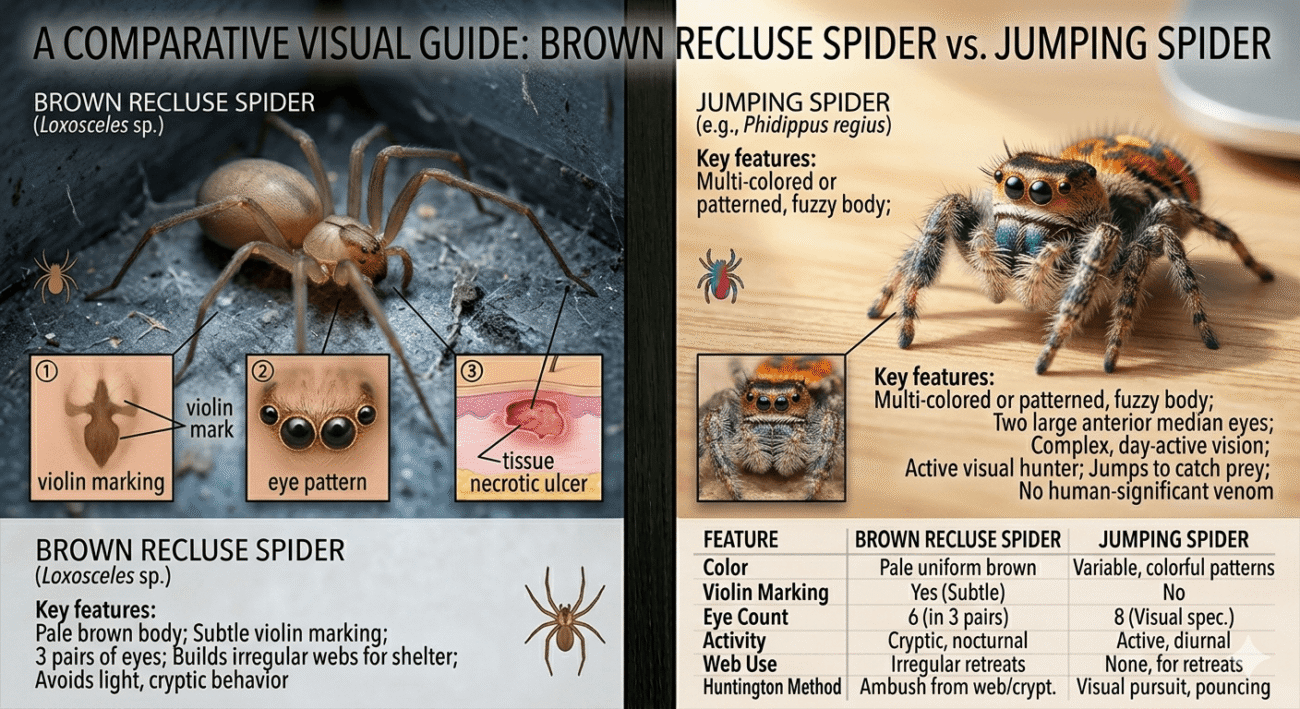
Introduction to Brown Recluse vs Pet Jumping Spider Guide
Understanding the difference between a brown recluse spider and a pet jumping spider is important for safety, pet ownership, and general awareness in the United States. Many people search for answers about Brown recluse vs pet jumping spider who would win or worry after spotting a brown spider not recluse inside their home.
Why This Comparison Matters in the US
Across many US states, especially in the Midwest and Southern regions, the brown recluse spider is commonly discussed due to its venomous bite. On the other hand, pet jumping spiders are gaining popularity as safe, interactive, and beginner-friendly pets.
People often confuse species and ask questions like:
- What brown spiders jump
- Is that a brown spider not recluse
- How dangerous is a house spider really
This confusion makes it essential to clearly compare both spiders in terms of behavior, risk, and usability as pets.
Quick Overview Comparison Table
| Feature | Brown Recluse Spider | Pet Jumping Spider |
| Danger Level | High | Very Low |
| Behavior | Reclusive | Curious |
| Human Interaction | Avoids | Engages |
| Bite Impact | Medically significant | Mild or rare |
| Pet Suitability | Not suitable | Highly suitable |
Common Misconceptions
Many homeowners panic after seeing a small brown spider and assume it is a brown recluse spider, even when it is actually a brown spider not recluse. Similarly, people ask What brown spiders jump, not realizing that jumping spiders are completely different in behavior and appearance.
What You Will Learn in This Guide
This guide will help you:
- Identify real differences between both spiders
- Understand Brown recluse vs pet jumping spider size differences
- Learn which spider is safe around humans
- Decide if a jumping spider is the right pet for you
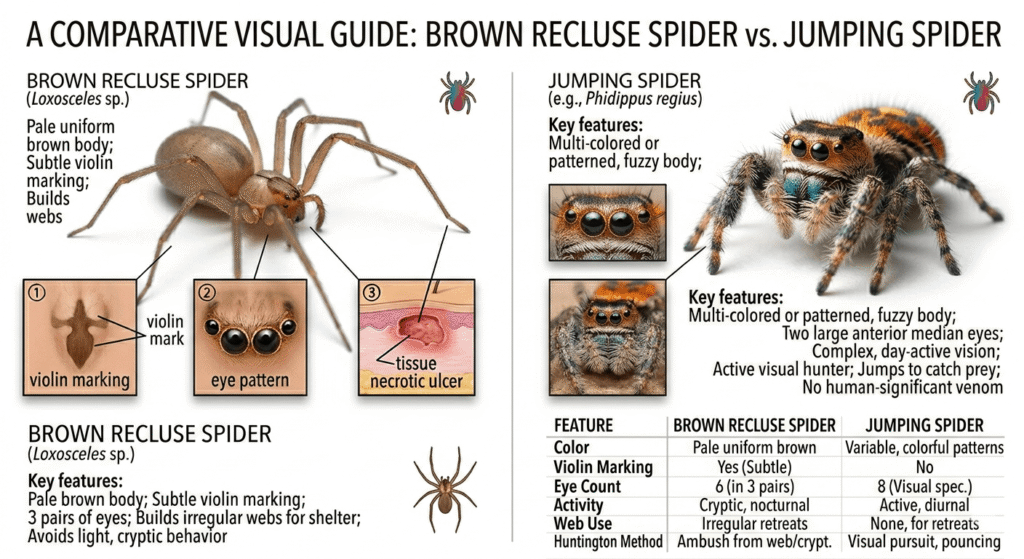
What is a Brown Recluse Spider
The brown recluse spider is one of the most well-known venomous spiders in the United States. It belongs to the species Loxosceles reclusa and is often feared due to its medically significant bite. Understanding its characteristics is essential when comparing Brown recluse vs pet jumping spider who would win or identifying a brown spider not recluse.
Habitat and Distribution in the US
The brown recluse spider is commonly found in:
- Midwest states like Missouri, Kansas, and Oklahoma
- Southern regions including Texas and Arkansas
- Indoor environments such as basements, closets, and storage boxes
They prefer dark, undisturbed areas, which increases accidental human encounters.
Physical Appearance and Identification
Correct identification is important because many people confuse harmless spiders with the brown recluse spider.
Key features include:
- Light to medium brown color
- Violin-shaped marking on the back
- Six eyes arranged in pairs, unlike most spiders
- Long, thin legs without noticeable spines
This helps distinguish it from a brown spider not recluse, which may look similar but lacks these defining traits.
Brown Recluse vs Pet Jumping Spider Size
| Feature | Brown Recluse Spider | Pet Jumping Spider |
| Body Size | 6 to 20 mm | 4 to 15 mm |
| Leg Span | Larger | Compact |
| Appearance | Slim | Stocky |
The Brown recluse vs pet jumping spider size comparison shows that while both can be small, their body shapes and posture differ significantly.
Behavior and Lifestyle
The brown recluse spider is:
- Nocturnal and shy
- Non-aggressive but defensive when disturbed
- Known to hide rather than hunt actively
Unlike pet spiders, they do not seek interaction, which is why they are not suitable for handling or captivity.
What is a Pet Jumping Spider
Pet jumping spiders are small, intelligent arachnids that belong to the Salticidae family. Unlike the brown recluse spider, these spiders are known for their friendly behavior and excellent vision. Many people searching for What brown spiders jump are often referring to these fascinating creatures.
Common Pet Species in the United States
In the US, the most popular pet jumping spiders include:
- Phidippus regius
- Phidippus audax
These species are widely kept due to their manageable size and calm temperament. When comparing Brown recluse vs pet jumping spider who would win, it becomes clear that jumping spiders are not built for aggression but for agility and curiosity.
Physical Traits and Identification
Jumping spiders are easy to recognize, even when confused with a brown spider not recluse.
Key features include:
- Large forward-facing eyes
- Compact and fuzzy body
- Short, strong legs designed for jumping
- Wide variety of colors and patterns
Brown Recluse vs Pet Jumping Spider Size
| Feature | Brown Recluse Spider | Pet Jumping Spider |
| Body Shape | Slim | Compact and thick |
| Eye Structure | 6 small eyes | 8 large eyes |
| Movement | Crawling | Jumping |
The Brown recluse vs pet jumping spider size comparison highlights that jumping spiders may appear smaller but are more robust and visually distinct.
Behavior and Intelligence
Pet jumping spiders are:
- Highly active during the day
- Curious and responsive to movement
- Capable of recognizing their environment
- Known to interact with humans in a non-threatening way
This makes them very different from the brown recluse spider, which prefers isolation.
Why They Are Popular Pets
Jumping spiders are ideal pets because:
- They are low maintenance
- They rarely bite humans
- They are safe for beginners
- They provide engaging behavior
Key Differences Between Brown Recluse vs Pet Jumping Spider
When comparing a brown recluse spider with a pet jumping spider, the differences are clear in behavior, safety, and interaction. Many users search for Brown recluse vs pet jumping spider who would win, but the reality is that these spiders serve very different roles in nature and in homes.
Side-by-Side Comparison Table
| Feature | Brown Recluse Spider | Pet Jumping Spider |
| Danger Level | High | Very Low |
| Temperament | Shy and defensive | Curious and active |
| Bite Risk | Medically significant | Rare and mild |
| Movement Style | Slow crawling | Fast jumping |
| Human Interaction | Avoids contact | Engages visually |
| Pet Suitability | Not recommended | Highly recommended |
Behavior and Lifestyle Comparison
The brown recluse spider prefers:
- Dark, hidden environments
- Minimal movement unless disturbed
- Avoidance of humans
In contrast, pet jumping spiders:
- Explore their surroundings actively
- Show curiosity toward movement
- Can recognize patterns and light
This explains why people asking What brown spiders jump are often surprised to learn that jumping spiders behave completely differently from recluse spiders.
Brown Recluse vs Pet Jumping Spider Size and Structure
| Trait | Brown Recluse Spider | Pet Jumping Spider |
| Body Build | Thin and flat | Compact and muscular |
| Leg Length | Long | Short and strong |
| Visual Appeal | Plain brown | Colorful or patterned |
The Brown recluse vs pet jumping spider size comparison shows that size alone does not determine behavior or safety.
Comparison with Competitors
Other spiders often confused in US homes include:
- Wolf spiders
- House spiders
- Other brown spider not recluse types
Compared to these:
- The brown recluse spider is more dangerous
- Jumping spiders are safer and more interactive
Understanding these differences helps reduce fear and prevents misidentification of a brown spider not recluse.
Bite Comparison and Safety Risks
Understanding spider bites is one of the main reasons people search for Brown recluse vs pet jumping spider who would win. The truth is, the real concern is not a fight but the level of danger each spider poses to humans.
Brown Recluse Spider Bite Effects
The brown recluse spider is known for its venom, which can cause serious reactions in some cases.
Common symptoms include:
- Redness and swelling at the bite site
- Burning or itching sensation
- Development of a blister or open sore
- In rare cases, tissue damage
Most bites occur when the spider is accidentally pressed against the skin. Despite its reputation, severe cases are not common but still require caution.
Pet Jumping Spider Bite Effects
Pet jumping spiders are very different from the brown recluse spider in terms of risk.
Their bites are:
- Extremely rare
- Usually mild, similar to a small insect bite
- Not medically significant
Many people asking What brown spiders jump assume they are dangerous, but jumping spiders are considered safe for handling in most situations.
Bite Comparison Table
| Feature | Brown Recluse Spider | Pet Jumping Spider |
| Bite Frequency | Rare | Very rare |
| Pain Level | Moderate to high | Very mild |
| Medical Risk | Possible complications | Minimal |
| Treatment Needed | Sometimes required | Usually none |
Identifying Risk vs Myth
Many reported bites in the US are actually caused by a brown spider not recluse. Misidentification leads to unnecessary fear and incorrect assumptions.
Key facts:
- Not every brown spider is dangerous
- The brown recluse spider has specific identifying traits
- Jumping spiders are not aggressive
When to Seek Medical Help
You should seek medical attention if:
- The bite worsens over time
- Severe pain or unusual symptoms appear
- You suspect a brown recluse spider bite
H2: Can You Keep Them as Pets
When comparing Brown recluse vs pet jumping spider who would win, the real question for many US readers is which spider is safe to keep at home. The answer is clear when you understand their behavior and risk levels.
Can a Brown Recluse Spider Be a Pet
The brown recluse spider is not suitable for pet ownership under any circumstances.
Reasons include:
- Venomous bite with potential medical risks
- Reclusive nature with no interaction
- High stress in captivity
- Safety concerns for households
Even experienced keepers avoid housing a brown recluse spider because it provides no benefit and increases danger. Many spiders mistaken as pets are actually a brown spider not recluse, which causes confusion.
Why Pet Jumping Spiders Are Ideal
Pet jumping spiders are one of the best beginner-friendly exotic pets in the US.
They are:
- Safe to handle in most cases
- Active and visually engaging
- Easy to care for with simple setups
- Non-aggressive toward humans
People often search What brown spiders jump, and once they discover jumping spiders, they realize these are completely different from harmful species.
Brown Recluse vs Pet Jumping Spider Size in Captivity
| Feature | Brown Recluse Spider | Pet Jumping Spider |
| Space Needs | Minimal but unsafe | Small and manageable |
| Enclosure Type | Not recommended | Ventilated container |
| Handling | Not safe | Generally safe |
The Brown recluse vs pet jumping spider size comparison shows that both require little space, but only one is suitable for a home environment.
Basic Jumping Spider Care Tips
To keep a healthy pet jumping spider:
- Provide a small ventilated enclosure
- Feed live insects like fruit flies
- Maintain proper humidity levels
- Avoid overhandling
Safety and Legal Considerations
In the US:
- Keeping dangerous species like the brown recluse spider is discouraged
- Jumping spiders are widely accepted as safe pets
Pros and Cons of Brown Recluse vs Pet Jumping Spider
When evaluating Brown recluse vs pet jumping spider who would win, the practical comparison comes down to usability, safety, and overall experience. This section breaks down the real-world advantages and disadvantages of each spider.
Pet Jumping Spider Pros
Pet jumping spiders are widely preferred in the US due to their safe and engaging nature.
Key advantages:
- Easy to care for with minimal setup
- Safe around humans with very low bite risk
- Active and entertaining behavior
- Suitable for beginners and small spaces
Many people who initially fear a brown spider not recluse later discover that jumping spiders are harmless and even enjoyable to keep.
Pet Jumping Spider Cons
Despite their benefits, there are a few limitations:
- Short lifespan compared to other pets
- Require live food such as flies
- Small size makes them easy to lose if not handled carefully
The Brown recluse vs pet jumping spider size comparison also shows that their tiny size may not appeal to everyone.
Brown Recluse Spider Cons
The brown recluse spider has no real advantages as a pet and presents multiple risks.
Major drawbacks:
- Venomous bite with possible health complications
- No interaction or engagement
- High risk in household environments
- Difficult to identify, often confused with a brown spider not recluse
Pros and Cons Comparison Table
| Feature | Brown Recluse Spider | Pet Jumping Spider |
| Safety | Risky | Safe |
| Interaction | None | High |
| Maintenance | Not practical | Easy |
| Beginner Friendly | No | Yes |
Customer Testimonial Highlights
Many US pet owners report positive experiences with jumping spiders:
- Easy to maintain even for beginners
- Fun to observe daily behavior
- No safety concerns compared to a brown recluse spider
Final Insight
For anyone asking What brown spiders jump, the answer leads to a clear conclusion. Jumping spiders offer a safe and interactive experience, while the brown recluse spider should always be avoided.
Conclusion of Brown Recluse vs Pet Jumping Spider Guide
When comparing brown recluse spider and pet jumping spiders, the difference is clear in terms of safety, behavior, and usability. While many people search for Brown recluse vs pet jumping spider who would win, the real takeaway is not about competition but about risk versus benefit.
The brown recluse spider is a shy but venomous species that should never be handled or kept as a pet. Its bite, although rare, can lead to medical concerns. In contrast, pet jumping spiders are safe, curious, and increasingly popular among US households.
Final Comparison Summary
| Feature | Brown Recluse Spider | Pet Jumping Spider |
| Safety Level | Risky | Safe |
| Pet Friendly | No | Yes |
| Behavior | Reclusive | Interactive |
| Bite Risk | Moderate concern | Minimal |
Understanding Brown recluse vs pet jumping spider size and behavior helps eliminate confusion, especially when identifying a brown spider not recluse inside your home.
Key Takeaways
- Not every brown spider is dangerous
- The brown recluse spider should always be avoided
- Jumping spiders are safe and beginner-friendly pets
- Many searches like What brown spiders jump refer to harmless species
- Pet jumping spiders offer a positive and engaging experience
Call to Action
If you are interested in safe and fascinating spider pets, explore more guides on jumping spider care, feeding, and habitat setup on our website.
Learn how to properly identify a brown spider not recluse and avoid unnecessary fear by educating yourself with accurate information.
Frequently Asked Questions (FAQs)
1. Brown recluse vs pet jumping spider who would win
The brown recluse spider has venom, but jumping spiders are faster and avoid conflict. In reality, they rarely interact.
2. What brown spiders jump
Jumping spiders are the main species known for jumping. They are completely different from the brown recluse spider.
3. Is a brown spider not recluse dangerous
Most of the time, a brown spider not recluse is harmless and does not pose any serious risk to humans.
4. Brown recluse vs pet jumping spider size difference
The Brown recluse vs pet jumping spider size difference is small, but jumping spiders are more compact and sturdy.
5. Can a brown recluse spider kill you
Fatal cases are extremely rare. However, bites from a brown recluse spider can require medical attention.
6. Are jumping spiders safe as pets
Yes, jumping spiders are considered one of the safest spider pets and are ideal for beginners.
7. How to identify a brown recluse spider
Look for a violin-shaped marking, six eyes, and a uniform brown color to identify a brown recluse spider correctly.
