
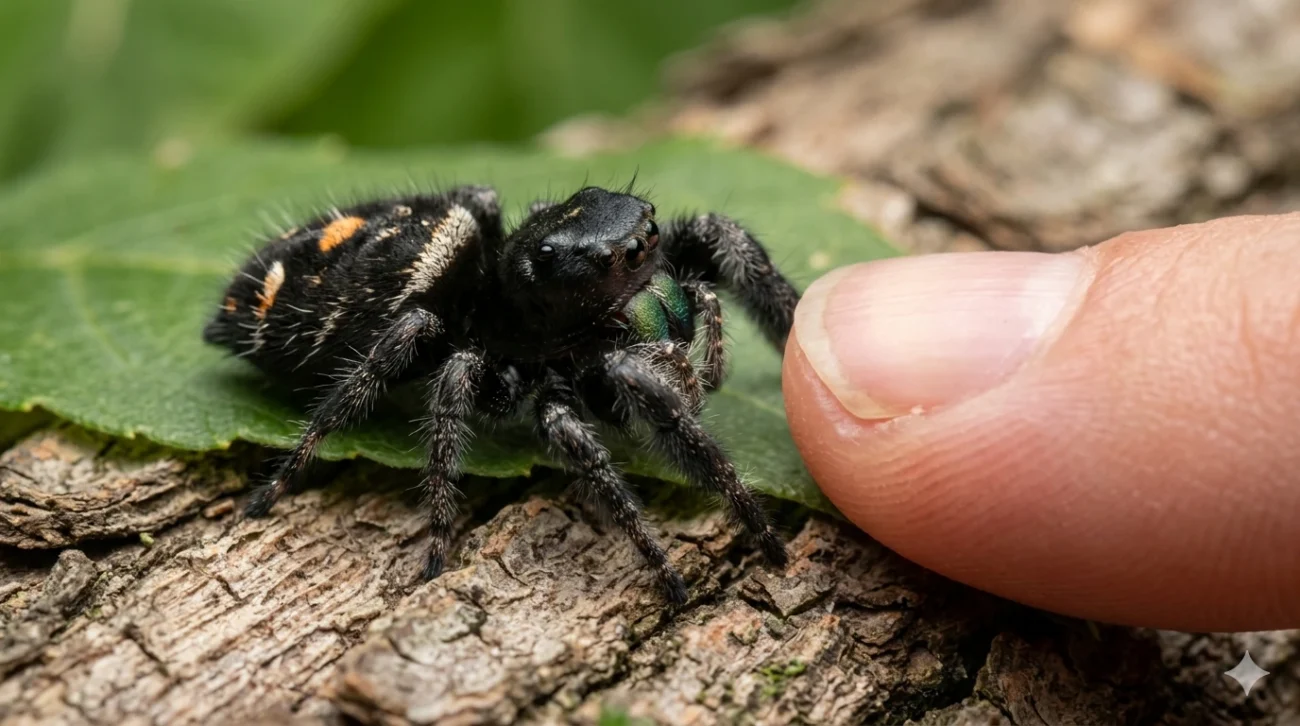
Bold Jumping Spider Size: Introduction and Overview
The Bold Jumping Spider Size is one of the most searched topics among spider enthusiasts in the USA. This small but fascinating spider, scientifically known as Phidippus audax, is widely recognized for its unique appearance and active behavior. Additionally, its size plays a key role in identification and understanding its growth stages.
In fact, many people are curious about how big a bold jumping spider can grow. Some assume they are large due to their bold markings, while others underestimate their actual size. Therefore, having accurate information helps avoid confusion and improves species identification.
Moreover, bold jumping spiders are commonly found in gardens, homes, and outdoor environments across the United States. As a result, both beginners and experienced spider keepers often encounter them. Understanding the Bold Jumping Spider Size helps determine whether the spider is juvenile or fully grown.
Additionally, size is closely linked to diet, habitat, and overall health. For example, spiders with better access to food tend to grow slightly larger. On the other hand, environmental factors such as temperature and space can influence development.
- Helps identify growth stage of the spider
- Useful for pet owners and hobbyists
- Important for distinguishing similar species
- Provides insight into spider health and development
Furthermore, many users in the USA are now keeping jumping spiders as pets. Therefore, knowing the Bold Jumping Spider Size is essential for proper care, enclosure setup, and feeding routines.
This guide will provide detailed insights into size, growth stages, diet, and behavior. As a result, you will gain a complete understanding of this popular species and make informed decisions whether you are observing it in the wild or keeping it as a pet.
What is the Average Bold Jumping Spider Size?
Understanding the Bold Jumping Spider Size starts with knowing its average measurements. In the USA, adult bold jumping spiders are considered small to medium-sized spiders. However, their compact body and bold markings often make them appear larger than they actually are.
Typically, adult spiders range between 6 mm to 18 mm in body length. Additionally, females are usually larger than males, which is common in many spider species. As a result, identifying gender based on size is often possible.
In fact, when comparing measurements, female bold jumping spiders tend to reach the upper size range. On the other hand, males are slightly smaller but more agile and active. Therefore, both size and behavior can help distinguish between them.
Average Size Breakdown
- Adult Female: 8 mm to 18 mm
- Adult Male: 6 mm to 12 mm
- Spiderlings: Less than 2 mm at early stage
Additionally, the size of a bold jumping spider can vary depending on environmental factors. For example, spiders with a rich Bold jumping spider diet tend to grow faster and reach larger sizes. However, limited food supply may slow down growth.
Moreover, climate also plays a role. In warmer regions of the USA, spiders may develop more quickly. As a result, they can reach their full size in a shorter period.
It is also important to note that body length does not include leg span. Therefore, when legs are extended, the spider may appear significantly larger than its actual body measurement.
Overall, understanding these size ranges helps with identification, care, and observation. Next, we will explore the growth stages that lead to these size differences.
Bold Jumping Spider Growth Stages and Size Development
The Bold Jumping Spider Size changes significantly throughout its life cycle. Understanding these growth stages helps identify whether a spider is young or fully mature. Additionally, it provides useful insights for pet owners and researchers in the USA.
Like other spiders, bold jumping spiders grow through a process called molting. During this process, they shed their outer skin to allow for growth. As a result, their size increases gradually after each molt.
Key Growth Stages
Egg Stage
The life cycle begins with eggs, which are extremely small and usually kept in a silk sac. At this stage, size is not visible without magnification.
Spiderling Stage
After hatching, spiderlings are tiny, often less than 2 mm. However, they grow quickly if food is available. Therefore, early feeding plays a crucial role in development.
Juvenile Stage
During this phase, the spider continues to molt and grow. Additionally, markings become more visible, making identification easier. Size typically ranges from 2 mm to 6 mm.
Sub-Adult Stage
At this stage, the spider is close to full size but not fully mature. Behavior becomes more active, and hunting skills improve significantly.
Adult Stage
Fully grown adults reach their maximum Bold Jumping Spider Size. Females become larger and more robust, while males remain smaller but highly active.
- Molting is essential for growth
- Diet directly affects size increase
- Each stage shows visible size differences
- Environmental factors influence growth speed
Additionally, a proper Bold jumping spider diet supports healthy development at every stage. For example, small insects like fruit flies help spiderlings grow faster. As a result, nutrition plays a key role in reaching full size.
Therefore, understanding growth stages helps in proper care, identification, and observation. Next, we will compare male and female size differences in more detail.
Male vs Female Bold Jumping Spider Size Differences
When discussing Bold Jumping Spider Size, one of the most important aspects is the difference between males and females. In the USA, many spider enthusiasts use size as a quick way to identify gender. Additionally, physical appearance and behavior also help confirm the distinction.
In general, female bold jumping spiders are larger and more robust. On the other hand, males are smaller, slimmer, and more active. Therefore, observing both size and movement patterns can make identification easier.
Key Differences in Size and Appearance
- Females typically range from 8 mm to 18 mm in body length
- Males usually grow between 6 mm to 12 mm
- Females have a thicker and more rounded body
- Males appear slimmer with longer legs
Additionally, females often have a more stable and calm behavior. They spend more time guarding eggs and hunting efficiently. As a result, their larger size supports reproduction and survival.
On the other hand, males are more active and constantly moving. This is mainly due to their search for mates. Therefore, their smaller size allows for greater agility and speed.
Behavior Linked to Size
- Females: Calm, strategic hunters, less movement
- Males: Active, fast, frequently exploring surroundings
Moreover, environmental conditions can influence how large each gender grows. For example, access to a proper Bold jumping spider diet can lead to slightly larger females. However, males usually remain smaller regardless of conditions.
In fact, these differences are helpful for beginners who want to identify their spider quickly. Therefore, observing size, body shape, and behavior together gives the most accurate result.
Next, we will explore how habitat and environmental factors affect the size and growth of bold jumping spiders.
How Habitat Affects Bold Jumping Spider Size
The environment plays a major role in determining Bold Jumping Spider Size. In the USA, these spiders are found in a wide range of habitats, including gardens, forests, urban homes, and outdoor structures. As a result, their size can vary depending on where they live.
Additionally, environmental conditions such as temperature, humidity, and food availability directly influence growth. Therefore, spiders living in ideal conditions tend to reach their full size more efficiently.
Key Environmental Factors
- Temperature: Warmer climates support faster growth
- Food Supply: Regular feeding increases size potential
- Habitat Space: Larger areas allow more movement and hunting
- Humidity Levels: Balanced moisture supports healthy molting
For example, bold jumping spiders living in southern states like Texas or Florida often grow faster due to warmer temperatures. On the other hand, spiders in colder regions may grow more slowly. However, they can still reach normal adult size over time.
Moreover, access to a proper Bold jumping spider diet is one of the most important factors. Spiders that regularly catch insects such as flies or small bugs tend to develop better and reach larger sizes. As a result, diet and habitat work together to influence growth.
Urban environments also affect development. For instance, spiders living near homes may have easier access to insects attracted by lights. Therefore, they may grow slightly larger compared to those in limited natural habitats.
However, extreme conditions can negatively impact growth. For example, lack of food or very dry environments may slow development. As a result, spiders may remain smaller than average.
Understanding these habitat factors helps explain why Bold Jumping Spider Size can vary between individuals. Next, we will provide a clear comparison table showing size differences across growth stages.
Bold Jumping Spider Size Chart by Growth Stage
To better understand Bold Jumping Spider Size, it is helpful to look at a structured comparison across different growth stages. This bold jumping spider size chart makes it easier for users in the USA to identify the stage of a spider based on its body length and characteristics.
Additionally, size varies depending on diet, habitat, and environmental conditions. However, the ranges below provide a reliable estimate for most situations.
| Growth Stage | Size Range | Key Characteristics |
|---|---|---|
| Egg | Microscopic | Stored in silk sac, not visible without magnification |
| Spiderling | Less than 2 mm | Very small, rapid early growth, requires frequent feeding |
| Juvenile | 2 mm to 6 mm | Developing markings, active hunting behavior |
| Sub-Adult | 6 mm to 10 mm | Near maturity, improved agility and strength |
| Adult Male | 6 mm to 12 mm | Smaller, more active, slimmer body |
| Adult Female | 8 mm to 18 mm | Larger, stronger, more rounded body |
As shown in this bold jumping spider size chart, females typically reach the largest size. On the other hand, males remain smaller but are more agile. Therefore, size alone can give useful clues about both age and gender.
In fact, this table is especially useful for beginners who want quick identification without detailed analysis. Additionally, it helps pet owners monitor growth and ensure proper care.
- Provides quick size reference
- Helps identify growth stage easily
- Useful for both beginners and experts
- Supports better care and observation
Next, we will compare bold jumping spiders with other species to highlight how their size differs in the jumping spider family.
Bold Jumping Spider Size Compared to Other Jumping Spider Species
When analyzing Bold Jumping Spider Size, it is helpful to compare it with other jumping spider species. This comparison allows users in the USA to better understand how this species stands out in terms of size, appearance, and behavior.
In fact, jumping spiders belong to a large family known as Salticidae. Many species exist, but not all of them grow to the same size. Therefore, comparing these spiders helps improve identification accuracy.
Key Size Comparisons
| Spider Species | Average Size | Key Differences |
|---|---|---|
| Bold Jumping Spider | 6 mm to 18 mm | Robust body, bold markings, common in USA |
| Zebra Jumping Spider | 5 mm to 9 mm | Smaller size, striped pattern |
| Regal Jumping Spider | 10 mm to 22 mm | Larger size, more colorful appearance |
| Twin-flagged Jumping Spider | 6 mm to 13 mm | Unique leg display, moderate size |
As shown above, the bold jumping spider falls into the medium size range compared to other species. Additionally, it is larger than zebra jumping spiders but smaller than regal jumping spiders.
Moreover, appearance also plays a role in identification. For example, the bold jumping spider has distinct white spots and a black body. On the other hand, zebra spiders have striped patterns, which can confuse beginners.
Additionally, behavior differences are noticeable. Bold jumping spiders are known for their curiosity and strong hunting ability. As a result, they are often easier to observe in both indoor and outdoor environments.
- Medium-sized compared to other jumping spiders
- Larger than common house jumping spiders
- Smaller than some tropical species
- Easy to identify due to bold markings
Therefore, comparing species helps users understand the true Bold Jumping Spider Size and avoid misidentification.
Next, we will explore the pros and cons of bold jumping spiders, especially for those considering them as pets.
Pros and Cons of Understanding Bold Jumping Spider Size
Knowing the Bold Jumping Spider Size offers several advantages, especially for enthusiasts, pet owners, and researchers in the USA. However, there are also a few limitations that users should be aware of. Therefore, evaluating both sides helps make better decisions.
In fact, understanding size is not just about measurement. It also connects with behavior, diet, and habitat conditions. As a result, it provides a complete picture of the spider’s development.
Pros
- Helps accurately identify the spider species
- Allows better understanding of growth stages
- Useful for proper pet care and enclosure setup
- Supports monitoring health and development
- Improves observation and research accuracy
Additionally, knowing the size range helps avoid confusion with other jumping spider species. For example, beginners often misidentify smaller species as juveniles. Therefore, size awareness improves identification accuracy.
Cons
- Size alone cannot confirm species identification
- Environmental factors can cause size variation
- Beginners may misjudge size without proper tools
- Juvenile spiders are difficult to identify accurately
On the other hand, relying only on Bold Jumping Spider Size can sometimes lead to incorrect conclusions. For instance, two spiders may have similar sizes but belong to different species. Therefore, other factors such as markings and behavior should also be considered.
Moreover, diet plays a major role in growth. A poor Bold jumping spider diet may result in smaller size, which can mislead identification. As a result, combining size with other observations is always the best approach.
In conclusion, understanding size offers strong benefits when used correctly. Next, we will explore real customer and user experiences to provide practical insights from the USA.
Customer Testimonial Highlights on Bold Jumping Spider Size
Real-world experiences help validate information about Bold Jumping Spider Size. In the USA, many spider enthusiasts, hobbyists, and pet owners share their observations based on daily interactions with this species. Therefore, these insights provide practical value beyond theoretical knowledge.
In fact, user experiences often highlight how size varies depending on environment, diet, and care conditions. Additionally, many beginners are surprised by how small these spiders actually are compared to their bold appearance.
USA User Experiences
- David from California: “I thought my bold jumping spider was large, but after measuring it, I realized it was only about 8 mm. The size guide really helped me understand its stage.”
- Emily from Texas: “My spider grew faster than expected because of a good diet. Learning about Bold jumping spider diet made a big difference in its growth.”
- Michael from Florida: “I used the size chart to identify whether my spider was juvenile or adult. It was surprisingly accurate and helpful.”
- Sophia from New York: “I keep jumping spiders as pets, and understanding their size stages helped me set up the right enclosure.”
Additionally, many users mention that size awareness reduces confusion when identifying different jumping spider species. As a result, beginners feel more confident in observing and caring for them.
On the other hand, some users note that environmental factors can sometimes make size estimation difficult. However, combining behavior and markings with size gives better accuracy.
- Improves species identification confidence
- Helps beginners understand growth stages
- Supports better pet care decisions
- Reduces confusion with similar species
Therefore, real user feedback confirms that understanding Bold Jumping Spider Size is essential for both hobbyists and researchers. Next, we will move toward the final call-to-action and conclusion section.
Take Action: Learn More About Bold Jumping Spider Size
Understanding Bold Jumping Spider Size is essential for anyone interested in jumping spiders in the USA. Whether you are a beginner, a pet owner, or a researcher, accurate size knowledge helps you make better decisions. Therefore, applying what you have learned will improve your overall experience.
Additionally, size awareness is not just about measurement. It connects with behavior, diet, and habitat conditions. As a result, you gain a complete understanding of how these fascinating spiders grow and survive.
Why You Should Keep Learning
- Helps you identify spiders more accurately
- Improves care for pet jumping spiders
- Enhances understanding of growth patterns
- Reduces confusion with similar species
For example, many USA-based hobbyists discover that tracking size changes helps them monitor spider health more effectively. On the other hand, ignoring size details can lead to misidentification and care mistakes.
Moreover, combining Bold jumping spider diet knowledge with size tracking provides even better results. Therefore, both factors should be studied together for complete understanding.
Conclusion
In conclusion, the Bold Jumping Spider Size offers valuable insights into the life and development of this unique species. It helps in identification, care, and research, especially for enthusiasts in the United States.
However, size alone is not enough. It should always be combined with behavior, markings, and diet observations for accurate results. As a result, you get a more reliable understanding of the species.
Therefore, continue exploring, observing, and learning about jumping spiders to deepen your knowledge and experience. The more you study, the more fascinating these small creatures become.
Start observing your bold jumping spider today and apply these insights for better understanding and care.
Frequently Asked Questions (FAQs)
1. What is the average Bold Jumping Spider Size?
The average Bold Jumping Spider Size is usually between 6 mm to 12 mm. Females are often slightly larger than males in most cases.
2. How big can bold jumping spiders get?
They can grow up to around 12 mm in body length. However, environmental conditions and diet can slightly affect their final size.
3. Are bold jumping spiders friendly?
Yes, they are generally considered non-aggressive and curious. They may even interact with humans by turning or observing movements.
4. What does a bold jumping spider diet include?
Their diet mainly includes small insects like flies, ants, and tiny moths. A proper diet helps maintain healthy growth and size development.
5. Do bold jumping spiders grow quickly?
Yes, they grow relatively fast compared to many spider species. Growth speed depends on food availability and environmental conditions.
6. How can I measure bold jumping spider size accurately?
You can use a small ruler or macro lens for close observation. Measuring from the front of the head to the end of the abdomen gives accurate results.
7. Why does bold jumping spider size vary?
Size variation occurs due to diet, habitat, and genetic factors. Therefore, two spiders of the same species may not always be identical in size.
