
Can Spiders Hear? Surprising Facts You Should Know
Can Spiders Hear? Surprising Facts You Should Know is a question many people ask when they notice spiders reacting quickly to movement. At first, it may seem like spiders can hear sounds just like humans. However, the reality is far more interesting.
Spiders do not have ears like humans or other animals. Therefore, they cannot hear sounds in the traditional way. Instead, they rely on highly sensitive body structures to detect vibrations. As a result, what looks like hearing is actually vibration sensing.
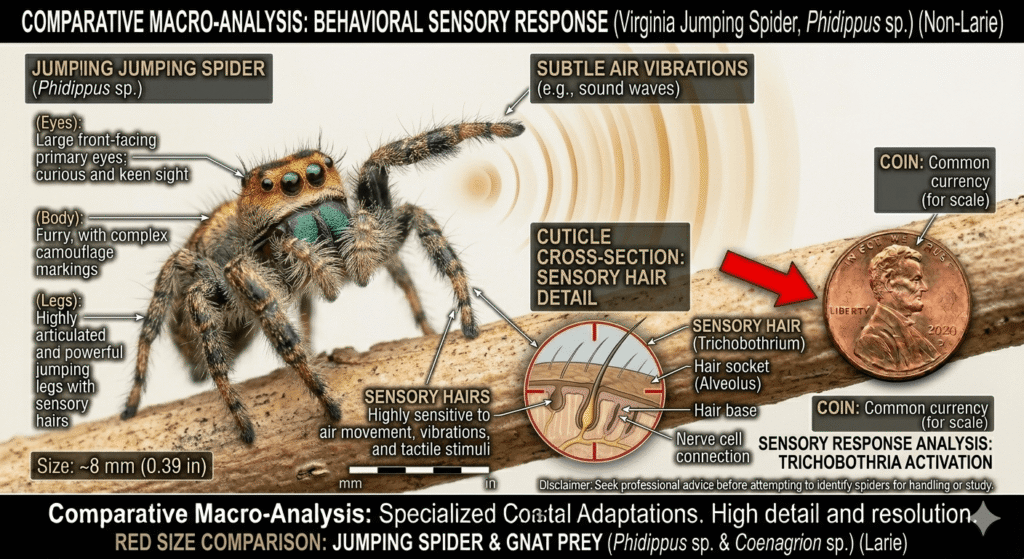
In fact, spiders are extremely skilled at sensing even the slightest movement in their surroundings. This ability helps them survive in the wild. Additionally, certain species, such as jumping spiders, can detect airborne vibrations that behave like sound waves.
Why Understanding Spider Senses Matters
Many people fear spiders because they misunderstand how they behave. However, learning how spiders sense the world can reduce unnecessary fear. It also helps you react more effectively when you encounter one.
- Spiders do not hear human conversations
- They respond mainly to vibrations, not voices
- Their senses are designed for survival and hunting
For example, if you talk near a spider, it may not respond at all. On the other hand, if you tap the floor or create vibrations, it may quickly move away. Therefore, vibrations play a key role in how spiders react.
Quick Answer to the Main Question
So, can spiders hear? The simple answer is no. However, they can detect sound vibrations through their legs and body. Therefore, their version of hearing is completely different from humans.
Key Takeaways
- Spiders do not have ears
- They sense vibrations instead of sound
- Some species detect airborne vibrations
- Their sensory system is highly advanced
Do Spiders Have Ears?
When asking Can Spiders Hear? Surprising Facts You Should Know, the first thing to understand is whether spiders even have ears. The simple answer is no. Spiders do not have ears like humans or most animals. However, this does not mean they are unaware of sounds around them.
Instead of ears, spiders rely on specialized sensory organs located across their bodies. These organs allow them to detect vibrations in the air and on surfaces. As a result, spiders experience the world in a completely different way.
In fact, their ability to sense movement is so advanced that it often appears like hearing. However, scientifically, it is vibration detection rather than true sound processing.
How Spider Anatomy Differs from Humans
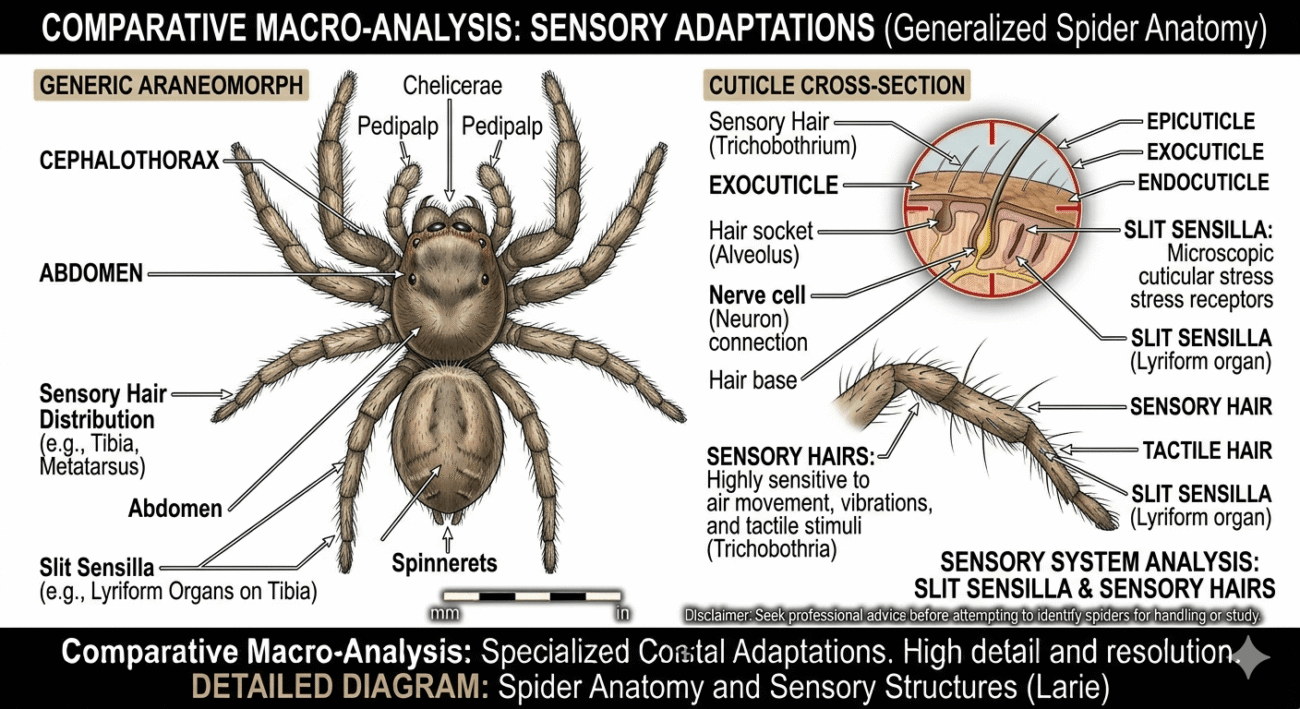
Humans use ears to capture sound waves and send signals to the brain. On the other hand, spiders use tiny hair-like structures and pressure sensors on their legs and bodies.
- Humans rely on ears for hearing
- Spiders rely on sensory hairs and slit organs
- Sound is processed differently in both systems
For example, if you speak to a spider, it will likely not respond. However, if you create vibrations by tapping nearby, it may react instantly. Therefore, spiders are more sensitive to physical movement than airborne sound.
Sensory Organs That Replace Ears
Spiders have unique structures that act as substitutes for ears. These organs help them detect even the slightest changes in their environment. Additionally, they play a major role in hunting and survival.
Key Sensory Structures
- Trichobothria: Fine hairs that detect air movement
- Slit sensilla: Sensors that detect pressure and vibrations
- Leg receptors: Help identify surface vibrations
Because of these features, spiders can detect prey, predators, and environmental changes quickly. As a result, they rarely need traditional hearing organs.
Why Spiders Don’t Need Ears
Spiders evolved to rely on vibrations instead of sound. This method is more effective for their survival. For instance, vibrations travel better through webs and surfaces, which spiders constantly use.
- Web vibrations signal trapped prey
- Ground vibrations warn of danger
- Air movement indicates nearby activity
Therefore, even without ears, spiders are highly aware of their surroundings. In fact, their system is often more precise than human hearing in certain situations.
How Do Spiders Detect Sound?
To fully understand Can Spiders Hear? Surprising Facts You Should Know, you need to explore how spiders actually detect sound-like signals. While they do not hear in the traditional sense, they are experts at sensing vibrations in both air and surfaces.
Instead of ears, spiders use specialized sensory structures that pick up even the slightest movement. As a result, they can detect prey, predators, and environmental changes with impressive accuracy. In fact, their sensitivity often exceeds what humans can perceive.
Additionally, spiders combine multiple sensing methods at once. This makes their detection system highly efficient and reliable in different situations.
Vibration Detection: The Core Mechanism
Spiders rely heavily on vibrations to understand their surroundings. These vibrations travel through surfaces like webs, walls, and the ground. Therefore, spiders can react instantly to movement nearby.
- Web vibrations signal trapped prey
- Ground vibrations warn of approaching threats
- Surface movement helps spiders locate direction
For example, when an insect gets caught in a web, the spider instantly detects the vibration pattern. As a result, it can quickly move toward its prey without seeing it.
Airborne Vibration Detection
Although spiders mainly rely on surface vibrations, some species can also detect airborne movements. This ability is especially noticeable in jumping spiders.
These spiders use tiny sensory hairs called trichobothria. These hairs respond to subtle air shifts caused by sound waves. Therefore, while they do not hear voices directly, they can sense movement created by sound.
Key Features of Air Detection
- Detects low-frequency air vibrations
- Helps identify flying insects
- Enhances awareness beyond the web
However, this does not mean spiders can understand speech. Instead, they react only to physical changes in air pressure.
How Accurate Is Their Detection?
Spiders are extremely precise when detecting vibrations. In fact, they can determine the direction, distance, and intensity of movement. As a result, they rarely miss important signals in their environment.
- Identify exact prey location
- Differentiate between harmless and dangerous vibrations
- React within milliseconds
On the other hand, loud human noise without vibration may not affect them at all. Therefore, sound alone is less important than movement.
Can Spiders Hear Airborne Sounds?
When exploring Can Spiders Hear? Surprising Facts You Should Know, one important question is whether spiders can detect airborne sounds like human voices. The answer is not straightforward. While spiders do not hear in the traditional sense, some species can sense airborne vibrations.
In recent studies, scientists discovered that certain spiders, especially jumping spiders, respond to low-frequency sound waves. However, this does not mean they “hear” like humans. Instead, they detect air movement caused by sound.
As a result, spiders may react to specific vibrations in the air. However, they do not recognize speech, words, or voices.
Scientific Findings on Airborne Sound Detection
Research shows that spiders use their fine body hairs to sense tiny changes in air pressure. These hairs move when sound waves pass through the air. Therefore, spiders can pick up certain frequencies.
- Low-frequency sounds are easier for spiders to detect
- High-frequency human speech is mostly ignored
- Sensory hairs act like motion detectors, not ears
For example, a nearby buzzing insect creates vibrations that spiders can detect. On the other hand, normal conversation often does not trigger any response.
Can Spiders Hear Human Speech?
This is a common concern. Many people ask, “Can spider hear human speaks?” The answer is no. Spiders cannot understand or hear human speech.
However, loud sounds that create vibrations might still affect them. For instance, footsteps or vibrations from music can alert a spider. Therefore, the reaction is due to movement, not sound itself.
What Spiders Respond To
- Strong vibrations from movement
- Air pressure changes from nearby activity
- Low-frequency sound waves
What they do not respond to includes:
- Normal talking or whispering
- Complex sound patterns like language
- Audio without physical vibration
Real-Life Example
Imagine speaking softly near a spider. It will likely stay still. However, if you clap loudly or stomp your foot, it may react instantly. This happens because those actions create stronger vibrations.
Therefore, spiders are not hearing you. Instead, they are sensing physical disturbances in their environment.
How Sensitive Are Spiders to Vibrations?
To better understand Can Spiders Hear? Surprising Facts You Should Know, it is important to explore just how sensitive spiders are to vibrations. Surprisingly, spiders are among the most sensitive vibration detectors in the animal world. As a result, they can notice movements that humans would never detect.
Instead of relying on sound, spiders use their legs and body sensors to pick up even the slightest disturbance. In fact, this sensitivity allows them to survive, hunt, and avoid danger efficiently.
Additionally, their ability to detect vibrations works in both air and solid surfaces. Therefore, spiders remain constantly aware of their surroundings.
How Spiders Sense Tiny Movements
Spiders have specialized structures that respond instantly to vibration signals. These sensors are so advanced that they can detect differences in movement patterns.
- Leg sensors pick up surface vibrations
- Body hairs detect air movement
- Pressure receptors identify intensity and direction
For example, when an insect struggles in a web, the spider can identify its exact position. As a result, it moves directly toward the prey without hesitation.
How Accurate Is Their Detection?
Spiders do not just feel vibrations. They analyze them with incredible precision. Therefore, they can distinguish between different types of movement.
-
- Identify prey vs non-prey vibrations
- Detect distance and direction accurately
- Respond within milliseconds
In fact, some spiders can tell whether a vibration is caused by wind, prey, or a predator. This helps them avoid unnecessary energy use and stay safe.
Comparison with Other Creatures
Compared to many insects, spiders have a more refined vibration detection system. On the other hand, animals that rely on hearing may miss subtle surface movements.
- More sensitive than many insects
- Better at detecting surface signals than airborne sound
- Highly adapted for web-based hunting
Therefore, while spiders cannot hear like humans, their vibration sensitivity gives them a powerful advantage.
Why This Sensitivity Matters
This ability plays a key role in spider survival. Without it, they would struggle to hunt or avoid danger.
- Helps capture prey quickly
- Warns about nearby threats
- Supports navigation in the dark
As a result, spiders do not need traditional hearing at all. Their vibration-based system is more than enough.
Do Different Spider Species Hear Differently?
When exploring Can Spiders Hear? Surprising Facts You Should Know, it is important to understand that not all spiders sense their environment in the same way. Different species have evolved unique abilities based on how they hunt and survive. As a result, their sensitivity to vibrations and airborne signals can vary significantly.
Some spiders rely heavily on webs, while others actively hunt. Therefore, their sensory systems are adapted to match their lifestyle. Additionally, these differences explain why certain spiders appear more responsive to movement than others.
Web-Building Spiders vs Hunting Spiders
Web-building spiders depend mainly on vibrations traveling through their webs. On the other hand, hunting spiders rely more on direct environmental sensing.
- Web spiders detect vibrations through silk threads
- Hunting spiders use body sensors and vision
- Each type reacts differently to movement
For example, a spider sitting in its web can instantly detect trapped prey. In contrast, a hunting spider must rely on ground vibrations and air movement to locate targets.
Jumping Spiders: Advanced Sensory Abilities
Jumping spiders are among the most advanced when it comes to sensing their surroundings. In fact, they can detect airborne vibrations better than many other species.
Additionally, they combine vibration sensing with excellent vision. Therefore, they can react to both movement and visual cues.
Key Features of Jumping Spiders
- Highly sensitive to air vibrations
- Strong visual recognition abilities
- Active hunters rather than web builders
Because of these traits, jumping spiders may appear more aware of nearby activity. However, they still do not hear sounds like humans.
Ground-Dwelling Spiders
Ground-dwelling spiders focus more on surface vibrations. These spiders often live in burrows or on the ground, where sound travels differently.
- Detect footsteps and ground movement
- React quickly to nearby threats
- Rely less on airborne signals
As a result, they are extremely effective at sensing danger before it reaches them.
What This Means for Humans
Understanding these differences helps answer common questions like “Can a spider recognize you?” The truth is, spiders do not recognize humans personally. However, they can detect movement patterns.
- They react to vibrations, not identity
- They do not remember human faces
- Responses are based on survival instincts
Therefore, while different species have varying abilities, none of them truly hear or recognize humans the way we do.
How Do Spiders Compare to Other Animals in Hearing?
To better understand Can Spiders Hear? Surprising Facts You Should Know, it helps to compare spiders with other animals. While spiders do not have ears, many animals rely heavily on hearing for survival. Therefore, this comparison highlights how unique spiders truly are.
Unlike mammals and birds, spiders depend on vibration detection rather than sound processing. As a result, their sensory system works differently but remains highly effective. In fact, in some situations, spiders outperform animals that rely on traditional hearing.
Key Differences Between Spiders and Other Animals
Animals such as humans, dogs, and cats use ears to detect airborne sound waves. On the other hand, spiders rely on physical movement in their environment.
- Humans use ears to hear and interpret sound
- Dogs detect a wider range of frequencies
- Spiders sense vibrations instead of sound
For example, a dog can hear distant sounds clearly. However, it may not detect subtle surface vibrations as effectively as a spider. Therefore, each system has its own strengths.
Comparison Table: Spiders vs Other Animals
| Feature | Spiders | Humans | Dogs | Insects |
|---|---|---|---|---|
| Hearing Organs | No ears | Well-developed ears | Highly sensitive ears | Varies by species |
| Sound Detection | Vibrations only | Airborne sound | Wide frequency range | Limited sound detection |
| Sensitivity | Extremely high (vibrations) | Moderate | Very high (sound) | Moderate |
| Response Speed | Instant | Fast | Very fast | Varies |
| Primary Survival Tool | Vibration sensing | Hearing + vision | Hearing + smell | Mixed senses |
Strengths of Spider Sensing
Although spiders cannot hear like humans, their vibration detection offers several advantages. In fact, this system is perfectly suited for their environment.
- Detects hidden prey through surfaces
- Works effectively in darkness
- Provides precise location tracking
Additionally, spiders do not rely on loud signals. Therefore, they can operate quietly and efficiently.
Limitations Compared to Hearing Animals
On the other hand, spiders do have limitations. Since they do not process sound, they miss certain environmental cues.
- Cannot hear voices or communication
- Limited response to airborne sound
- Dependence on physical movement
Therefore, while spiders are highly skilled in sensing vibrations, they do not replace true hearing abilities found in other animals.
Pros and Cons of Spider Hearing Abilities
When analyzing Can Spiders Hear? Surprising Facts You Should Know, it is important to look at both the strengths and limitations of their sensory system. Although spiders do not have ears, their vibration-based detection offers unique advantages. However, it also comes with certain drawbacks.
Understanding these pros and cons helps clarify why spiders behave the way they do. Additionally, it allows you to better predict their reactions in real-life situations.
Advantages of Spider Sensory System
Spiders have evolved a highly efficient system that works perfectly for their survival. As a result, they can detect even the smallest changes in their environment.
- Extremely sensitive to vibrations
- Can detect prey without seeing it
- Works effectively in darkness
- Provides fast reaction to danger
For example, a spider can sense an insect trapped in its web instantly. Therefore, it does not need to rely on vision or sound. Additionally, this system allows spiders to conserve energy while hunting.
Disadvantages of No Hearing Ability
On the other hand, the lack of true hearing limits spiders in certain ways. Since they cannot process sound, they miss important environmental cues.
- Cannot hear human speech or voices
- Limited awareness of distant airborne sounds
- Dependence on physical movement signals
For instance, a spider may not react to someone talking nearby. However, it will respond quickly to vibrations caused by movement. Therefore, sound alone is not enough to trigger a response.
Balanced Perspective
Despite these limitations, spiders are perfectly adapted to their environment. In fact, their system is more useful for their lifestyle than traditional hearing would be.
- Ideal for web-based hunting
- Efficient for detecting ground movement
- Reduces reliance on complex organs
Additionally, their ability to detect vibrations often gives them an advantage over other small creatures. Therefore, the lack of ears is not a weakness but a different evolutionary strategy.
What This Means for You
Many people wonder, “Does noise repel spiders?” The answer is not always. Loud noise alone may not affect them unless it creates vibrations. Therefore, physical disturbance is more effective than sound.
- Noise without vibration has little impact
- Movement-based disturbance is more effective
- Understanding this helps manage spider encounters
Customer Testimonial Highlights and Real-Life Experiences
To better understand Can Spiders Hear? Surprising Facts You Should Know, real-life experiences provide valuable insights. Many homeowners across the USA have observed how spiders react to sound, movement, and environmental changes. As a result, these observations help confirm what science already explains.
Additionally, pest control experts often share similar findings. They note that spiders rarely respond to noise alone. Instead, they react to vibrations caused by human activity.
What Homeowners Commonly Report
People frequently assume spiders react to voices or loud sounds. However, real experiences suggest otherwise. In fact, most reactions are linked to physical movement.
- Spiders do not respond to talking or whispering
- They quickly react to footsteps or vibrations
- Sudden movement causes immediate retreat
For example, a homeowner in Texas reported that a spider remained still during conversation. However, it ran away instantly when someone walked heavily across the floor. Therefore, vibration played the key role.
Insights from Pest Control Professionals
Experts who deal with spiders daily provide consistent feedback. According to their experience, spiders rely heavily on environmental signals rather than sound.
- Noise alone does not repel spiders
- Vibrations from cleaning or movement are more effective
- Spiders avoid areas with frequent disturbance
Additionally, professionals often advise reducing clutter and increasing activity in certain areas. As a result, spiders are less likely to stay in those spaces.
Common Misconceptions
Many myths exist about spider behavior. However, real-world observations help clarify the truth.
- Myth: Spiders can hear and understand humans
- Reality: They only detect vibrations
- Myth: Loud music scares spiders away
- Reality: Only vibration-related movement affects them
Therefore, understanding these facts can help reduce fear and improve how you deal with spiders at home.
Key Takeaways from Real Experiences
- Spiders react to movement, not sound
- Vibration is the main trigger for behavior
- Consistent activity can discourage spiders
Comparison with Competitors: Spider Facts vs Common Pest Control Advice
When researching Can Spiders Hear? Surprising Facts You Should Know, many websites provide incomplete or misleading information. Additionally, some pest control sources oversimplify spider behavior. Therefore, it is important to compare accurate scientific insights with common advice found online.
This section highlights how reliable information differs from typical competitor content. As a result, you can make better decisions based on facts rather than myths.
Common Competitor Claims
Many blogs and pest control pages claim that spiders can hear sounds or are scared of noise. However, these claims are often exaggerated or incorrect.
- Spiders can hear human voices
- Loud sounds repel spiders effectively
- Noise-based devices keep spiders away
In reality, these statements are not fully supported by science. Therefore, relying on them may lead to ineffective results.
Accurate Scientific Explanation
Scientific research clearly shows that spiders do not hear like humans. Instead, they detect vibrations through their body sensors. As a result, their behavior is influenced by movement rather than sound.
- No ears or traditional hearing system
- Highly sensitive to vibrations
- Limited response to airborne sound
For example, ultrasonic repellents often fail because they rely on sound, not vibration. Therefore, they may not work as advertised.
Comparison Table: Facts vs Competitor Claims
| Topic | Competitor Claims | Actual Facts |
|---|---|---|
| Can spiders hear? | Yes, like humans | No, they detect vibrations only |
| Effect of noise | Repels spiders | Only works if it creates vibrations |
| Ultrasonic devices | Highly effective | Limited or inconsistent results |
| Reaction to humans | Respond to voices | Respond to movement patterns |
Why Accurate Information Matters
Using correct information helps you handle spider situations more effectively. Additionally, it prevents unnecessary fear and confusion.
- Avoid wasting money on ineffective products
- Use proven methods based on behavior
- Understand how spiders actually respond
Therefore, focusing on vibration-based strategies is far more reliable than relying on sound alone.
Better Approach for Real Results
Instead of depending on noise, practical actions work better. These methods align with how spiders actually behave.
- Create regular movement in quiet areas
- Reduce clutter and hiding spots
- Use physical cleaning and disturbance
Conclusion: Can Spiders Hear? Surprising Facts You Should Know
After exploring Can Spiders Hear? Surprising Facts You Should Know, the answer is now clear. Spiders do not hear in the traditional sense because they do not have ears. However, they are highly sensitive to vibrations, which allows them to detect movement with remarkable accuracy.
Throughout this guide, we have seen how spiders rely on specialized sensory organs instead of sound. As a result, they can sense prey, detect danger, and respond quickly to environmental changes. Additionally, their system often works better than hearing in certain situations.
- Spiders do not hear human voices
- They respond mainly to vibrations
- Noise alone does not repel spiders
- Movement-based disturbance is more effective
Therefore, if you are trying to understand or manage spider behavior, focusing on vibrations and difference key. In fact, simple actions like cleaning, reducing clutter, and increasing movement in quiet areas can make a noticeable difference.
Additionally, understanding these facts helps reduce fear and confusion. Instead of relying on myths, you can now approach spider encounters with confidence and clarity.
Take Action Today
If you want to keep spiders away effectively, follow practical and proven steps:
- Maintain regular cleaning routines
- Eliminate hiding spots and clutter
- Increase activity in low-traffic areas
- Avoid relying only on sound-based solutions
As a result, you will create an environment that is less attractive to spiders. More importantly, you will use methods that actually work based on real science.
Frequently Asked Questions (FAQs)
Can spiders hear human speech?
No, spiders cannot hear human speech. However, they can detect vibrations caused by movement or loud actions.
Can a spider recognize you?
No, spiders cannot recognize individual humans. Instead, they react to movement patterns and vibrations for survival.
Does noise repel spiders?
Noise alone does not repel spiders. However, vibrations created by movement can cause them to move away.
Why shouldn’t you squish spiders?
Squishing spiders can create mess and may release eggs in some cases. Additionally, many spiders are harmless and help control pests.
How do spiders detect their prey?
Spiders detect prey through vibrations in their webs or on surfaces. As a result, they can locate prey quickly and accurately.
Are spiders afraid of humans?
Spiders are not truly afraid, but they avoid large movements. Therefore, they usually run away when they sense vibrations.
Do ultrasonic repellents work on spiders?
Ultrasonic repellents have limited effectiveness. Since spiders rely on vibrations, these devices may not produce consistent results.
