
Jumping Spider in Virginia: Habitat & Facts Guide
If you have ever spotted a tiny spider suddenly jumping across a surface, you have likely seen a jumping spider in Virginia. These fascinating creatures are common across the state and are known for their sharp vision and active hunting style.
Unlike many other spiders, jumping spiders do not rely on webs to catch prey. Instead, they stalk and leap on insects with surprising precision. As a result, they are often considered one of the most interesting and beneficial spiders found in Virginia homes and gardens.
In fact, many homeowners in the United States encounter jumping spiders indoors, especially during warmer months. However, despite their sudden movements, they are harmless and rarely pose any risk to humans.
Why You Should Learn About Jumping Spiders
Understanding the behavior and habitat of jumping spiders in Virginia can help you feel more comfortable around them. Additionally, it allows you to appreciate their role in controlling pests naturally.
- They reduce insect populations like flies and mosquitoes
- They do not build messy webs inside homes
- They are generally non-aggressive toward humans
- They are easy to identify due to their unique eyes and movement
What This Guide Covers
This comprehensive guide is designed for homeowners, nature enthusiasts, and curious readers in the USA. It explains everything you need to know about jumping spiders in Virginia in a clear and practical way.
- Different types, including brown and large jumping spiders in Virginia
- Typical size and appearance variations
- Where they live and how to find them
- Behavior, safety, and real-life benefits
- Helpful tips for identification and prevention
Additionally, this guide includes insights based on real-world observations in Virginia environments. Therefore, you will gain practical knowledge rather than just basic facts.
Now, let’s explore what exactly a jumping spider is and why it behaves so differently from other spiders.

What is a Jumping Spider in Virginia?
A jumping spider in Virginia belongs to the family Salticidae, which is one of the largest spider families in the world. These spiders are widely known for their excellent vision and unique hunting abilities.
Unlike web-building spiders, jumping spiders actively hunt their prey. They rely on stealth, precision, and powerful jumps. As a result, they are often seen moving quickly on walls, plants, and outdoor surfaces.
In Virginia, these spiders are commonly found in both urban and rural environments. Therefore, you may encounter them inside homes, gardens, parks, or even on window frames.
Key Characteristics of Jumping Spiders
Jumping spiders are easy to recognize once you know what to look for. In fact, their physical features make them stand out from other spider species.
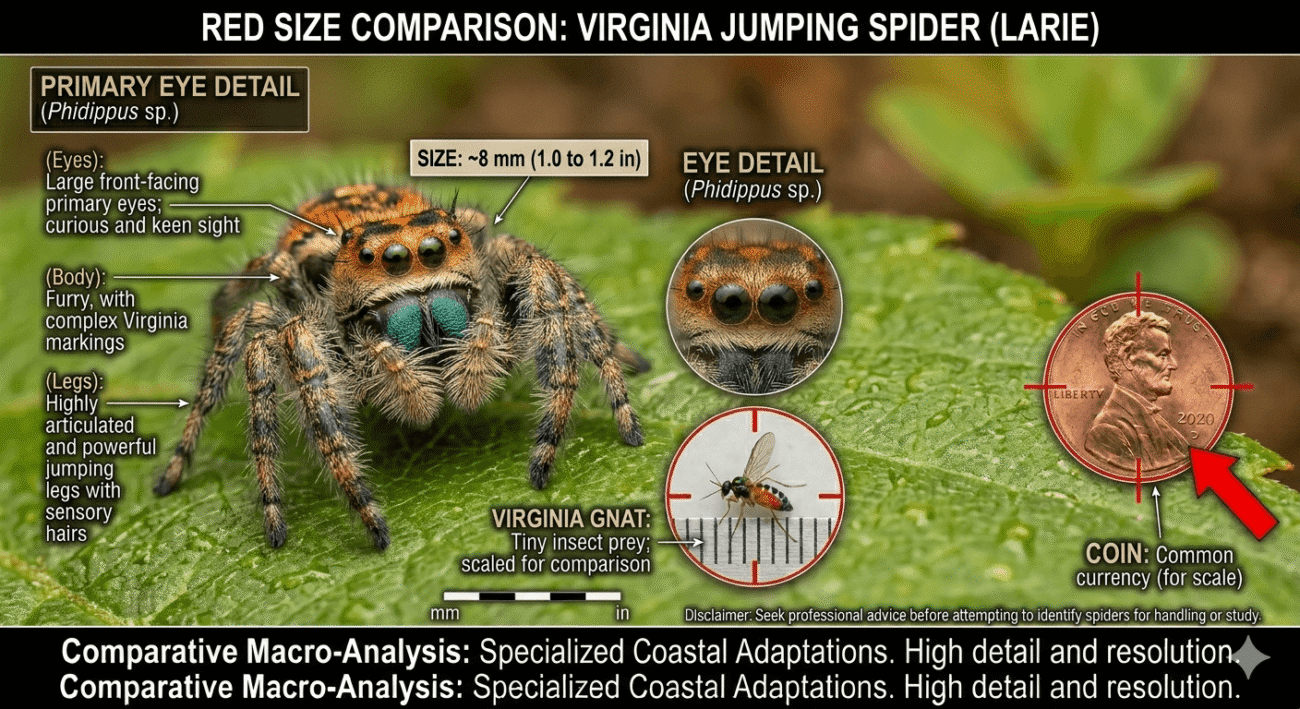
- Large forward-facing eyes that provide excellent vision
- Compact, hairy bodies with short legs
- Ability to jump multiple times their body length
- Curious and alert behavior when observing surroundings
Additionally, their eyesight is among the best in the spider world. This allows them to track moving prey with accuracy. For example, a jumping spider can detect motion from several inches away before making a precise jump.
Size and Appearance Variations
The jumping spider in Virginia size can vary depending on the species. Most are small, but some may appear larger than expected.
- Typical size ranges from 4mm to 18mm
- Some species are considered large jumping spiders in Virginia
- Colors include black, gray, tan, and brown
- Common types include brown jumping spider in Virginia varieties
On the other hand, lighting and surroundings can affect how big they appear. Therefore, a big jumping spider in Virginia may simply be closer to your view or more active.
How They Differ from Other Spiders
Jumping spiders behave very differently compared to traditional spiders. This difference often surprises people who are used to seeing webs in corners.
- They do not spin webs to catch prey
- They actively chase and jump on insects
- They are more active during the daytime
- They rely on vision instead of vibration
As a result, many people find them less frightening than other spiders. In fact, their curious nature often makes them appear almost friendly rather than threatening.
Now that you understand what a jumping spider is, let’s explore the different types found specifically in Virginia.
Types of Jumping Spiders Found in Virginia
Virginia is home to a wide variety of jumping spiders. In fact, several species of jumping spider in Virginia can be found in both natural and urban environments. Each type has unique colors, sizes, and behaviors.
Additionally, understanding these species helps with proper identification. As a result, you can easily recognize whether you are seeing a harmless garden spider or a larger indoor visitor.
Common Jumping Spider Species in Virginia
Although there are many species, a few are commonly seen across the state. These are often spotted around homes, gardens, and wooded areas.
- Bold Jumping Spider (Phidippus audax) – Black body with white or orange spots
- Tan Jumping Spider (Platycryptus undatus) – Flat body with gray and brown tones
- Zebra Jumping Spider (Salticus scenicus) – Black and white striped appearance
- Regal Jumping Spider (Phidippus regius) – Larger species with vibrant markings
For example, the bold jumping spider is one of the most frequently seen species in Virginia. It is often mistaken for a large jumping spider in Virginia due to its size and bold coloring.
Size Differences Between Species
The jumping spider in Virginia size varies depending on the species. Some are tiny and barely noticeable, while others appear quite large.
- Small species: Around 4mm to 6mm
- Medium species: Around 7mm to 12mm
- Large jumping spiders in Virginia: Up to 18mm
However, perception also plays a role. A big jumping spider in Virginia may look larger when it moves quickly or jumps toward a surface.
Color Variations and Identification
Color is another important factor when identifying jumping spiders. In Virginia, you will find a range of shades and patterns.
- Black with white markings (very common)
- Brown jumping spider in Virginia species with tan or earthy tones
- Striped patterns like zebra spiders
- Iridescent or metallic colors in some species
Additionally, lighting conditions can change how these colors appear. Therefore, taking clear observations or referring to jumping spiders in Virginia pictures can help with accurate identification.
Where You Are Most Likely to See Each Type
Different species prefer different environments. Knowing where to look increases your chances of spotting them.
- Gardens and plants: Bold and tan jumping spiders
- Walls and fences: Zebra jumping spiders
- Forests and wooded areas: Larger species like regal jumping spiders
- Indoors near windows: Small to medium species
As a result, homeowners in Virginia often encounter multiple types throughout the year. Each species plays a role in maintaining a healthy ecosystem.
Now that you know the different types, let’s explore where these jumping spiders live and thrive in Virginia.
Habitat of Jumping Spider in Virginia
The habitat of a jumping spider in Virginia is surprisingly diverse. These spiders adapt easily to different environments, which is why they are commonly seen across the state. From forests to city homes, they thrive in many conditions.
Additionally, their ability to hunt without webs allows them to explore more spaces. As a result, they are not limited to corners or hidden areas like traditional spiders.
Natural Habitats in Virginia
In the wild, jumping spiders prefer locations that provide both shelter and access to prey. These environments support their active hunting lifestyle.
- Woodlands and forest edges with plenty of insects
- Grasslands and open fields with sunlight exposure
- Shrubs, bushes, and tree bark for hiding and hunting
- Rocky areas where they can observe prey from above
For example, a brown jumping spider in Virginia is often found blending into tree bark or dry leaves. This natural camouflage helps it stay hidden while hunting.
Urban and Indoor Habitats
However, jumping spiders are not limited to outdoor spaces. In fact, many species adapt well to human environments.
- Window sills and door frames with sunlight
- Walls, ceilings, and corners inside homes
- Gardens, patios, and fences
- Garages, sheds, and storage areas
Additionally, homes in the United States often attract insects, which makes them ideal hunting grounds. Therefore, spotting a jumping spider indoors is quite common, especially during warmer months.
Seasonal Activity in Virginia
The activity of jumping spiders in Virginia changes with the seasons. Understanding this pattern can help you know when to expect them.
- Spring: Increased activity as temperatures rise
- Summer: Peak season with high visibility outdoors
- Fall: Movement indoors for warmth and food
- Winter: Reduced activity, often hidden in sheltered spots
As a result, you are more likely to see a big jumping spider in Virginia during summer when they are actively hunting.
Environmental Conditions They Prefer
Jumping spiders look for specific conditions that support their survival. These factors influence where they settle.
- Warm temperatures with moderate humidity
- Access to sunlight for better visibility
- Abundant insect population
- Safe hiding spots from predators
On the other hand, extreme cold or lack of food reduces their activity. Therefore, they naturally migrate toward more suitable environments.
Now that you understand where they live, let’s explore how jumping spiders behave and hunt in Virginia.
Behavior and Hunting Style of Jumping Spider in Virginia
The behavior of a jumping spider in Virginia is very different from most other spiders. Instead of waiting in webs, these spiders actively hunt their prey. This makes them more dynamic and easier to observe.
Additionally, their sharp vision and quick movements allow them to track insects with precision. As a result, they are considered one of the most skilled hunters in the spider world.
Active Hunting Instead of Web Building
Unlike web-building spiders, jumping spiders rely on movement and timing. They do not use webs to trap prey. Instead, they stalk and jump.
- They slowly approach their target before attacking
- They use silk as a safety line while jumping
- They calculate distance before making a leap
- They capture prey instantly upon landing
For example, a large jumping spider in Virginia may pause for several seconds before jumping. This pause helps it aim accurately.
What Do Jumping Spiders Eat?
The diet of jumping spiders mainly consists of small insects. Therefore, they play an important role in natural pest control.
- Flies and mosquitoes
- Ants and small beetles
- Other small spiders
- Occasionally tiny moths
In fact, homeowners often notice fewer insects in areas where jumping spiders are present. As a result, they are considered beneficial for homes and gardens in Virginia.
Daily Activity Patterns
Jumping spiders are mostly active during the daytime. This is because they depend heavily on vision rather than touch.
- Most active in bright daylight
- Prefer sunny spots like windows and walls
- Rest during nighttime in hidden areas
- Move quickly when disturbed
However, sudden movements can make them appear aggressive. On the other hand, they are simply reacting to their surroundings.
Unique Behavioral Traits
One of the most interesting aspects of a jumping spider in Virginia is its curious nature. These spiders often seem to observe humans.
- They tilt their heads while looking at objects
- They may follow movement with their eyes
- They show hesitation before jumping
- They rarely attack unless threatened
Additionally, their intelligence is higher compared to many other spider species. Therefore, they can adapt quickly to new environments.
Now that you understand their behavior, let’s address an important concern—are jumping spiders in Virginia dangerous to humans?
Are Jumping Spiders in Virginia Dangerous to Humans?
Many people feel concerned when they see a jumping spider in Virginia. However, these spiders are generally harmless to humans. In fact, they are considered one of the safest spider types you can encounter.
Additionally, their behavior is non-aggressive. They prefer to avoid humans rather than attack. As a result, bites are extremely rare and usually happen only if the spider feels trapped.
Do Jumping Spiders Bite?
Yes, jumping spiders can bite, but this is very uncommon. Most encounters end with the spider jumping away instead of defending itself.
- Bites occur only when handled or pressed
- They do not seek out humans to bite
- They rely on escape rather than aggression
- Indoor sightings rarely lead to contact
For example, a big jumping spider in Virginia may look intimidating. However, its first instinct is to run or jump away when approached.
How Dangerous is Their Bite?
The bite of a jumping spider is mild and not medically significant. Therefore, there is no serious health risk for most people.
- Symptoms may include slight redness or swelling
- Mild itching or irritation can occur
- Pain level is similar to a small insect bite
- Severe reactions are extremely rare
Additionally, jumping spiders do not carry harmful venom for humans. As a result, medical treatment is usually not required.
Are Large Jumping Spiders More Dangerous?
Some people assume that a large jumping spider in Virginia is more dangerous. However, size does not increase risk.
- Larger spiders may appear more noticeable
- They still avoid human interaction
- Their venom strength remains the same
- They behave just like smaller species
On the other hand, larger spiders are easier to spot. Therefore, they often seem more threatening than they actually are.
Safety Tips for Homeowners
Although jumping spiders are harmless, it is still helpful to follow basic safety practices. This ensures a comfortable and stress-free environment.
- Avoid handling spiders directly
- Use a glass and paper to relocate them safely
- Keep windows and doors sealed properly
- Reduce indoor insects to limit attraction
In fact, many homeowners in the United States choose to leave jumping spiders alone because of their pest control benefits.
Now that safety concerns are clear, let’s explore the benefits of having jumping spiders in your home and garden.
Benefits of Jumping Spider in Virginia for Your Home and Garden
Seeing a jumping spider in Virginia inside your home may feel surprising at first. However, these spiders offer several benefits that make them valuable rather than harmful. In fact, many homeowners in the United States consider them natural helpers.
Additionally, their presence often indicates a balanced indoor or outdoor environment. As a result, removing them may not always be necessary.
Natural Pest Control
One of the biggest advantages of jumping spiders is their ability to control insect populations. They actively hunt and reduce common household pests.
- They eat flies, mosquitoes, and gnats
- They target ants and small crawling insects
- They help reduce other unwanted spiders
- They prevent pest infestations naturally
For example, a brown jumping spider in Virginia can quietly reduce insects around windows and plants. Therefore, it acts as a chemical-free pest control solution.
No Messy Webs
Unlike traditional spiders, jumping spiders do not build large webs. This makes them much more acceptable indoors.
- No sticky webs in corners or ceilings
- No clutter around furniture or windows
- Minimal silk use only for safety lines
- Cleaner appearance inside homes
As a result, many people prefer having jumping spiders over web-building species. Additionally, this reduces the need for constant cleaning.
Safe for Families and Pets
Jumping spiders are not dangerous to humans or pets. This makes them safe to have around your living space.
- Non-aggressive behavior
- Rarely bite unless provoked
- No harmful venom for humans
- Do not spread diseases
In fact, even a large jumping spider in Virginia poses no real threat. Therefore, there is no need for panic if you see one indoors.
Eco-Friendly and Low Maintenance
Another key benefit is that jumping spiders support an eco-friendly lifestyle. They help maintain balance without requiring any effort from you.
- No need for pesticides or chemicals
- They survive independently
- They adapt to indoor and outdoor environments
- They contribute to biodiversity
On the other hand, removing them may lead to an increase in insects. Therefore, keeping them around can be a smarter choice.
Why You Should Not Kill Them
Many people react quickly when they see a spider. However, killing a jumping spider in Virginia often removes a helpful ally.
- They control pests naturally
- They do not damage property
- They rarely interact with humans
- They improve environmental balance
As a result, experts recommend leaving them undisturbed whenever possible. This approach benefits both your home and the environment.
Now that you understand their benefits, let’s learn how to identify a jumping spider accurately in Virginia.
How to Identify a Jumping Spider in Virginia
Identifying a jumping spider in Virginia is easier once you know the key features. These spiders have distinct physical traits and behaviors that set them apart from other species.
Additionally, proper identification helps reduce fear and confusion. As a result, you can quickly recognize whether the spider you see is harmless and beneficial.
Key Physical Features
Jumping spiders have a unique appearance that makes them stand out. Their body structure and eyes are the most noticeable features.
- Large front-facing eyes that appear almost shiny
- Compact and slightly hairy body
- Short, strong legs designed for jumping
- Rounded head with a distinct face-like look
For example, when you look closely, their eyes may seem to follow movement. This is a clear sign you are looking at a jumping spider.
Size and Shape Differences
The jumping spider in Virginia size can vary, but most follow a similar body structure. Understanding size helps with better identification.
- Small species: Around 4mm to 6mm
- Medium species: Around 7mm to 12mm
- Large jumping spiders in Virginia: Up to 18mm
However, a big jumping spider in Virginia may appear larger due to its movement or proximity. Therefore, observing calmly can help you judge its actual size.
Color and Pattern Recognition
Color patterns are another useful way to identify jumping spiders. In Virginia, several variations exist.
- Black with white or orange spots
- Brown jumping spider in Virginia with earthy tones
- Striped patterns like zebra jumping spiders
- Shiny or slightly metallic appearances
Additionally, lighting conditions can affect how these colors appear. Referring to jumping spiders in Virginia pictures can also improve accuracy.
Movement and Behavior Clues
Behavior is one of the easiest ways to confirm identification. Jumping spiders move differently than most spiders.
- Quick, sudden jumps instead of crawling slowly
- Frequent stops to observe surroundings
- Active during the daytime
- Curious reactions to movement
In fact, their jumping ability is the biggest giveaway. If a spider leaps instead of running, it is likely a jumping spider.
Where to Spot Them Easily
Knowing where to look can make identification much easier. These spiders prefer visible, well-lit areas.
- Window sills and sunny walls
- Garden plants and fences
- Outdoor furniture and railings
- Indoors near light sources
As a result, spotting a jumping spider in Virginia becomes much more predictable. Once you know the signs, identification becomes quick and simple.
How to Prevent or Remove Jumping Spider in Virginia (If Needed)
Although a jumping spider in Virginia is harmless and beneficial, some homeowners still prefer to keep their spaces spider-free. Fortunately, you can prevent or remove them safely without using harsh chemicals.
Additionally, simple changes in your home environment can significantly reduce spider activity. As a result, you can maintain a clean and comfortable living space.
Simple Prevention Tips
Preventing spiders is often easier than removing them. By limiting their access and food sources, you can reduce their presence effectively.
- Seal cracks around windows and doors
- Install or repair window screens
- Keep doors closed, especially at night
- Reduce indoor lighting that attracts insects
For example, fewer insects inside your home means less food for spiders. Therefore, controlling insects is a key step in prevention.
Keep Your Home Clean and Clutter-Free
Clean spaces are less attractive to spiders. They prefer areas where they can hide and find prey easily.
- Vacuum corners, ceilings, and under furniture regularly
- Remove unnecessary clutter from rooms
- Organize storage areas like garages and basements
- Keep surfaces dust-free and tidy
Additionally, a clean home makes it easier to spot a large jumping spider in Virginia before it settles in.
Safe and Humane Removal Methods
If you find a jumping spider indoors, removing it safely is simple. There is no need for harmful sprays or traps.
- Use a glass and paper to gently capture the spider
- Release it outside in a garden or natural area
- Avoid direct contact or handling
- Stay calm to prevent sudden movements
In fact, most jumping spiders will not resist and may jump away on their own. As a result, removal is quick and stress-free.
Natural Repellents You Can Use
Some natural scents can help keep spiders away. These are safe alternatives to chemical products.
- Peppermint oil mixed with water
- Vinegar spray in entry points
- Citrus-based cleaners on surfaces
- Eucalyptus oil in corners and windows
However, these methods should be used consistently for best results. On the other hand, they do not harm the spiders.
When to Take Extra Measures
In rare cases, you may notice frequent sightings of a big jumping spider in Virginia. This usually indicates a higher insect population.
- Check for hidden insect infestations
- Improve ventilation and reduce humidity
- Inspect outdoor areas near entry points
- Consider professional pest control if needed
Therefore, addressing the root cause is more effective than simply removing spiders.
Now that you know how to manage them, let’s explore some interesting facts about jumping spiders in Virginia.
Interesting Facts About Jumping Spider in Virginia
The jumping spider in Virginia is not just another common spider. In fact, it is one of the most fascinating and intelligent spider types found in the United States. These small creatures display behaviors that often surprise even experienced observers.
Additionally, learning these facts can change how you see spiders altogether. As a result, many people begin to appreciate their unique abilities instead of fearing them.
They Have Exceptional Vision
Jumping spiders are known for their incredible eyesight. Unlike most spiders, they rely heavily on vision to hunt and explore.
- They have four pairs of eyes
- The front pair provides sharp, detailed vision
- They can detect movement from a distance
- Their eyes can track objects with precision
For example, a jumping spider can turn its head and focus on moving objects, which gives it a curious and alert appearance.
They Can Jump Multiple Times Their Body Length
As their name suggests, jumping spiders are excellent jumpers. Their jumping ability is one of their most impressive traits.
- They can jump up to 10–50 times their body length
- They use silk as a safety line while jumping
- They calculate distance before launching
- They land accurately on their target
As a result, even a small jumping spider in Virginia can move quickly and efficiently while hunting.
They Show Signs of Intelligence
Jumping spiders are considered highly intelligent compared to other spiders. Their behavior shows planning and problem-solving skills.
- They analyze their surroundings before acting
- They choose the best angle to approach prey
- They can remember hunting paths
- They adjust their strategy if needed
In fact, researchers have observed jumping spiders taking indirect routes to reach prey. Therefore, they do not rely only on instinct.
They Are Curious Creatures
One of the most interesting traits of a jumping spider in Virginia is its curiosity. These spiders often appear to observe humans.
- They tilt their heads when watching movement
- They may move closer instead of running away
- They react to changes in light and motion
- They show alert and responsive behavior
However, this curiosity does not mean aggression. On the other hand, it simply reflects their awareness of their environment.
They Come in Many Colors and Patterns
Jumping spiders are visually diverse. This makes them easier to identify and more interesting to observe.
- Black with white or orange markings
- Brown jumping spider in Virginia with earthy shades
- Striped patterns like zebra spiders
- Some species show shiny or iridescent colors
Additionally, referring to jumping spiders in Virginia pictures can help you recognize these variations more easily.
Now that you know these fascinating facts, let’s move forward to a comparison section to better understand how jumping spiders differ from other common spiders.
Jumping Spider in Virginia vs Other Common Spiders
Understanding how a jumping spider in Virginia compares to other spiders can help reduce fear and confusion. In fact, many people mistake them for more dangerous species due to their sudden movements.
However, jumping spiders are very different in behavior, appearance, and risk level. Therefore, this comparison will help you clearly identify why they are considered safe and beneficial.
Quick Comparison Table
| Feature | Jumping Spider in Virginia | House Spider | Wolf Spider |
|---|---|---|---|
| Hunting Style | Active hunter, jumps on prey | Uses webs to trap prey | Chases prey on the ground |
| Web Usage | Does not build webs for hunting | Builds visible webs indoors | Does not use webs for catching prey |
| Size | Small to medium (4mm–18mm) | Small to medium | Medium to large |
| Appearance | Compact body, large front eyes | Thin legs, less noticeable eyes | Hairy body, longer legs |
| Danger Level | Harmless to humans | Harmless | Mild bite, not dangerous |
| Behavior | Curious and alert | Passive and hidden | Fast-moving and shy |
| Indoor Presence | Common near windows and walls | Common in corners and ceilings | Less common indoors |
Key Differences Explained
The biggest difference is how they hunt. A jumping spider in Virginia actively stalks its prey, while house spiders depend on webs. As a result, you will rarely see messy webs with jumping spiders.
Additionally, their appearance makes them easy to identify. Their large front-facing eyes give them a unique and almost expressive look. On the other hand, wolf spiders appear larger and more intimidating due to their size and speed.
- Jumping spiders rely on vision, not vibrations
- They are more active during the daytime
- They are less likely to hide in dark corners
- They interact more visibly with their surroundings
In fact, many homeowners prefer jumping spiders because they do not create webs and help control pests. Therefore, they are often considered the most beneficial indoor spider in Virginia.
Now that you understand how they compare, let’s look at the pros and cons of having jumping spiders in your home.
Pros and Cons of Jumping Spider in Virginia
Before deciding whether to remove or keep a jumping spider in Virginia, it is important to understand both the advantages and limitations. Although these spiders are beneficial, some homeowners may still feel uncomfortable.
Additionally, weighing the pros and cons helps you make a practical and informed decision. As a result, you can choose the best approach for your home environment.
Pros of Jumping Spiders
Jumping spiders offer several benefits, especially for homeowners dealing with insects. In fact, they are one of the most helpful spiders you can have around.
- Natural pest control by reducing flies and mosquitoes
- No messy webs inside your home
- Harmless to humans and pets
- Active hunters that keep insect populations low
- Require no maintenance or chemicals
- Help maintain a balanced indoor ecosystem
For example, a brown jumping spider in Virginia can quietly eliminate insects near windows and plants. Therefore, it reduces the need for sprays or traps.
Cons of Jumping Spiders
Despite their benefits, there are a few minor drawbacks. However, these are mostly related to perception rather than actual risk.
- Sudden jumping can startle people
- Appearance may be unsettling for some individuals
- Occasional indoor sightings may cause concern
- Rare bites if handled directly
On the other hand, even a large jumping spider in Virginia does not pose a real threat. Therefore, these concerns are usually manageable with proper understanding.
When Should You Be Concerned?
In most cases, there is no reason to worry about jumping spiders. However, certain situations may require attention.
- Frequent sightings indicating high insect activity
- Presence in sensitive areas like bedrooms or kitchens
- Personal fear or discomfort with spiders
Additionally, a big jumping spider in Virginia may appear intimidating. However, it behaves the same way as smaller ones and avoids human interaction.
Final Verdict
Overall, the pros of having a jumping spider in Virginia far outweigh the cons. These spiders are safe, helpful, and environmentally friendly.
- Best for natural pest control
- Safe to keep indoors if comfortable
- Easy to remove if necessary
- Beneficial for both homes and gardens
As a result, most experts recommend leaving them undisturbed unless absolutely necessary. This approach supports a healthier and more balanced living space.
Customer Testimonial Highlights About Jumping Spider in Virginia
Real experiences from homeowners in the United States provide valuable insight into how people perceive a jumping spider in Virginia. In fact, many initial fears turn into appreciation after understanding their behavior.
Additionally, these testimonials highlight real-world situations. As a result, they help new readers feel more confident and informed.
What Homeowners Commonly Experience
Many residents across Virginia report similar encounters with jumping spiders. These experiences often begin with surprise but end with reassurance.
- Spotted near windows during sunny afternoons
- Seen actively hunting small insects indoors
- Observed jumping quickly across walls or furniture
- Found in gardens controlling pest activity
For example, a homeowner in Northern Virginia mentioned noticing fewer flies after spotting a brown jumping spider in Virginia near their kitchen window. Therefore, they chose to leave it undisturbed.
Positive Feedback from Homeowners
Once people learn more about these spiders, their opinions often change. Many begin to see them as helpful rather than harmful.
- “They actually helped reduce insects in my home”
- “I was scared at first, but now I leave them alone”
- “No webs, no mess, and no problems at all”
- “Much better than using chemical sprays”
Additionally, homeowners appreciate their clean and quiet presence. As a result, jumping spiders are often preferred over other spider types.
Concerns and First Impressions
Despite positive experiences, some people still feel uneasy at first. This is usually due to their sudden movements.
- Quick jumping can be surprising
- A big jumping spider in Virginia may look intimidating
- Unfamiliar appearance can cause initial fear
- Unexpected indoor sightings may create concern
However, these concerns usually fade with better understanding. On the other hand, most people realize the spider is harmless after observing it.
Expert Observations and Insights
Pest control professionals across the USA often recommend leaving jumping spiders alone. Their observations align with homeowner experiences.
- They reduce pest populations naturally
- They do not infest homes like other pests
- They rarely reproduce indoors in large numbers
- They are easy to manage without chemicals
In fact, experts consider them beneficial indoor predators. Therefore, their presence is usually a positive sign rather than a problem.
What Should You Do About Jumping Spider in Virginia?
If you have spotted a jumping spider in Virginia, you now have the knowledge to make the right decision. These spiders are not dangerous, and in many cases, they are actually beneficial for your home.
Additionally, understanding their role can help you avoid unnecessary stress. As a result, you can choose a solution that fits your comfort level while maintaining a healthy environment.
Make the Smart Choice for Your Home
Before taking action, consider what matters most to you. Do you want a natural way to control insects, or do you prefer a completely spider-free space?
- Keep them if you want natural pest control
- Remove them safely if you feel uncomfortable
- Avoid harmful chemicals whenever possible
- Focus on long-term prevention strategies
For example, many homeowners in the United States choose to leave jumping spiders alone. Therefore, they benefit from fewer insects without extra effort.
When to Take Action Immediately
In most situations, no urgent action is required. However, certain conditions may require attention.
- Frequent sightings in multiple rooms
- High insect activity attracting spiders
- Personal discomfort or fear
- Presence in sensitive areas like bedrooms
On the other hand, even a large jumping spider in Virginia does not pose a real risk. Therefore, quick removal is usually a matter of preference rather than necessity.
Simple Action Plan You Can Follow Today
If you decide to act, follow this easy and effective plan. It balances safety, cleanliness, and long-term results.
- Inspect your home for entry points and seal them
- Reduce indoor insects by keeping spaces clean
- Use natural repellents for prevention
- Relocate spiders safely instead of killing them
Additionally, consistency is key. Small changes can lead to long-term results without the need for chemicals.
Final Recommendation
In conclusion, a jumping spider in Virginia is more helpful than harmful. It supports a cleaner, pest-free environment with minimal effort.
- Safe for families and pets
- Effective natural pest controller
- Easy to manage or remove
- Eco-friendly solution for modern homes
Therefore, the best approach is to stay informed and act based on your comfort level. Whether you keep them or remove them, you are now equipped to make a confident decision.
Conclusion: Understanding Jumping Spider in Virginia
A jumping spider in Virginia is one of the most misunderstood yet beneficial creatures you may encounter in your home or garden. While their sudden movements can feel surprising, they are completely harmless and play an important role in controlling insect populations.
Additionally, these spiders are easy to identify due to their large eyes and unique jumping behavior. As a result, recognizing them can help reduce fear and confusion during encounters.
Throughout Virginia, homeowners frequently come across different types, including brown jumping spider in Virginia varieties and even what may appear to be a large jumping spider in Virginia. However, regardless of size or color, their behavior and safety level remain the same.
- They are non-aggressive and rarely bite
- They help reduce pests naturally
- They do not create messy webs
- They are safe for families and pets
In fact, many people in the United States choose to leave them undisturbed because of these benefits. Therefore, instead of viewing them as a problem, they can be seen as a natural solution.
Whether you decide to keep or remove them, understanding their role allows you to make a confident and informed choice. Ultimately, a jumping spider in Virginia is more helpful than harmful.
Frequently Asked Questions About Jumping Spider in Virginia
1. Are jumping spiders common in Virginia?
Yes, jumping spiders are very common throughout Virginia. They are found in homes, gardens, forests, and urban areas. Additionally, they are more visible during warmer months when insect activity increases.
2. How big can a jumping spider in Virginia get?
The jumping spider in Virginia size typically ranges from 4mm to 18mm. Some species may appear larger, which is why people often describe them as a big jumping spider in Virginia. However, size does not affect their safety.
3. Are large jumping spiders in Virginia dangerous?
No, even a large jumping spider in Virginia is not dangerous. These spiders are non-aggressive and prefer to avoid humans. Their bite is rare and usually mild, similar to a small insect bite.
4. What does a brown jumping spider in Virginia look like?
A brown jumping spider in Virginia usually has earthy tones such as tan, brown, or gray. Additionally, it may have subtle patterns that help it blend into tree bark or walls.
5. Do jumping spiders jump on humans?
Jumping spiders may jump in your direction, but not intentionally onto you. They are reacting to movement or navigating their environment. Therefore, they are not trying to attack.
6. Can jumping spiders live inside homes?
Yes, jumping spiders can live indoors, especially near windows and light sources. Additionally, they stay where insects are available. However, they do not infest homes in large numbers.
7. Where can I find jumping spiders in Virginia?
You can find jumping spiders in Virginia in gardens, walls, fences, window sills, and wooded areas. Referring to jumping spiders in Virginia pictures can also help you identify them more easily in these locations.
