
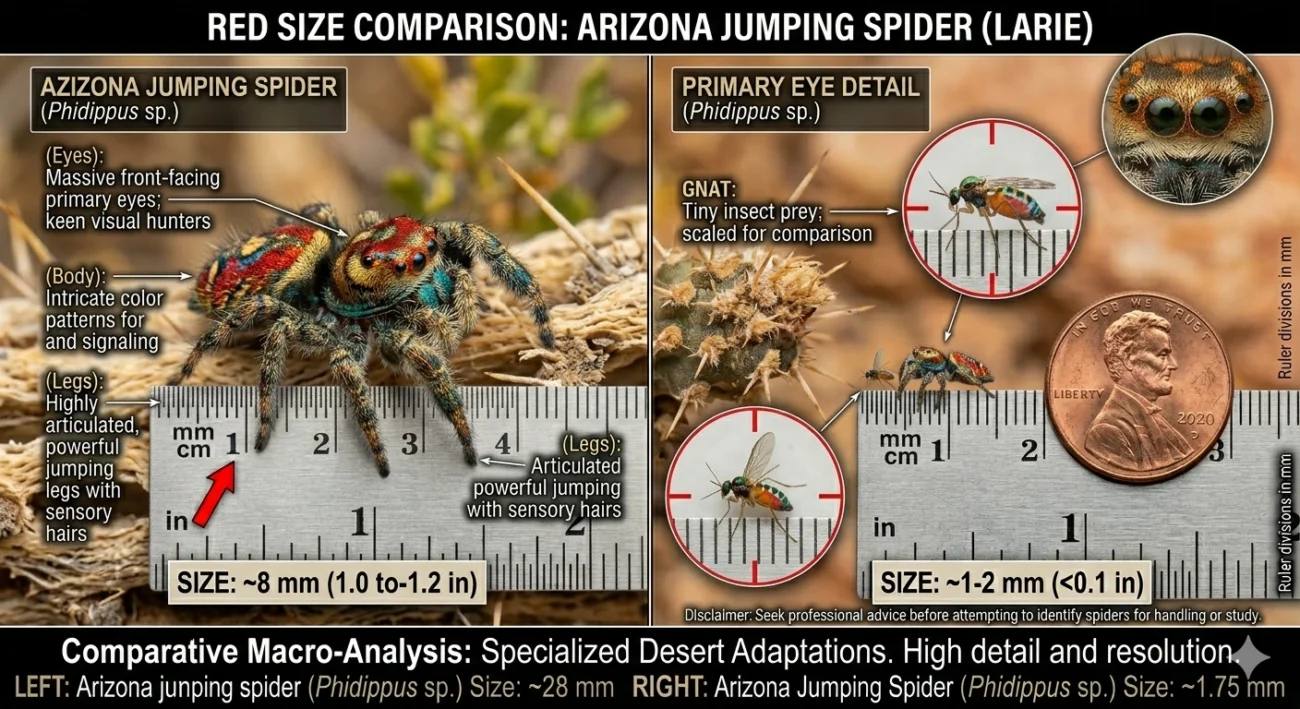
Introduction to Arizona Jumping Spiders
Arizona Jumping Spiders: Types, Facts & Habitat Guide is essential for anyone curious about these fascinating desert creatures. These small but intelligent spiders are widely found across Arizona’s landscapes. From dry deserts to urban homes, they adapt remarkably well.
Unlike many spiders, jumping spiders do not rely on webs to catch prey. Instead, they actively hunt during the day. As a result, they are often seen moving quickly and observing their surroundings.
In fact, Arizona is home to several unique species. Each type has distinct colors, patterns, and behaviors. This diversity makes them especially interesting for nature lovers and homeowners alike.
Additionally, many people wonder if these spiders are dangerous. However, most jumping spiders in Arizona are harmless and beneficial. They help control pests naturally, which makes them useful in gardens and homes.
Why Arizona Has So Many Jumping Spiders
Arizona offers ideal conditions for these spiders to thrive. The warm climate, dry environment, and abundant insects create a perfect habitat.
- Hot temperatures support active hunting behavior
- Desert plants provide hiding spots
- Urban areas offer shelter and food sources
- Low humidity suits their survival needs
Therefore, whether you live in Phoenix, Tucson, or smaller towns, spotting these spiders is common. They often appear on walls, windows, and outdoor surfaces.
What Makes Jumping Spiders Unique
Jumping spiders stand out due to their exceptional vision and intelligence. Unlike most spiders, they can see clearly and react quickly.
- They have large forward-facing eyes
- They can jump multiple times their body length
- They display curious and alert behavior
- They do not build traditional webs
As a result, many people find them less intimidating compared to other spiders. In fact, some even consider them friendly-looking.
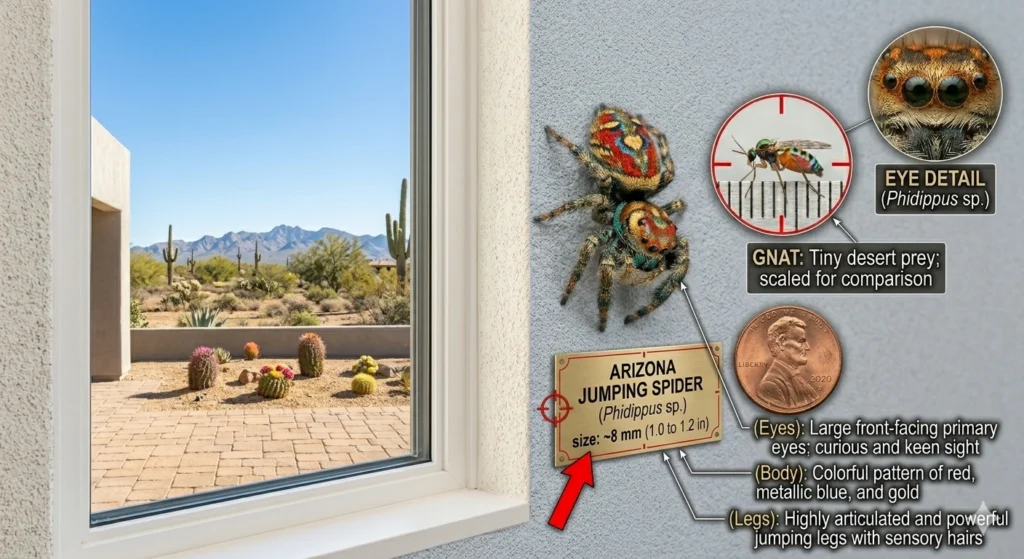
What Are Jumping Spiders?
Jumping spiders belong to the family Salticidae, one of the largest spider families in the world. These spiders are known for their agility, intelligence, and excellent vision. In Arizona, they are commonly seen during the daytime, actively exploring their surroundings.
Unlike web-building spiders, jumping spiders rely on movement and precision. They stalk their prey carefully and then leap to capture it. As a result, they are often described as “mini hunters” of the spider world.
Additionally, their compact body and unique eye structure make them easy to recognize. Many species found in Arizona display vibrant colors and distinct patterns, which help in identification.
Key Characteristics of Jumping Spiders
These spiders have several features that set them apart from other species. Understanding these traits helps with accurate identification and reduces fear.
- Large forward-facing eyes for sharp vision
- Short, sturdy legs built for jumping
- Compact and often hairy bodies
- Bright or contrasting color patterns
In fact, their vision is among the best in the spider world. They can track moving objects and even react to human movement. Therefore, they often appear curious rather than aggressive.
How They Hunt Without Webs
Jumping spiders do not rely on webs to catch prey. Instead, they use a combination of sight and movement to hunt effectively.
- They spot prey from a distance
- Slowly approach with controlled movement
- Attach a silk safety line before jumping
- Leap accurately to capture their target
As a result, their hunting style is efficient and fascinating to watch. This behavior also makes them beneficial, as they actively reduce insect populations.
Differences Between Jumping Spiders and Other Spiders
Many people confuse jumping spiders with more dangerous species. However, there are clear differences that make them safer and easier to identify.
| Feature | Jumping Spiders | Other Common Spiders |
|---|---|---|
| Hunting Style | Active hunters | Web-based trapping |
| Vision | Excellent eyesight | Poor eyesight |
| Behavior | Curious and alert | Shy or defensive |
| Danger Level | Mostly harmless | Varies by species |
On the other hand, many web-building spiders rely heavily on traps and avoid direct interaction. This difference makes jumping spiders less threatening to humans.
Common Types of Jumping Spiders in Arizona
Arizona is home to a wide variety of jumping spiders. Each species has unique colors, patterns, and behaviors. Therefore, learning Arizona jumping spiders identification becomes easier when you know what to look for.
Some species are commonly found in deserts, while others prefer urban homes and gardens. Additionally, a few types are often mistaken for dangerous spiders due to their bold appearance. However, most are harmless and beneficial.
Bold Jumping Spider (Phidippus audax)
This is one of the most common species across the United States, including Arizona. It is easy to recognize due to its striking appearance.
- Black body with white or orange spots
- Metallic green or blue mouthparts
- Compact and slightly hairy body
- Often seen on walls, fences, and plants
In fact, this species is often spotted around homes. As a result, many homeowners become familiar with it quickly.
Arizona Bark Jumping Spider
The Arizona bark jumping spider is well adapted to desert environments. It blends easily with tree bark and rocky surfaces.
- Camouflage coloring in brown and gray tones
- Flat body shape for hiding in cracks
- Common in desert shrubs and tree trunks
- Excellent at avoiding predators
Additionally, this species is harder to spot due to its natural camouflage. However, it plays an important role in controlling small insects.
Zebra Jumping Spider (Salticus scenicus)
This species is smaller but very noticeable due to its pattern. It is often found in urban areas.
- Black and white striped body
- Small size, usually under half an inch
- Active during the day
- Frequently seen on windows and walls
On the other hand, despite its size, it is a skilled hunter. It quickly captures small insects indoors and outdoors.
White Jumping Spider Arizona
The white jumping spider Arizona refers to lighter-colored species often seen in dry regions. These spiders blend well with sandy environments.
- Pale white or beige coloration
- Common in desert sand and rocks
- Less visible due to camouflage
- Active hunters during daylight
As a result, spotting them requires careful observation. They are often overlooked due to their subtle appearance.
Quick Identification Tips
To identify jumping spiders in Arizona, focus on a few key features. This makes recognition easier, even for beginners.
- Look for large front-facing eyes
- Notice quick, jumping movements
- Check body patterns and colors
- Observe daytime activity
Habitat of Jumping Spiders in Arizona
Jumping spiders thrive in a wide range of environments across Arizona. Their adaptability allows them to survive in both harsh deserts and busy urban areas. Therefore, understanding their habitat helps you spot them more easily.
These spiders prefer warm, dry climates. As a result, Arizona provides nearly perfect conditions for their survival. Additionally, their small size allows them to hide in tiny spaces, making them highly versatile.
Natural Desert Habitats
In the wild, jumping spiders are commonly found in desert landscapes. They use natural elements for shelter, hunting, and protection.
- Under rocks and stones for shade
- On cacti and desert shrubs
- Inside cracks in dry soil
- Around fallen wood and debris
For example, the Arizona bark jumping spider blends perfectly with tree bark. This camouflage helps it avoid predators and ambush prey effectively.
Urban and Residential Areas
Interestingly, jumping spiders are also very common in cities and homes. They adapt quickly to human environments where food is available.
- Exterior walls and fences
- Window sills and door frames
- Gardens and backyard plants
- Garages and indoor corners
In fact, many homeowners in Arizona notice these spiders near windows. This is because insects gather around light sources, attracting predators like jumping spiders.
Microhabitats They Prefer
Although they can live almost anywhere, jumping spiders prefer specific microhabitats. These locations offer both safety and easy access to prey.
- Sunny spots for active hunting
- Hidden crevices for resting
- Areas with high insect activity
- Surfaces with good visibility
Additionally, they avoid overly wet or cold areas. This is why they are less common in shaded, damp environments.
Seasonal Activity in Arizona
Jumping spiders remain active for most of the year in Arizona. However, their visibility changes with the seasons.
- Spring: Increased activity and breeding
- Summer: Peak hunting during mornings and evenings
- Fall: Gradual decrease in activity
- Winter: Limited movement, often hidden
Therefore, the best time to spot them is during warm months. Early morning and late afternoon are especially ideal.
Behavior and Hunting Style of Jumping Spiders
Jumping spiders are among the most active and intelligent spiders in Arizona. Instead of waiting in webs, they explore their surroundings and hunt with precision. As a result, their behavior is very different from most other spider species.
These spiders rely heavily on vision and movement. Additionally, they show curiosity and awareness, which makes them fascinating to observe. Many people even notice them turning their heads to follow motion.
Active Hunting Approach
Unlike web-building spiders, jumping spiders hunt like tiny predators. They use strategy rather than traps.
- They scan their surroundings using sharp eyesight
- Slowly stalk prey with controlled movement
- Pause frequently to adjust direction
- Leap accurately to capture insects
For example, a jumping spider may watch a fly for several seconds before attacking. This careful planning increases their success rate.
Jumping Mechanics Explained
Their ability to jump is one of their most impressive traits. However, it is not just random movement. It is a calculated action.
- They anchor a silk safety line before jumping
- Build internal pressure in their legs
- Launch themselves toward the target
- Use silk to prevent falling if they miss
As a result, they can jump several times their body length with great accuracy. This makes them efficient hunters in both desert and indoor environments.
Diet and Feeding Habits
Jumping spiders play an important role in controlling insect populations. They feed on a variety of small pests commonly found in Arizona.
- Flies and mosquitoes
- Ants and small beetles
- Moths and tiny insects
- Occasionally other small spiders
Therefore, they are considered beneficial, especially in homes and gardens. They help reduce unwanted pests naturally without chemicals.
Interaction with Humans
Many people ask whether Arizona jumping spiders are poisonous. While they do have venom to subdue prey, it is not dangerous to humans.
- They are non-aggressive by nature
- Bites are extremely rare
- They prefer to escape rather than attack
- No serious medical risk in most cases
In fact, jumping spiders often appear curious rather than threatening. They may even approach humans briefly before moving away.
Are Jumping Spiders Dangerous?
Many people feel uneasy when they see spiders. However, jumping spiders are very different from harmful species. In most cases, they pose little to no risk to humans.
Additionally, understanding their behavior helps reduce unnecessary fear. These spiders are not aggressive and rarely interact with people in a harmful way.
Are They Poisonous or Venomous?
A common concern is whether Arizona jumping spiders are poisonous. Technically, they are venomous, meaning they use venom to catch prey. However, this venom is not dangerous to humans.
- Venom is designed for small insects
- No serious harm to humans
- Medical cases are extremely rare
- Symptoms, if any, are mild
Therefore, while they do have venom, it is not something most people need to worry about.
Do Jumping Spiders Bite?
Jumping spiders can bite, but this happens very rarely. In fact, they only bite when they feel trapped or threatened.
- Bites are defensive, not aggressive
- Usually occur during handling
- Most bites cause mild irritation
- Symptoms fade quickly without treatment
As a result, simply avoiding direct contact eliminates almost all risk.
Comparison with Dangerous Spiders
Not all spiders are harmless. However, jumping spiders are among the safest you will encounter in Arizona.
| Spider Type | Risk Level | Behavior | Medical Concern |
|---|---|---|---|
| Jumping Spider | Very Low | Curious, non-aggressive | Minimal to none |
| Black Widow | High | Defensive | Serious symptoms possible |
| Brown Recluse | Moderate to High | Shy but can bite | Skin damage possible |
On the other hand, species like black widows require caution. This comparison clearly shows how safe jumping spiders are.
Why They Are Actually Helpful
Instead of being harmful, jumping spiders provide real benefits. They act as natural pest controllers in homes and gardens.
- Reduce flies and mosquitoes
- Control small insect populations
- Limit need for chemical pesticides
- Support a balanced ecosystem
In fact, many homeowners in the United States prefer keeping them around. They offer a safe and eco-friendly way to manage pests.
Fascinating Facts About Jumping Spiders
Jumping spiders are not just common in Arizona. They are also among the most intelligent and visually advanced spiders in the world. As a result, researchers and nature enthusiasts find them incredibly interesting.
Additionally, their behavior often surprises people. Many individuals who once feared spiders begin to appreciate them after learning these facts.
They Have Exceptional Vision
Jumping spiders rely heavily on their eyesight. In fact, their vision is far better than most other spiders.
- They have four pairs of eyes
- The front eyes provide sharp, detailed vision
- They can detect movement from a distance
- They track objects with head movements
Therefore, they do not depend on webs to sense vibrations. Instead, they actively observe their environment.
They Perform Courtship Dances
One of the most fascinating behaviors is their mating display. Male jumping spiders perform unique dances to attract females.
- Wave their legs in rhythmic patterns
- Display vibrant body colors
- Move side to side in a controlled motion
- Use vibrations to communicate
As a result, this behavior reduces aggression and increases mating success. It also makes them one of the most entertaining spiders to watch.
They Show Signs of Intelligence
Jumping spiders are often considered smarter than other spider species. Their actions suggest basic problem-solving abilities.
- Plan routes before jumping
- Adjust strategies when hunting
- Learn from failed attempts
- Show curiosity toward movement
In fact, some studies suggest they can remember paths and make decisions based on previous experiences.
They Can Recognize Movement Around Them
Many people notice that jumping spiders appear to “look” at them. While they do not recognize humans like mammals, they can detect movement and respond to it.
- Turn to face nearby motion
- Pause and observe before reacting
- Move closer out of curiosity
- Retreat quickly if threatened
Additionally, this behavior makes them seem more interactive compared to other spiders.
They Are Found Across the United States
Although this guide focuses on Arizona, jumping spiders are widespread across the country. However, desert species show unique adaptations.
- Better heat tolerance
- Camouflage suited for dry environments
- Active during cooler parts of the day
- Efficient water conservation
Therefore, Arizona species are especially adapted to survive extreme conditions.
How to Identify Jumping Spiders in Arizona
Accurate identification helps reduce fear and confusion. Many people misidentify harmless species as dangerous ones. Therefore, learning Arizona jumping spiders identification is both useful and practical.
Additionally, jumping spiders have clear visual traits. Once you understand these features, recognizing them becomes much easier.
Key Physical Features to Look For
Jumping spiders share several common traits. These features make them stand out from other spiders found in Arizona.
- Large front-facing eyes with a “face-like” appearance
- Compact and slightly fuzzy body
- Short, strong legs built for jumping
- Distinct color patterns depending on species
In fact, their eye arrangement is the easiest way to identify them. No other common spider in Arizona has such prominent front eyes.
Color and Pattern Variations
Different species display a wide range of colors. This variation often confuses beginners, but a few patterns are common.
- Black with white or orange spots (Bold jumping spider)
- Striped black and white (Zebra jumping spider)
- Brown or gray for camouflage (bark species)
- Pale or beige tones in desert environments
For example, the white jumping spider Arizona blends easily with sand and rocks. As a result, it can be difficult to spot without careful observation.
Behavioral Clues for Identification
Behavior is just as important as appearance. Jumping spiders act very differently from web-building species.
- Move quickly and stop frequently
- Jump instead of crawling long distances
- Actively observe surroundings
- Hunt during the daytime
Therefore, if you see a spider jumping and watching movement, it is likely a jumping spider.
Male vs Female Differences
In some species, males and females look slightly different. These differences can help with more detailed identification.
- Males often have brighter colors
- Males display courtship behavior
- Females are usually larger in size
- Females focus more on nesting and egg care
Additionally, observing behavior during mating season can make identification easier.
Common Identification Mistakes
Many people confuse jumping spiders with other species. However, a few simple checks can prevent this.
- Mistaking them for wolf spiders due to size
- Confusing dark species with harmful spiders
- Ignoring eye structure
- Overlooking their jumping behavior
As a result, focusing on both appearance and movement ensures accurate identification.
Where and When to Spot Jumping Spiders in Arizona
Finding jumping spiders in Arizona is easier than most people think. These spiders are active, visible, and often live close to humans. Therefore, knowing where and when to look can greatly increase your chances of spotting them.
Additionally, their daytime activity makes them more noticeable compared to nocturnal spiders. This makes them ideal for observation and even photography.
Best Places to Find Them
Jumping spiders are highly adaptable. They live in both natural and urban environments across Arizona.
- Garden plants and backyard shrubs
- Exterior house walls and fences
- Window sills and door frames
- Desert trails, rocks, and cacti
For example, in cities like Phoenix and Tucson, they are often seen near windows. This is because insects gather around light, attracting these active hunters.
Indoor vs Outdoor Sightings
While jumping spiders prefer outdoor environments, they sometimes enter homes. However, this usually happens by accident while hunting.
- Outdoors: More active and easier to observe
- Indoors: Found near light sources or corners
- Garages: Common due to insects and shelter
- Balconies: Ideal hunting spots
As a result, occasional indoor sightings are normal and not a cause for concern.
Best Time of Day
Jumping spiders are daytime hunters. Their activity depends heavily on light and temperature.
- Morning: Highly active and hunting
- Afternoon: Moderate activity during cooler hours
- Evening: Reduced movement
- Night: Mostly inactive
Therefore, early morning and late afternoon are the best times to observe them.
Seasonal Visibility
Arizona’s climate allows jumping spiders to remain active for much of the year. However, their visibility changes with seasons.
- Spring: Increased activity and mating behavior
- Summer: Active but avoid extreme heat
- Fall: Gradual decline in sightings
- Winter: Limited activity, often hidden
In fact, spring is the ideal season for spotting a wide variety of species.
Tips for Easy Spotting
If you want to observe jumping spiders more easily, a few simple tips can help.
- Look at sunlit surfaces where insects gather
- Move slowly to avoid scaring them away
- Check plants and walls carefully
- Use your phone camera to zoom in safely
Additionally, patience is key. These spiders may pause often, giving you time to observe them closely.
Jumping Spiders vs Other Common Spiders in Arizona
Many homeowners in the United States worry about spiders. However, not all species behave the same way. Understanding the differences helps you react appropriately and avoid unnecessary fear.
Jumping spiders stand out due to their behavior, appearance, and safety level. In contrast, other spiders found in Arizona may rely on webs or defensive tactics.
Key Differences at a Glance
The table below compares jumping spiders with other commonly found species in Arizona. This makes identification and risk assessment much easier.
| Feature | Jumping Spiders | Wolf Spiders | Black Widow | Brown Recluse |
|---|---|---|---|---|
| Hunting Style | Active hunters | Ground hunters | Web-based | Hidden ambush |
| Vision | Excellent | Good | Poor | Poor |
| Behavior | Curious, alert | Fast, cautious | Defensive | Shy, reclusive |
| Danger Level | Very low | Low | High | Moderate to high |
| Common Location | Walls, plants | Ground, soil | Dark corners | Hidden indoor areas |
Why Jumping Spiders Are Safer
Jumping spiders are often misunderstood. However, compared to other species, they are among the safest.
- They rarely bite humans
- They do not build messy webs indoors
- They actively avoid confrontation
- They help control pest populations
Therefore, they are actually beneficial to have around homes and gardens.
Common Misconceptions
Many people confuse jumping spiders with more dangerous species. This leads to unnecessary panic.
- Dark-colored jumping spiders mistaken for black widows
- Larger species confused with wolf spiders
- Fast movement assumed to be aggressive behavior
- Presence indoors seen as infestation
In reality, their behavior is completely different. They are curious hunters, not defensive attackers.
Which Spider Should You Be Concerned About?
While jumping spiders are harmless, some Arizona species do require caution.
- Black widows: Recognizable by red hourglass marking
- Brown recluse: Known for hidden habitats
- Other venomous species: Rare but present
On the other hand, jumping spiders do not pose such risks. This makes them one of the safest spiders you can encounter.
Pros and Cons of Having Jumping Spiders Around
Many homeowners in the United States are unsure whether to keep or remove spiders. However, jumping spiders are very different from harmful species. Understanding their advantages and limitations helps you make an informed decision.
Additionally, these spiders often provide more benefits than drawbacks. Still, it is important to look at both sides clearly.
Benefits of Jumping Spiders
Jumping spiders offer several practical advantages, especially in homes and gardens. As a result, many people choose to leave them undisturbed.
- Natural pest control without chemicals
- Reduce flies, mosquitoes, and small insects
- Do not build messy or large webs
- Non-aggressive and rarely bite
- Safe for families and pets
For example, homeowners in Arizona often notice fewer insects when these spiders are present. Therefore, they act as a free and eco-friendly pest solution.
Limitations to Consider
Although they are mostly beneficial, there are a few minor drawbacks. However, these issues are usually easy to manage.
- Unexpected sightings may cause fear
- Occasional indoor presence
- Small silk lines may appear in corners
- Misidentification can lead to unnecessary concern
On the other hand, these limitations are not serious. Most people adjust quickly once they understand their behavior.
Quick Pros vs Cons Comparison
| Pros | Cons |
|---|---|
| Control pests naturally | Can surprise homeowners |
| Harmless to humans | Occasional indoor presence |
| No large webs | Minor silk traces |
| Eco-friendly solution | Often misunderstood |
Should You Keep or Remove Them?
In most cases, keeping jumping spiders is the better choice. They help maintain a balanced indoor and outdoor environment.
- Leave them if they are outdoors or in gardens
- Relocate gently if found indoors
- Avoid using harmful chemicals
- Educate family members to reduce fear
Therefore, instead of eliminating them, managing their presence is more effective and safer.
Customer Testimonial Highlights
Real experiences from homeowners across the United States provide valuable insight into how jumping spiders are perceived. While some people feel uneasy at first, many change their opinion after understanding their behavior.
Additionally, these testimonials highlight the practical benefits of having these spiders around. They also help build trust for those still unsure.
Positive Experiences from Homeowners
Many individuals report that jumping spiders are helpful rather than harmful. Over time, they become less fearful and more accepting.
- “I noticed fewer flies in my backyard after spotting these spiders.”
- “They look intimidating at first, but they never bothered us.”
- “I see them near my windows, and they keep bugs away.”
- “Much better than using chemical sprays indoors.”
For example, a homeowner in Arizona shared that keeping these spiders reduced the need for pest control services. As a result, they saved both time and money.
Initial Concerns and How They Changed
At first, many people worry about safety. However, their perspective often changes after learning more about these spiders.
- Fear of bites turns out to be unnecessary
- Concern about infestation is usually unfounded
- Misidentification leads to early panic
- Understanding behavior reduces anxiety
In fact, once people realize how harmless they are, they become more comfortable sharing spaces with them.
Why People Prefer Them Over Pest Control
Traditional pest control methods often involve chemicals. On the other hand, jumping spiders offer a natural alternative.
- No harmful chemicals involved
- Continuous pest control without effort
- Environmentally friendly solution
- Safe around children and pets
Therefore, many homeowners now prefer a natural approach instead of relying on sprays and treatments.
Common Takeaways from Testimonials
When you look at multiple experiences, a clear pattern emerges. Most people develop a positive view over time.
- They are harmless and non-aggressive
- They help reduce insects effectively
- They are easy to coexist with
- They are often misunderstood initially
Additionally, these insights build confidence for new readers. They show that keeping these spiders is both safe and beneficial.
What Should You Do Next?
Now that you understand jumping spiders, the next step is simple. Instead of fearing them, you can use this knowledge to your advantage. These small hunters can actually improve your home environment.
Additionally, making the right choice helps you avoid unnecessary pest control costs. It also supports a more natural and balanced ecosystem around your home.
If You See One in Your Home
Seeing a spider indoors can be surprising. However, there is no need to panic. A calm and simple approach works best.
- Stay calm and observe its behavior
- Avoid direct handling
- Use a glass and paper to relocate it outside
- Release it in a garden or near plants
As a result, you remove it safely without harm. This approach is both practical and humane.
If You Want Natural Pest Control
Jumping spiders can help reduce insects naturally. Therefore, allowing them to stay in certain areas can be beneficial.
- Let them remain in gardens and outdoor spaces
- Avoid unnecessary pesticide use
- Keep outdoor lighting controlled to manage insect flow
- Encourage a balanced environment
In fact, many homeowners in the United States rely on natural pest control methods. This reduces chemical exposure and saves money over time.
If You Still Feel Uncomfortable
It is completely normal to feel unsure about spiders. However, simple steps can help you feel more in control.
- Seal small cracks and entry points
- Keep indoor areas clean and clutter-free
- Reduce insect attraction near windows
- Learn to identify harmless species
Additionally, education plays a key role. The more you understand, the less intimidating these spiders become.
Make the Smart Choice
Choosing how to respond is important. Instead of reacting with fear, take a balanced approach.
- Recognize their benefits
- Avoid unnecessary extermination
- Use safe relocation methods
- Share awareness with others
Therefore, by making informed decisions, you create a safer and more eco-friendly living space.
Conclusion
Arizona Jumping Spiders: Types, Facts & Habitat Guide shows that these small creatures are far more helpful than harmful. While many people initially fear spiders, understanding their behavior changes that perspective quickly.
Throughout Arizona, these spiders thrive in deserts, gardens, and even homes. Additionally, their ability to hunt pests naturally makes them valuable allies. They reduce insects without chemicals, which benefits both your health and the environment.
In fact, their intelligence, vision, and curious behavior set them apart from other spider species. Unlike dangerous spiders, they rarely bite and avoid human interaction. Therefore, they are considered one of the safest spiders you can encounter.
Moreover, learning proper Arizona jumping spiders identification helps prevent confusion with harmful species. This knowledge reduces fear and allows you to respond calmly in real situations.
As a result, the best approach is not to eliminate them, but to manage their presence wisely. Whether you choose to observe, relocate, or simply leave them alone, these spiders offer more benefits than drawbacks.
Ultimately, understanding these fascinating creatures leads to smarter decisions. Instead of reacting with fear, you can appreciate their role in maintaining a balanced ecosystem.
Frequently Asked Questions
Are Arizona jumping spiders poisonous?
Jumping spiders are venomous, but their venom is not dangerous to humans. In most cases, they pose no medical risk and are considered harmless.
Do jumping spiders bite humans?
They rarely bite and only do so if threatened. Additionally, most bites are mild and do not require medical treatment.
How can I identify jumping spiders in Arizona?
Look for large front-facing eyes, quick jumping movements, and compact bodies. These features make Arizona jumping spiders identification easier.
Where are jumping spiders commonly found in Arizona?
They are found in gardens, walls, windows, desert plants, and rocks. They prefer sunny areas where insects are abundant.
Are jumping spiders good for homes?
Yes, they help control pests like flies and mosquitoes. Therefore, many homeowners consider them beneficial rather than harmful.
What do Arizona jumping spiders eat?
They feed on small insects such as flies, ants, and mosquitoes. As a result, they naturally reduce pest populations.
Should I remove jumping spiders from my house?
In most cases, it is better to relocate them outside instead of killing them. They are harmless and useful for pest control.
