
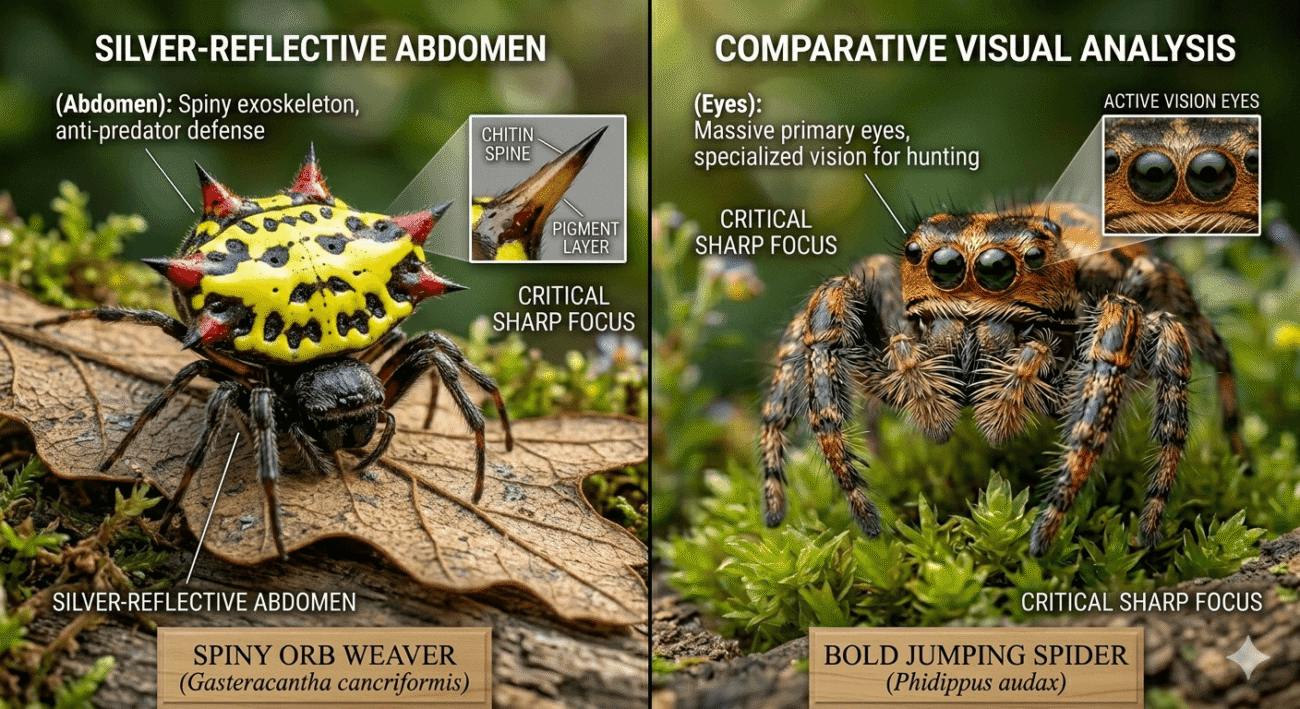
Introduction to Spiny Orb Weaver vs Bold Jumping Spider
The topic of spiny ord weaver vs bold jumping spider often confuses homeowners across the United States. Many people spot these spiders in gardens or near windows and assume they behave the same. However, that assumption can lead to unnecessary fear or even removal of beneficial species.
In reality, these two spiders are very different. While one builds beautiful webs, the other actively hunts its prey. As a result, understanding their behavior helps you make better decisions around your home.
Additionally, both species play an important role in controlling pests. For example, they reduce flies, mosquitoes, and other insects naturally. Therefore, learning to identify them correctly can benefit your garden and indoor environment.
Why This Comparison Matters
Many people search for spiny ord weaver vs bold jumping spider because they want clear answers about safety and behavior. In fact, most concerns are related to bites, venom, and whether these spiders are dangerous.
- Homeowners want to know if these spiders are harmful
- Gardeners are curious about pest control benefits
- Families want to ensure safety around children
- Pet owners worry about possible bites
On the other hand, misinformation online often exaggerates risks. However, both of these spiders are generally harmless to humans. Understanding this can reduce fear and promote a healthier ecosystem around your home.
Quick Overview of Both Species
Before diving deeper, it helps to understand the basic difference between these spiders. Each has a unique appearance and lifestyle.
- Spiny orb weaver: Known for its bright colors and spiked body
- Bold jumping spider: Recognized for its fuzzy look and large eyes
- One builds webs, while the other hunts actively
- Both are commonly found in different regions of the USA
In the following sections, we will explore their appearance, behavior, bite risk, and overall benefits. This guide is designed to give you clear, expert-level insights so you can confidently identify and understand both species.
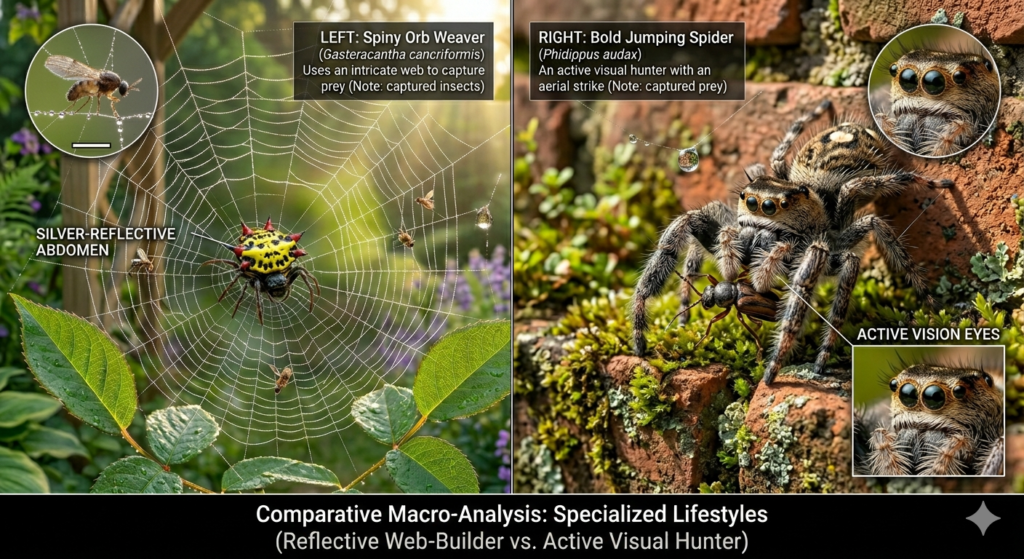
What is a Spiny Orb Weaver Spider?
The spiny orb weaver is one of the most visually striking spiders found in the United States. Unlike common house spiders, this species stands out due to its bright colors and unusual body shape. As a result, many people feel alarmed when they first see it.
However, despite its intimidating look, this spider is harmless to humans. In fact, it plays a valuable role in maintaining ecological balance. Additionally, it is commonly found in residential gardens, making it a familiar sight during warmer months.
Physical Appearance
This spider is easy to identify because of its unique structure. Its body looks almost like a small crab shell with sharp spines.
- Bright colors such as yellow, white, red, or orange
- Flat, wide abdomen with multiple spines
- Small size, usually less than one inch
- Hard outer shell-like body texture
Because of these features, it is often mistaken for a dangerous species. However, its appearance is mainly for defense against predators, not humans.
Habitat and Distribution in the USA
Spiny orb weavers are widely distributed across the southern and eastern United States. They prefer warm climates and areas with plenty of vegetation.
- Common in Florida, Texas, and California
- Found in gardens, forests, and shrubs
- Often seen near homes and backyard plants
- Build webs between branches or structures
Therefore, if you have a garden or outdoor plants, you are likely to encounter one. They thrive in areas where insects are abundant.
Web-Building Behavior
One of the most fascinating aspects of this spider is its web-building ability. Unlike active hunters, it relies entirely on its web to catch prey.
- Builds circular orb-shaped webs
- Webs are often rebuilt daily
- Usually active during nighttime
- Sits at the center or underside of the web
As a result, these spiders are highly effective at catching flying insects. Additionally, their webs can sometimes appear overnight, surprising homeowners.
Overall, the spiny orb weaver is more beneficial than harmful. Understanding its behavior can help you appreciate its role rather than fear it.
What is a Bold Jumping Spider?
The bold jumping spider is one of the most fascinating and intelligent spiders found in North America. When comparing spiny ord weaver vs bold jumping spider, this species stands out due to its active hunting style and curious behavior.
Unlike web-building spiders, this one relies on vision and movement. As a result, it often interacts more visibly with humans. However, despite its bold name, it is not dangerous and rarely bites.
Physical Features
This spider has a distinctive look that makes it easier to identify. Its appearance is less intimidating compared to many other species.
- Black body with white or orange spots
- Compact and slightly fuzzy texture
- Large front-facing eyes for excellent vision
- Short legs designed for jumping
In fact, its big eyes give it a somewhat “cute” appearance. Because of this, many people feel less threatened by it compared to other spiders.
Habitat and Range in the USA
Bold jumping spiders are highly adaptable. Therefore, they can live in a wide range of environments across the United States.
- Common in homes, gardens, and outdoor walls
- Frequently found on windowsills and fences
- Active during the daytime
- Prefer warm and sunny areas
Additionally, they tend to stay in places where prey is easy to spot. This makes urban and suburban areas ideal for them.
Hunting and Behavior
One of the biggest differences in spiny ord weaver vs bold jumping spider is how they catch prey. This spider does not rely on webs for hunting.
- Uses vision to locate prey
- Stalks insects like a predator
- Jumps quickly to capture prey
- Uses silk only as a safety line
As a result, it behaves more like a tiny hunter than a passive trap builder. Additionally, it may turn its head to observe movement, which feels unusual for a spider.
Overall, the bold jumping spider is active, intelligent, and beneficial. Understanding its behavior helps reduce fear and highlights its usefulness in controlling pests.
Key Differences Between Spiny Orb Weaver and Bold Jumping Spider
Understanding the differences between these two species helps eliminate confusion and fear. While both are beneficial, their appearance, behavior, and lifestyle are completely different.
When analyzing spiny ord weaver vs bold jumping spider, it becomes clear that one relies on webs, while the other depends on active hunting. Therefore, identifying them correctly is much easier when you focus on their habits.
Quick Comparison Table
| Feature | Spiny Orb Weaver | Bold Jumping Spider |
|---|---|---|
| Appearance | Bright colors with spiny, flat body | Black, fuzzy body with white spots |
| Size | Small to medium | Small and compact |
| Hunting Style | Uses webs to catch prey | Actively hunts and jumps on prey |
| Web Building | Builds circular orb webs | Does not use webs for hunting |
| Activity Time | Mostly nocturnal | Active during daytime |
| Human Interaction | Avoids humans | Curious and observant |
| Bite Risk | Very low | Very low |
Behavioral Differences Explained
The biggest contrast lies in how these spiders survive. On one hand, the orb weaver creates intricate webs and waits patiently. On the other hand, the jumping spider actively searches for prey.
- Orb weavers rely on traps instead of movement
- Jumping spiders use vision and speed
- One is passive, while the other is highly active
- Each method is effective in different environments
Additionally, their interaction with humans differs significantly. Orb weavers tend to stay hidden, especially during the day. However, jumping spiders may look directly at you, which often surprises people.
As a result, many homeowners mistakenly believe jumping spiders are more dangerous. In reality, both species are harmless and beneficial for pest control.
Overall, recognizing these differences makes identification simple and helps you respond appropriately when you encounter either spider.
Behavior and Temperament Comparison
When comparing spiny ord weaver vs bold jumping spider, behavior plays a major role in how people perceive these spiders. While both are harmless, their actions around humans are very different. As a result, one may seem scarier than the other.
However, understanding their temperament can help reduce fear and prevent unnecessary removal. Additionally, both species contribute positively to your environment.
Spiny Orb Weaver Behavior
The spiny orb weaver is a passive and non-aggressive spider. It prefers to stay in its web and avoid contact with humans.
- Remains stationary in its web most of the time
- Builds webs in quiet, undisturbed areas
- Rarely leaves its web unless necessary
- Quickly retreats if disturbed
Therefore, you are unlikely to have direct interaction with this spider. In most cases, it will stay hidden and go unnoticed during the day.
Bold Jumping Spider Behavior
In contrast, the bold jumping spider is active and curious. It does not rely on webs, so it moves around frequently.
- Actively explores its surroundings
- May turn to face humans or movement
- Uses quick jumps to escape or hunt
- Often seen during daylight hours
Because of this behavior, it may appear more “aware” than other spiders. In fact, many people report that it seems to watch them, which can feel unusual.
Human Interaction and Temperament
The difference in temperament is clear when these spiders encounter humans. On one hand, the orb weaver avoids interaction. On the other hand, the jumping spider shows curiosity rather than fear.
- Orb weaver: shy and defensive
- Jumping spider: curious but not aggressive
- Neither species actively seeks to bite humans
- Both prefer escape over confrontation
As a result, jumping spiders are often misunderstood. People may think they are aggressive, but this is not true. Instead, they are simply more interactive.
Overall, both spiders are safe to have around. Understanding their behavior allows you to respond calmly and appreciate their role in pest control.
Bite, Venom, and Safety Concerns
One of the most common concerns in spiny ord weaver vs bold jumping spider is whether these spiders are dangerous. Many people worry about bites, especially when they see spiders inside their homes. However, the truth is far less alarming.
In fact, both species are considered harmless to humans. Additionally, bites are extremely rare and usually occur only when the spider feels threatened.
Spiny Orb Weaver vs Bold Jumping Spider Bite
When discussing spiny orb weaver vs bold jumping spider bite, it is important to understand that neither spider is aggressive. Their venom is mild and not medically significant.
- Spiny orb weaver bites are extremely rare
- Bold jumping spiders may bite only if handled
- Both bites are mild and short-lived
- No serious medical cases are commonly reported
Therefore, the risk to humans is minimal. Most people will never experience a bite from either species.
Common Bite Symptoms
If a bite does occur, symptoms are usually mild and manageable at home. However, reactions may vary slightly depending on the individual.
- Minor redness around the bite area
- Slight swelling or irritation
- Mild itching or discomfort
- Symptoms typically fade within a few hours
As a result, these bites are often compared to a mosquito bite rather than something serious.
When Should You Be Concerned?
Although bites are harmless in most cases, there are rare situations where extra care is needed. For example, individuals with allergies may experience stronger reactions.
- Severe swelling or persistent pain
- Signs of allergic reaction
- Symptoms lasting more than 24 hours
- Unusual discomfort or infection
In such cases, it is best to seek medical advice. However, these situations are extremely uncommon.
Overall, both spiders are safe to live around. Understanding their bite risk can help you stay calm and avoid unnecessary fear.
Benefits of These Spiders in Your Home and Garden
When evaluating spiny ord weaver vs bold jumping spider, many people focus only on fear. However, both of these spiders provide significant benefits, especially in residential environments across the United States.
In fact, they act as natural pest controllers. As a result, they help reduce the need for chemical pesticides. Additionally, their presence indicates a balanced and healthy ecosystem.
Natural Pest Control
Both spiders play an important role in controlling insect populations. They feed on common pests that can damage plants or spread disease.
- Reduce flies and mosquitoes around your home
- Help control garden pests naturally
- Lower the risk of insect-borne issues
- Support healthier outdoor spaces
For example, a single orb weaver web can trap dozens of flying insects in one night. Meanwhile, jumping spiders actively hunt insects during the day.
Therefore, having both types can provide round-the-clock pest control.
Eco-Friendly and Chemical-Free Solution
Many homeowners rely on sprays and chemicals to manage pests. However, these methods can harm the environment and beneficial insects.
- Spiders reduce the need for pesticides
- They do not harm plants or soil
- Safe for most outdoor environments
- Support natural ecological balance
As a result, they offer a sustainable and eco-friendly alternative. Additionally, they help maintain biodiversity in your yard.
Indoor and Outdoor Advantages
Each spider provides benefits in different areas of your home. Understanding this can help you decide whether to leave them undisturbed.
- Spiny orb weavers are ideal for gardens and outdoor spaces
- Bold jumping spiders are useful indoors and near windows
- Both reduce unwanted insect activity
- They require no maintenance or care
On the other hand, some people may find webs inconvenient. However, the benefits usually outweigh this minor issue.
Overall, these spiders are helpful allies rather than pests. Recognizing their value can change how you view them and encourage a more natural approach to pest control.
Pros and Cons of Spiny Orb Weaver and Bold Jumping Spider
When comparing spiny ord weaver vs bold jumping spider, it is important to look at both advantages and drawbacks. While both species are beneficial, they may not suit every environment or personal preference.
Therefore, understanding their pros and cons can help you decide how to handle them around your home. Additionally, this balanced view builds trust and helps you make informed decisions.
Spiny Orb Weaver Pros and Cons
Pros
- Excellent at catching flying insects like mosquitoes
- Creates structured webs that trap pests efficiently
- Non-aggressive and avoids human interaction
- Beneficial for gardens and outdoor plants
Cons
- Webs may appear in walkways or doorways
- Bright appearance can scare some people
- Mostly active at night, so less visible pest control during the day
- Webs need to be cleaned if placed in unwanted areas
As a result, this spider is ideal for outdoor spaces but may be inconvenient near entrances.
Bold Jumping Spider Pros and Cons
Pros
- Actively hunts insects without building messy webs
- Highly intelligent and aware of surroundings
- Useful for indoor pest control
- Generally perceived as less threatening due to its small size
Cons
- Sudden jumping behavior may startle people
- More visible, which can cause discomfort
- May wander into living spaces frequently
- Curiosity can bring it closer to humans
On the other hand, its active nature makes it more noticeable. However, it is still completely harmless.
Which One is Better Overall?
The answer depends on your environment and comfort level. For example, if you prefer a hands-off pest controller, the orb weaver is ideal. However, if you want active insect control indoors, the jumping spider is more effective.
- Choose orb weaver for gardens and outdoor areas
- Choose jumping spider for indoor pest control
- Both are safe and beneficial in most cases
- Neither requires removal unless necessary
Overall, both spiders offer more benefits than drawbacks. Understanding their differences allows you to coexist with them more comfortably.
Comparison with Other Common Household Spiders
When people search for spiny ord weaver vs bold jumping spider, they often compare these species with other common spiders found in the United States. This broader comparison helps users understand risk levels and behavior more clearly.
Additionally, many websites fail to explain these differences properly. Therefore, this section provides a clearer and more practical comparison based on real-world encounters.
How They Compare to Other Spiders
| Spider Type | Behavior | Danger Level | Habitat |
|---|---|---|---|
| Spiny Orb Weaver | Passive, web builder | Harmless | Gardens, outdoors |
| Bold Jumping Spider | Active hunter | Harmless | Indoors and outdoors |
| Wolf Spider | Fast hunter | Low risk | Ground, basements |
| House Spider | Web builder | Harmless | Indoors |
| Black Widow | Web builder | Medically significant | Dark corners, garages |
Key Differences That Matter
Not all spiders pose the same level of risk. In fact, most household spiders are harmless, including the two discussed in this guide.
- Orb weavers and jumping spiders are beneficial and non-dangerous
- Wolf spiders may bite but rarely cause serious issues
- House spiders are harmless but less effective at pest control
- Black widows require caution due to stronger venom
As a result, understanding these distinctions helps prevent unnecessary panic. Many people misidentify harmless spiders as dangerous ones.
Why This Comparison Helps You
Homeowners often react quickly when they see a spider. However, identifying the species correctly can save time and reduce stress.
- Avoid killing beneficial spiders
- Focus only on truly harmful species
- Improve natural pest control at home
- Make informed decisions based on facts
Therefore, comparing these spiders with others gives you a complete picture. It also highlights why both species in this guide are safe and useful.
Overall, when placed alongside other spiders, both stand out as low-risk and highly beneficial. This makes them ideal for maintaining a balanced home environment.
Customer Testimonial Highlights and Real-Life Experiences
Real-world experiences help build trust when comparing spiny ord weaver vs bold jumping spider. Across the United States, homeowners frequently encounter these spiders and share similar observations.
In fact, most experiences highlight how harmless and beneficial these spiders are. Additionally, many people report a change in perception after learning more about them.
Homeowner Experiences
Many homeowners initially feel concerned when they see unfamiliar spiders. However, their opinions often change after understanding their behavior.
- “I found a colorful spider in my garden. It turned out to be harmless.”
- “The web looked scary, but it actually reduced mosquitoes.”
- “I stopped removing them after noticing fewer insects.”
- “It stayed in one place and never bothered anyone.”
As a result, people begin to appreciate the spiny orb weaver for its pest control abilities.
Indoor Encounters with Jumping Spiders
Bold jumping spiders are more interactive. Therefore, people tend to notice them more often inside their homes.
- “It seemed to watch me, which was surprising but not scary.”
- “I noticed fewer flies around after it appeared.”
- “It moved quickly but never acted aggressively.”
- “Now I leave them alone because they help indoors.”
Additionally, many users describe them as intelligent and even “friendly” in behavior.
Common Misconceptions Reported
Despite positive experiences, some misconceptions still exist. However, most are based on appearance rather than facts.
- Bright colors are often mistaken for danger
- Jumping behavior is seen as aggression
- Webs are assumed to be harmful or dirty
- All spiders are believed to be dangerous
In reality, these concerns are rarely justified. Both spiders prefer to avoid humans and focus on catching insects.
Overall, real-life experiences confirm that these spiders are safe and useful. Learning from others can help reduce fear and encourage a more balanced perspective.
Final Thoughts and What You Should Do Next
After comparing spiny ord weaver vs bold jumping spider, one thing is clear. Both spiders are harmless, beneficial, and important for natural pest control. However, many people still remove them due to fear or misunderstanding.
Now that you understand their behavior, you can make smarter decisions. Instead of reacting with concern, you can recognize their value in your home or garden.
What Should You Do If You See One?
In most cases, there is no need to take action. These spiders are not dangerous and will not harm you or your family.
- Leave them undisturbed whenever possible
- Allow them to control pests naturally
- Relocate gently if found in unwanted areas
- Avoid using harmful chemicals unnecessarily
As a result, you create a safer and more eco-friendly environment.
Why Understanding Spiders Matters
Fear often comes from lack of knowledge. However, learning about these species helps you respond calmly and confidently.
- Reduces unnecessary panic
- Promotes eco-friendly pest control
- Encourages coexistence with beneficial species
- Improves your overall home environment
Additionally, understanding spider behavior can help you identify harmful species more easily. This ensures that you take action only when truly necessary.
Explore More Helpful Guides
If you found this guide useful, there is more to learn. Expanding your knowledge can help you better manage your home and outdoor spaces.
- Learn about other common spiders in the USA
- Discover natural pest control methods
- Understand which species to avoid
- Stay informed with expert-backed guides
Therefore, take the next step and continue exploring. The more you know, the more confident you will feel when dealing with spiders.
Start applying these insights today and turn fear into understanding.
Conclusion
Understanding spiny ord weaver vs bold jumping spider helps remove fear and replace it with clarity. While their appearance and behavior differ, both spiders are harmless and highly beneficial.
The spiny orb weaver is a passive web builder that controls flying insects outdoors. On the other hand, the bold jumping spider is an active hunter that works effectively indoors. As a result, both contribute to natural pest control in different ways.
Additionally, concerns about bites are often exaggerated. In reality, both species rarely bite, and their venom is mild. Therefore, there is no need to panic when you encounter them.
Instead of removing these spiders, it is better to understand their role. Allowing them to stay can reduce pests and support a healthier environment. In fact, many homeowners in the United States now prefer natural solutions over chemicals.
Overall, these spiders are not threats but helpful allies. With the right knowledge, you can confidently identify them and make informed decisions for your home.
FAQs
1. Is the spiny orb weaver dangerous to humans?
No, the spiny orb weaver is not dangerous. It is non-aggressive and rarely bites. Even if it does, the effects are mild and temporary.
2. Can a bold jumping spider bite you?
Yes, but it is very rare. These spiders only bite when threatened or handled. Additionally, the bite is harmless and similar to a mild insect bite.
3. Which spider is more aggressive?
Neither species is aggressive. The orb weaver avoids humans, while the jumping spider may appear curious but does not attack.
4. What is the difference between spiny orb weaver vs bold jumping spider bite?
Both bites are mild and not medically significant. However, jumping spiders are slightly more likely to bite if handled, while orb weavers rarely bite at all.
5. Should I remove these spiders from my home?
No, it is usually not necessary. Both spiders help control pests naturally. However, you can relocate them if they are in unwanted areas.
6. Are bold jumping spiders good to have indoors?
Yes, they are beneficial indoors. They actively hunt insects and reduce pests without creating webs.
7. Why do spiny orb weavers build webs near homes?
They build webs where insects are abundant. Homes with lights often attract bugs, making them ideal feeding spots for these spiders.
